

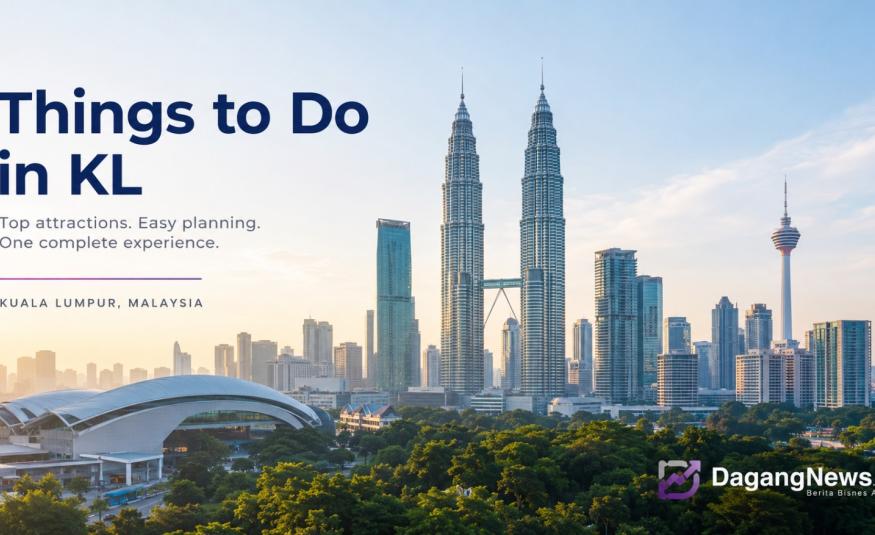
Kuala Lumpur has always been one of Southeast Asia's easiest cities to love — skyscrapers one minute, street food the next, ancient limestone caves just outside the city, and highland theme park escapes within a day trip. But the way travellers plan KL is changing fast.
Malaysia recorded 28.2 million international tourist arrivals in the first eight months of 2025 alone — a 14.5% year-on-year increase, according to the Ministry of Tourism, Arts and Culture.
Singapore remained the largest source market at 14 million arrivals during the same period, followed by China at 3.3 million and Indonesia at 2.9 million.
Malaysia's tourism growth beat the global average of 4% and outpaced the Asia-Pacific region's 6% — a signal that KL and the wider country are drawing more international visitors, more deliberately, than at any point since the pandemic.
The question travellers are increasingly asking is not simply, "What should I see?" It is, "How do I plan all of this in one place?"
Kuala Lumpur by the Numbers
| Fact | Data | Source |
|---|---|---|
| Malaysia international arrivals (Jan–Aug 2025) | 28.2 million (+14.5% YoY) | Ministry of Tourism, Arts and Culture |
| Singapore visitors to Malaysia (Jan–Aug 2025) | 14 million (+18.1% YoY) | Ministry of Tourism |
| Malaysia 2025 tourism target | 31 million arrivals + RM125.5 billion receipts | Tourism Malaysia |
| Visit Malaysia 2026 target | 47 million international arrivals | Tourism Malaysia |
| KL Tower height | 421 metres — 7th tallest telecommunications tower in the world | KL Tower official records |
| Batu Caves age | Over 400 million years | Tourism Malaysia |
| Aquaria KLCC | 5,000+ marine creatures; 90-metre underwater tunnel | Aquaria KLCC |
Sources: Malaysia Ministry of Tourism, Arts and Culture | Tourism Malaysia
From One App to a Full KL Itinerary
Today's KL traveller does not want to split trip planning across four apps and two browser tabs. They want to find transportation, confirm their seats, choose their experiences and arrive with a plan.
That shift is particularly visible among younger travellers. Nearly 40% of redBus users are aged between 21 and 30 — a group that builds trips around convenience and flexibility rather than printed itineraries.
For them, a KL weekend is not planned in a spreadsheet. It starts with a bus booking and ends with a fully planned itinerary before they have even packed a bag.
Travellers can book popular Kuala Lumpur attractions such as Aquaria KLCC, KL Tower, Genting SkyWorlds and city sightseeing tours online through redBus Things to Do.
Instead of purchasing tickets separately at each attraction, visitors can compare prices, secure entry in advance and organise multiple experiences from a single platform.
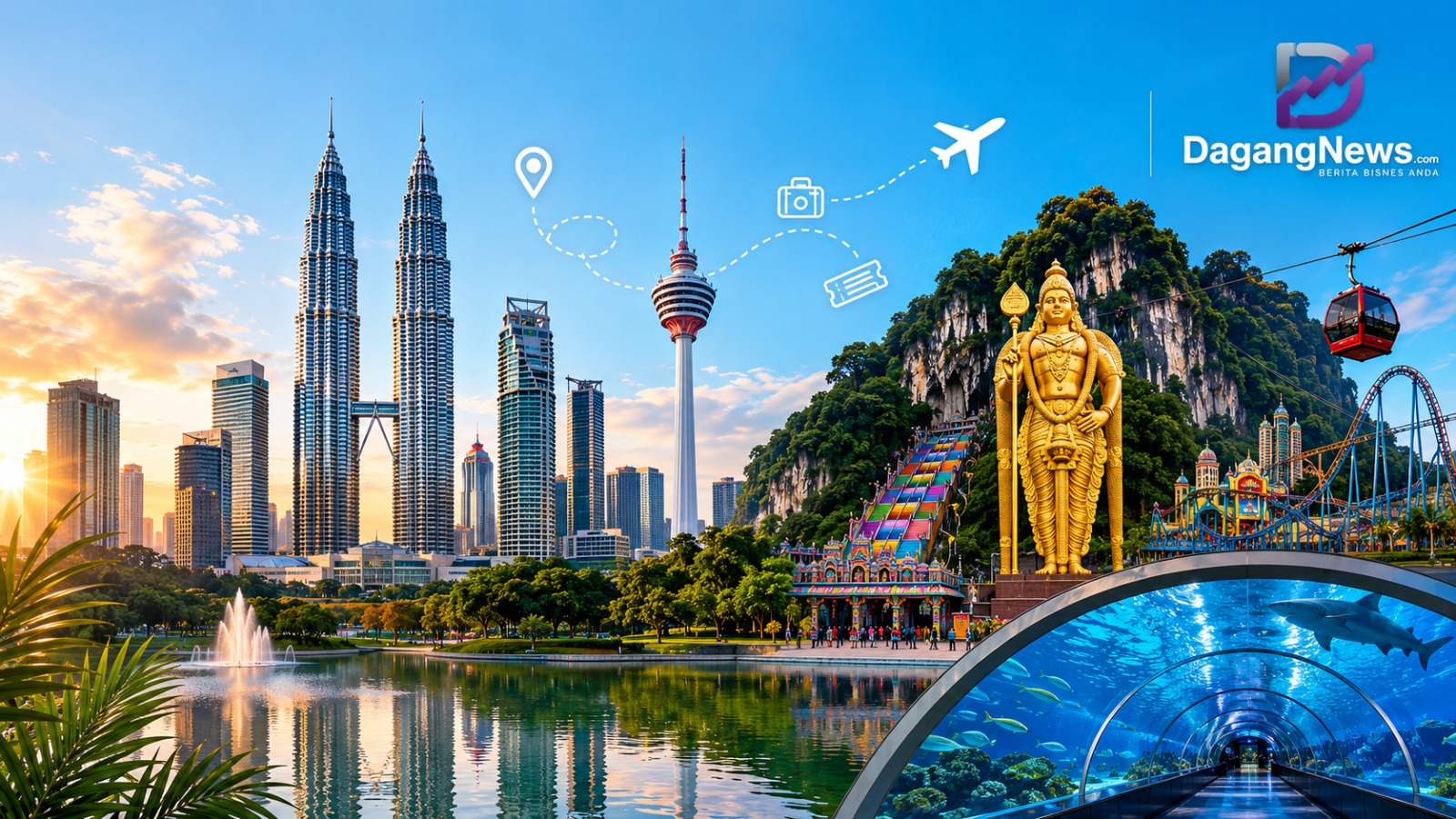
2026 Things to Do in KL: Pricing and Details
Top things to do in KL for every type of traveller — families, couples, solo visitors and quick weekend escapes.
Here is a breakdown of some of the most popular experiences available to book before arrival.
Top Things to Do in KL in 2026
| Experience | What Makes It Worth It | Starting Price | Suggested Duration |
|---|---|---|---|
| Aquaria KLCC | Malaysia's largest oceanarium; 5,000+ creatures; 90-metre transparent underwater tunnel; sand tiger sharks and green sea turtles visible at close range | From MYR45 | 1.5–2 hours |
| KL Tower | 7th tallest telecommunications tower in the world at 421 metres; 360° observation deck; SkyBox glass-floored suspended pod; ORBIT revolving restaurant | From MYR25 | 1–2 hours |
| KL Hop-On Hop-Off Bus | Open-top sightseeing route covering 40+ KL landmarks; flexible boarding and reboarding; 20–30 minute frequency | From MYR38 | 24–48 hours |
| Batu Caves Half-Day Tour | 400-million-year-old limestone caves; 272-step climb to the main temple cave; 43-metre golden statue of Lord Murugan | From MYR35 | Half day |
| Genting SkyWorlds Theme Park | Highland theme park 2,000 metres above sea level; 25+ rides across seven themed zones; average temperature 15–25°C | From MYR88 | Full day |
Aquaria KLCC — The Easiest First Choice for Any KL Visit
Aquaria KLCC sits directly beneath the Kuala Lumpur Convention Centre, a 10-minute walk from the Petronas Twin Towers. It has been voted among Asia's top aquariums on TripAdvisor and covers 60,000 square feet across eight exhibit zones.
The centrepiece is the 90-metre transparent underwater walking tunnel — one of the longest in Southeast Asia — where sharks, stingrays, green sea turtles and schools of tropical fish move around and above visitors simultaneously.
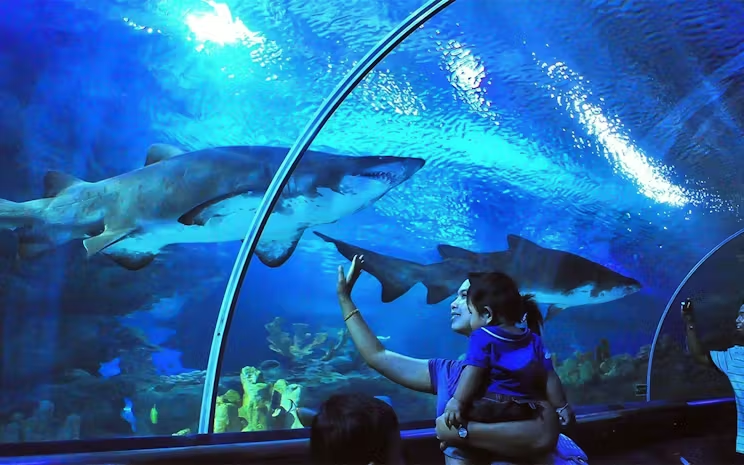
Interactive highlights include the Gene Pool touch tank, where visitors can handle starfish and sea cucumbers, as well as scheduled shark and otter feeding sessions conducted by marine specialists.
Aquaria is ideal for first-time KL visitors because its location within the KLCC precinct allows it to be paired easily with the Petronas Twin Towers, KLCC Park fountain shows and the restaurants within Suria KLCC — all within a 15-minute walk of one another.
KL Tower — Skyline Views at a Fraction of the Cost
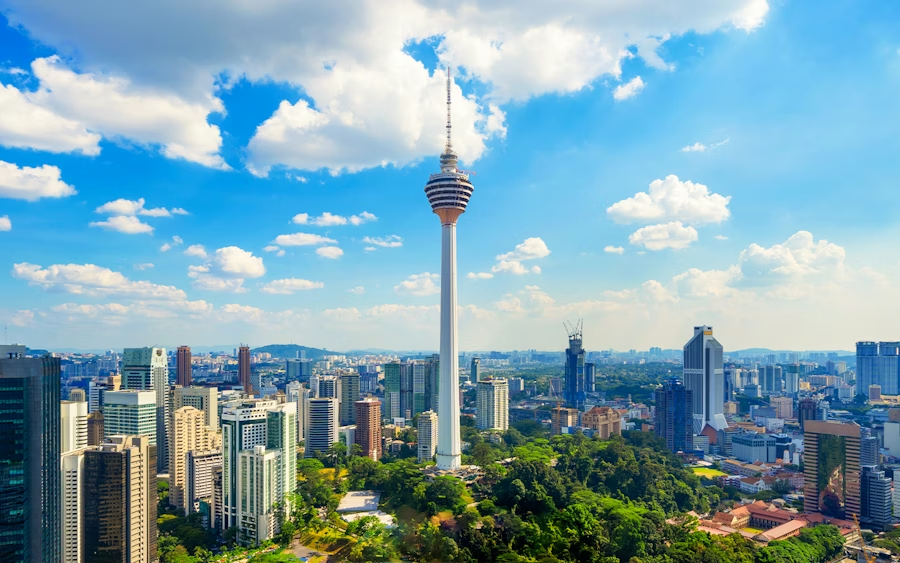
KL Tower stands 421 metres tall — the seventh tallest telecommunications tower in the world — and offers one of the most accessible panoramic views of Kuala Lumpur. Unlike the Petronas Twin Towers observation deck, which often requires advance bookings during peak periods, KL Tower tickets are usually available on the same day.
The standard Observation Deck at 276 metres provides a full 360-degree view of the city. The SkyBox — a glass-floored suspended pod extending outward from the tower — has become one of the city's most photographed attractions.
For visitors who wish to combine dining with the view, the ORBIT revolving restaurant completes a full rotation in approximately 56 minutes.
Getting there is straightforward, with a 10-minute walk from Dang Wangi LRT station. The tower is surrounded by the Bukit Nanas Forest Reserve, where Malaysia's oldest protected forest sits in the centre of a capital city. The short nature walk through the reserve to the tower entrance is worth including in the visit.
Batu Caves — The Cultural Landmark 13km from the City
Located 13km north of Kuala Lumpur city centre, Batu Caves is a limestone hill complex containing Hindu temples and cave formations estimated to be more than 400 million years old.
The site attracts approximately 1.5 million visitors annually and hosts the Thaipusam festival — one of the world's largest Hindu celebrations — each January.
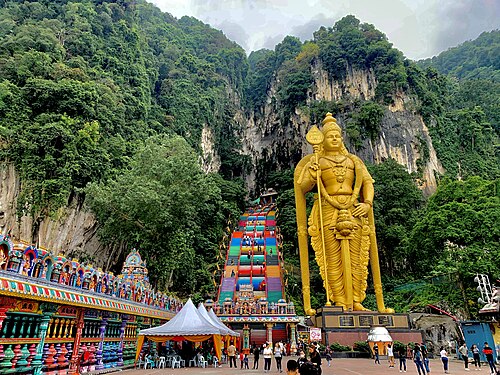
Entry to the main Temple Cave is free. The 272-step climb leads visitors through a vast cave opening that feels worlds apart from the heat and bustle below.
The 43-metre golden statue of Lord Murugan at the base is among the tallest statues in Malaysia and can be seen clearly from the KTM Komuter platform at Batu Caves station.
Genting SkyWorlds — A Full-Day Escape into the Clouds
For travellers seeking a cooler and more expansive experience beyond the city, Genting SkyWorlds Theme Park sits 2,000 metres above sea level in Genting Highlands, approximately 50km from Kuala Lumpur city centre.
The park spans seven themed zones, including Epic Zone, Andromeda Base, Ice Age and Minion Land, featuring more than 25 rides and attractions. At this elevation, temperatures average between 15°C and 25°C year-round, providing a welcome contrast to Kuala Lumpur's typical 32°C to 34°C heat.
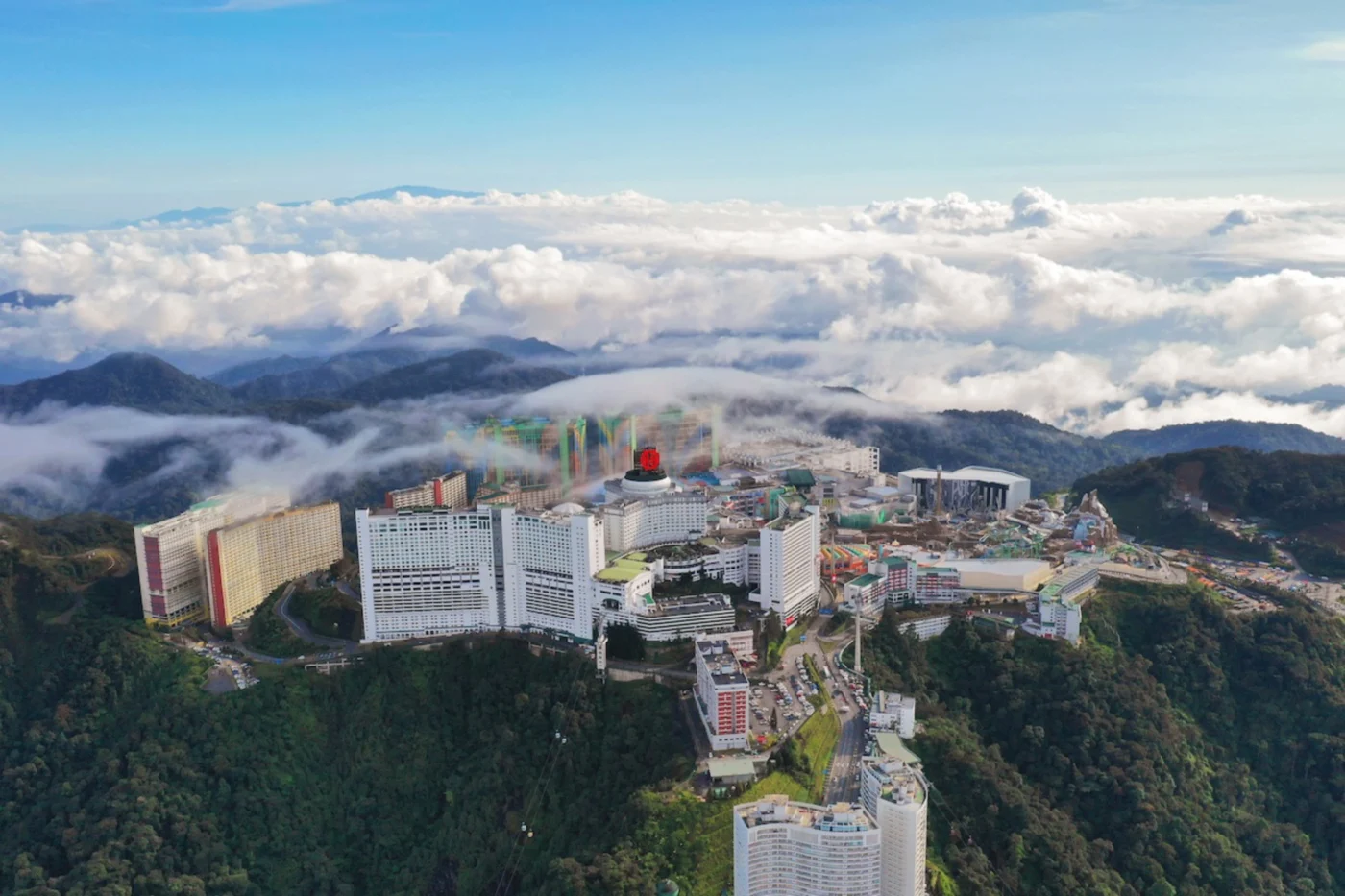
Most visitors combine Genting SkyWorlds with SkyAvenue, Chin Swee Caves Temple and the Awana SkyWay cable car, which stretches 3.38km across spectacular highland scenery, creating a full-day itinerary.
How the Platform Connects the Journey and the Destination
The most significant shift in how Kuala Lumpur is being planned is not centred on a single attraction or ticket price. It is the reduction of friction between getting there and deciding what to do upon arrival.
A traveller booking the SG-to-KL bus through redBus can continue directly into attraction planning within the same session — using the same platform, account and checkout process. There is no need to switch apps, re-enter payment details or keep track of multiple confirmation emails.
This matters particularly for short trips, where every hour spent planning before departure is an hour that could otherwise be spent exploring.

A traveller departing on Saturday morning and returning on Sunday evening has roughly 36 hours in Kuala Lumpur. Having Aquaria KLCC, KL Tower and a Batu Caves half-day tour booked in advance means those 36 hours can be spent experiencing the city rather than debating where to go.
KL Beyond the Petronas Twin Towers — What Travellers Are Actually Booking
The Petronas Twin Towers will always be iconic, but Kuala Lumpur is far more than a single skyline photograph.
Malaysia's tourism growth in 2025 suggests a city being discovered in layers — by first-time visitors who arrive for the towers and return for the caves, the food, the culture and the highlands.
Some practical combinations that continue to prove popular include:
● Half-day culture: Batu Caves in the morning followed by KL Tower at sunset
● Full family day: Aquaria KLCC, KLCC Park fountain show and dinner at Pavilion Kuala Lumpur
● Full highland day: Genting SkyWorlds, SkyAvenue, Chin Swee Caves Temple and the Awana SkyWay
● City overview: KL Hop-On Hop-Off Bus on the first day, followed by targeted visits based on personal interests
Best Time to Visit Each Attraction
| Attraction | Best Time | Why |
|---|---|---|
| Aquaria KLCC | Weekday afternoon | Less crowded; school groups typically visit in the mornings |
| KL Tower | Sunset (5.30pm–7.00pm) | Golden-hour city views before the skyline lights up |
| Batu Caves | Before 9.00am | Avoid the midday heat during the 272-step climb |
| KL Hop-On Hop-Off Bus | First morning of arrival | Helps visitors orient themselves before selecting attractions |
| Genting SkyWorlds | Full day (arrive by 10.00am) | More than 25 attractions require sufficient time to enjoy |
Why This Matters for the Modern KL Traveller
Malaysia's 14.5% tourism growth in 2025 and its Visit Malaysia 2026 target of 47 million visitors are not achievements that happen by accident.
They reflect sustained investment in making the country easier to visit through better transport infrastructure, more online booking options and a growing ecosystem of platforms that connect the journey with the experiences waiting at the destination.
Kuala Lumpur has never been a difficult city to explore. It offers efficient public transport, walkable clusters of attractions and some of Southeast Asia's most affordable food and leisure experiences. What makes it even easier today is arriving with the planning already done. - DagangNews.com
Layari kami terus di DagangNews.com

Orang ramai dipelawa menghantar artikel ke ruangan PARAFRASA di [email protected] mengikut ketetapan berikut:
1. Berbentuk analisis peribadi (Op-Ed) mengenai sesuatu isu atau topik, bukan plagiat
2. Topik yang mendapat perhatian segera dan utama ialah
a. berkaitan perniagaan, perdagangan, keusahawanan, pelaburan
b. Ekonomi MADANI
c. Pembangunan ekonomi negara dan negeri khusus
d. Sektor industri khusus seperti minyak sawit, getah, penerbangan, minyak dan gas
e. ESG
f. Hak pekerja, hak majikan, hak asasi manusia
3. Sains & Teknologi
a. Penemuan penyelidikan Sains & Teknologi serta teori dan konsep
b. Langkah mengkomersialkan produk berasaskan R&D
4. Kaedah penulisan
a) Sebaiknya seorang penulis sahaja pada penama.
b) Berbahasa Malaysia
c) Bahasa Inggeris diterima tetapi akan diterjemah ke Bahasa Malaysia
d) Editor akan memutuskan jika mahu mengekalkan Bahasa Inggeris
e) Tidak melebihi 1,000 patah perkataan dan tidak kurang daripada 600.
f) Jika disertakan gambar, juga amat digalakkan tetapi jangan guna Google (elak langgar hakcipta)
5. Hantar HANYA kepada DagangNews.com
a) Jika didapati artikel sama disiarkan di media lain kerana penulis menghantar merata-rata, nama penulis akan disenaraihitamkan.
b) Sila kemukakan Nama sebenar, Cadangan nama siaran dan emel untuk dihubungi (untuk rekod).