
KUALA LUMPUR 15 Aug – U.S. President Donald Trump has set in motion his long-promised “reciprocal” tariff regime, a sweeping trade measure that came into effect on 7 August 2025.
The policy, which pegs U.S. import duties to match those imposed on American goods by other countries, has pushed the average U.S. tariff level to around 20% — the highest in a century — and is already shaking the foundations of global commerce.
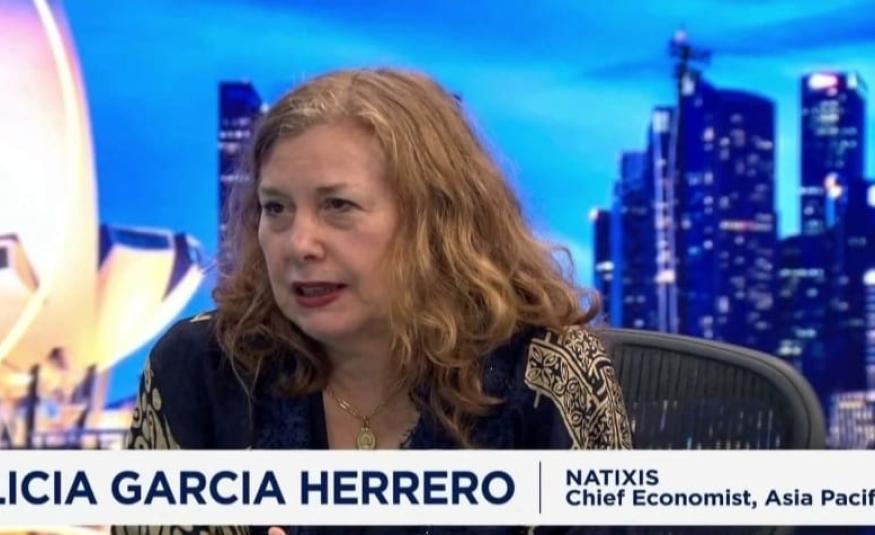
Alicia García-Herrero, Chief Economist for Asia-Pacific at French investment bank Natixis, senior fellow at Brussels-based think tank Bruegel, and non-resident senior fellow at the East Asian Institute, National University of Singapore, warns that the impact will be profound and lasting.
“The first impact on trade will be huge,” she told DagangNews.com.
“Trade will slow down because big countries will integrate production vertically inside their countries — this is the U.S., China, and increasingly even the European Union within the EU. This is going to be really costly for countries like Singapore. There are many in Asia… Vietnam, Thailand, Malaysia — it’s really a huge blow for them.”
She said the measure would speed up the “bifurcation” of global supply chains. “The U.S. will create a U.S.-centric supply chain and that’s going to happen, no doubt. So basically, we will have two major supply chains — potentially even one within Europe.”
Global growth slowdown ahead
García-Herrero warned that the tariffs will be “very negative” for the world economy. “Expect the deceleration in global growth down the road, especially if tariffs remain so high… which they will — at least an average of 20%, which is huge. And especially if other countries retaliate by imposing tariffs among each other.”
She noted that ASEAN’s position is especially vulnerable because it cannot sign a trade deal with the U.S. “That’s why we had Indonesia recently sign with Europe, and we should expect more.
But that doesn’t solve the problem of the U.S. market,” she said, adding that: “We should see ASEAN countries really losing their largest export market, because the U.S. is larger than China or ASEAN itself.”
Malaysia’s high-tech exposure
On Malaysia, she highlighted the semiconductor sector as a key concern. “Malaysia is going to be hit by only 19% because of the 100% tariff on semiconductors. This is hugely important for Malaysia,” she said, warning that the country’s 2025 ASEAN chairmanship will do little to sway Washington.
“The U.S. doesn’t really care about ASEAN chairmanship. The fact that (Prime Minister Datuk Seri) Anwar (Ibrahim) tried to unite positions against Trump when the threats of tariffs started will make things even harder for Malaysia.”
A lasting reshuffle
García-Herrero, who recently published an op-ed in Caixin Global, believes these measures will permanently reshape trade patterns.
“Trade flows will be permanently redesigned, reshuffled. There will be a kind of Western hemisphere — potentially with Europe — type of supply chain, and they will have an Asian one.
"But for ASEAN, this is a problem because China is not a large importer, it’s a large exporter. ASEAN will face humongous competition from China and overcapacity from China, and it will not necessarily manage to export a lot to China, because China will integrate the supply chain.”
Her bottom line is clear: the reciprocal tariff regime is not just a short-term policy shock but a structural shift that could redefine ASEAN’s role in the global economy for decades to come. - DagangNews.com
Layari kami terus di DagangNews.com

Orang ramai dipelawa menghantar artikel ke ruangan PARAFRASA di [email protected] mengikut ketetapan berikut:
1. Berbentuk analisis peribadi (Op-Ed) mengenai sesuatu isu atau topik, bukan plagiat
2. Topik yang mendapat perhatian segera dan utama ialah
a. berkaitan perniagaan, perdagangan, keusahawanan, pelaburan
b. Ekonomi MADANI
c. Pembangunan ekonomi negara dan negeri khusus
d. Sektor industri khusus seperti minyak sawit, getah, penerbangan, minyak dan gas
e. ESG
f. Hak pekerja, hak majikan, hak asasi manusia
3. Sains & Teknologi
a. Penemuan penyelidikan Sains & Teknologi serta teori dan konsep
b. Langkah mengkomersialkan produk berasaskan R&D
4. Kaedah penulisan
a) Sebaiknya seorang penulis sahaja pada penama.
b) Berbahasa Malaysia
c) Bahasa Inggeris diterima tetapi akan diterjemah ke Bahasa Malaysia
d) Editor akan memutuskan jika mahu mengekalkan Bahasa Inggeris
e) Tidak melebihi 1,000 patah perkataan dan tidak kurang daripada 600.
f) Jika disertakan gambar, juga amat digalakkan tetapi jangan guna Google (elak langgar hakcipta)
5. Hantar HANYA kepada DagangNews.com
a) Jika didapati artikel sama disiarkan di media lain kerana penulis menghantar merata-rata, nama penulis akan disenaraihitamkan.
b) Sila kemukakan Nama sebenar, Cadangan nama siaran dan emel untuk dihubungi (untuk rekod).