
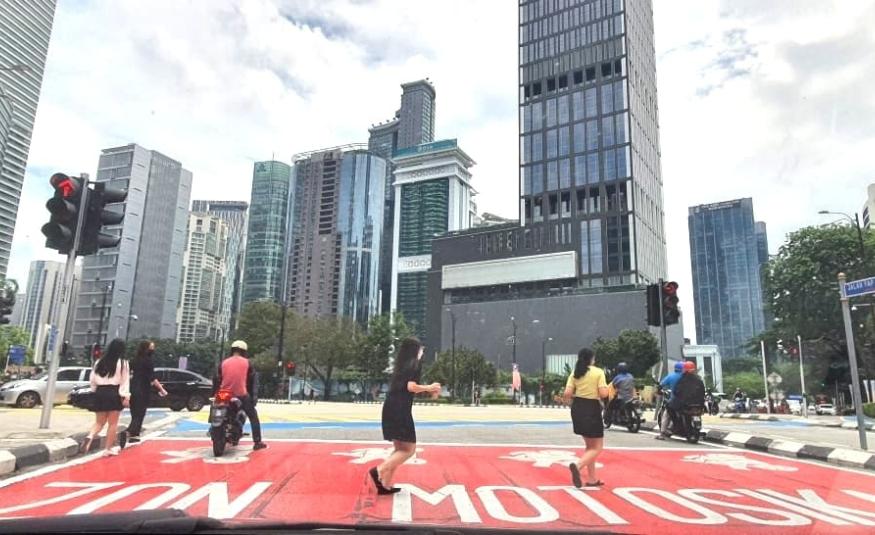
There’s a paradox unfolding in Malaysia right now—its economy is growing, but the jobs are not. Or at least, not the kind of jobs that make young graduates stay, build families, and innovate.
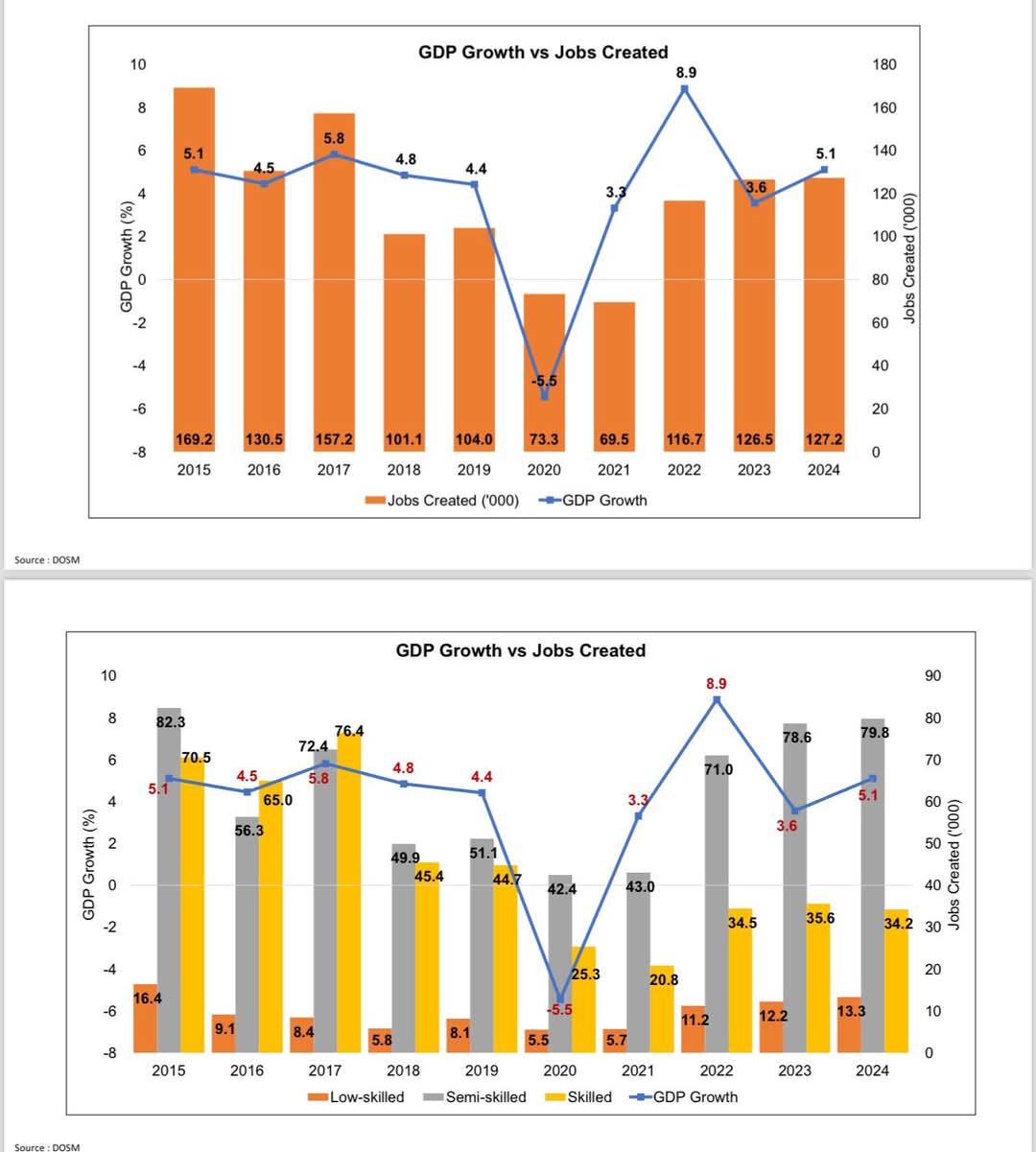
Malaysia’s GDP is back on a solid growth path, climbing out from the pandemic pit with a dramatic 8.9% in 2022 and projected 5.1% in 2024.
But job creation? It’s stuck in neutral.
The number of jobs added each year has barely moved since before COVID-19. Worse, a disproportionate share of those jobs are low- and semi-skilled. In other words, Malaysia is revving its engine—but the wheels are spinning.
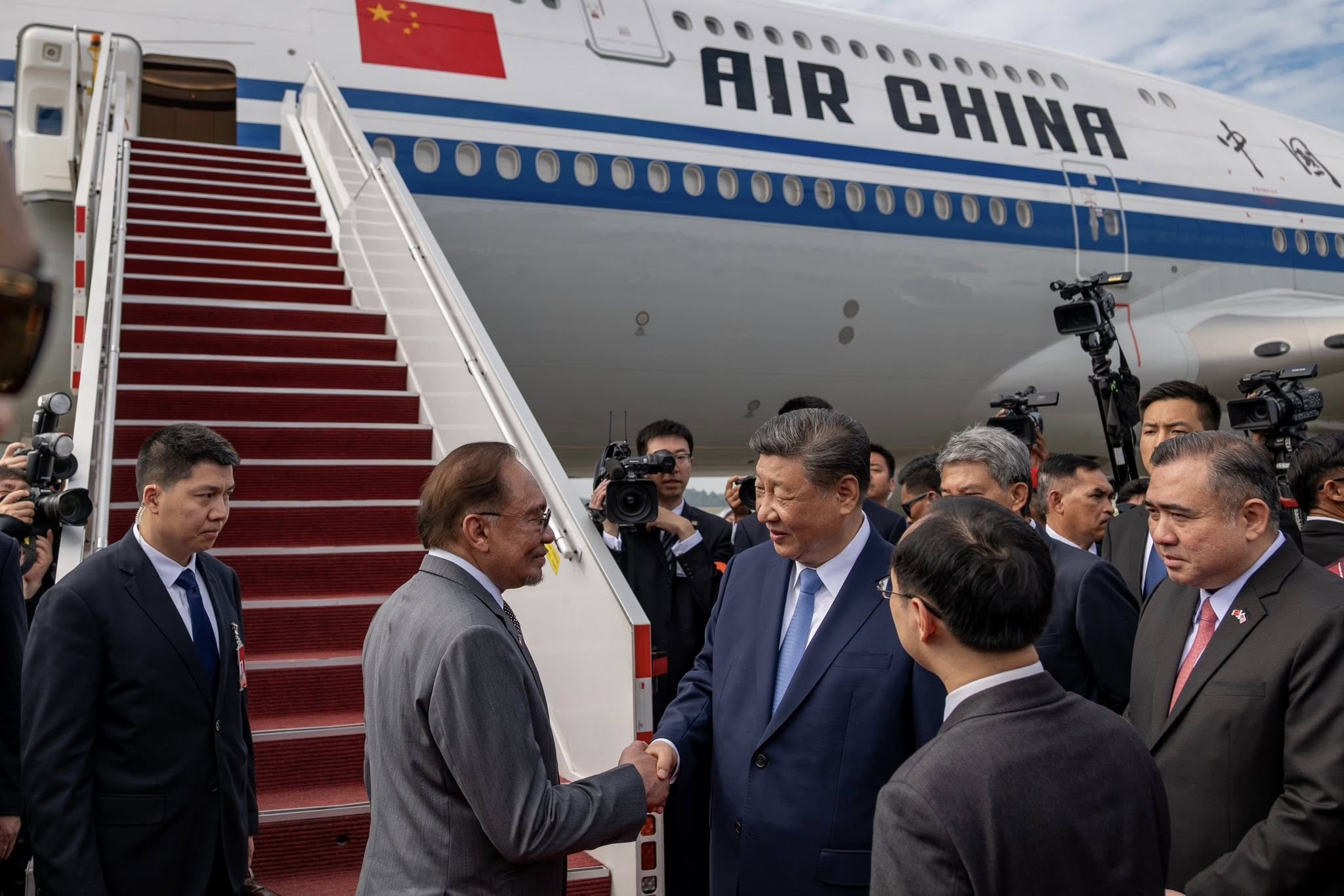
And then, there’s Xi Jinping’s state visit. It could not be more symbolically or strategically timed.
With the United States raising the tariff walls even higher around Chinese goods, China is looking for new lanes—and Malaysia could become one.
But here’s the thing: Xi’s visit should not be seen as just another round of economic courtship. It’s a stress test for Malaysia’s readiness to reposition itself in a world that is rapidly bifurcating between spheres of economic influence.
Let’s be clear: Malaysia doesn’t need to replace China’s US$500 billion in exports to the U.S. Nor should it become a mere backdoor for Chinese goods to dodge tariffs. That’s a race to the bottom.
What Malaysia can be—and must be—is a strategic value-adder.
A place where Chinese components are not just assembled, but improved. A location where R&D is done, certifications are issued, packaging is localized for Islamic and ASEAN markets, and software gets written to make hardware smarter.
The Western critique that Malaysia cannot absorb China’s export overflow often comes from a deeply outdated view of global trade—one that treats products as static goods rather than evolving platforms.
The modern supply chain is not linear; it’s modular, iterative, and adaptive. Malaysia doesn’t need to absorb the whole trade volume.
It just needs to plug itself into the right nodes—customization, final assembly, advanced testing, precision engineering, green tech—so that it becomes indispensable in the next chapter of global manufacturing.
Xi’s visit brought more than fanfare. If handled right, it could catalyze:
- Joint ventures in semiconductors, electric vehicles, battery tech, and AI manufacturing.
- Chinese R&D centers being planted in Cyberjaya or Penang, giving local engineers a seat at the table.
- Revived Belt and Road projects—but with a smarter twist: not vanity infrastructure, but ports, logistics hubs, and digital corridors that align with ASEAN’s own supply chain integration goals.
But all of this hinges on one inconvenient truth: Malaysia can no longer afford to grow the wrong way.
The charts from the Department of Statistics tell us all we need to know—skilled job creation has barely budged, even in years when growth soared.
In 2022, just 11,200 skilled jobs were created out of 71,000 total. That’s less than 16%. In a country producing thousands of university graduates every year, that’s a recipe for brain drain, wage stagnation, and social frustration.
This disconnect between GDP and real jobs is a warning flare. Malaysia risks becoming a “pass-through” economy—goods come in, goods go out, and value is captured elsewhere. That is not a development model. That’s a holding pattern.
What Malaysia needs is alignment.
Xi’s visit must sync with national goals like the New Industrial Master Plan 2030, the 12th Malaysia Plan, and the Madani Economic Framework.
These frameworks emphasize high-value investments, sustainability, and digital transformation. Malaysia’s challenge is not lack of vision. It’s execution. It’s connecting the dots between investment, skills, and local value capture.
And this is where the China relationship becomes both an opportunity and a test. Malaysia must use this moment to demand more than capital. It must demand capacity building, technology transfer, and serious employment generation in return.
That means structuring joint ventures to protect local interests. It means insisting on Malaysian engineers in the boardroom, not just in the factory floor. It means upskilling local SMEs and integrating them into global supply chains—not leaving them on the sidelines while big players shake hands.
This is Malaysia’s geo-economic balancing act. Play this right, and it becomes a neutral but strategic node in both China’s Dual Circulation Strategy and the West’s China+1 pivot.
Play it wrong, and it becomes a glorified transshipment hub, forever reliant on someone else’s innovation, someone else’s market access, someone else’s future.
Here’s the final truth: Xi’s visit should be transformative—but only if Malaysia has the courage to ask for more, to think longer, and to demand better.
That means not just growing the economy, but growing it in a way that creates good jobs, decent wages, and real opportunities for Malaysians—not just for Chinese exporters or foreign investors.
Because in today’s world, value creation is sovereignty. And the most strategic thing Malaysia can do right now is simple: make itself valuable. - DagangNews.com
Samirul Ariff Othman is an adjunct lecturer at Universiti Teknologi Petronas, international relations analyst and a senior consultant with Global Asia Consulting. The views in this OpEd piece are entirely his own.
Layari kami terus di DagangNews.com

Orang ramai dipelawa menghantar artikel ke ruangan PARAFRASA di [email protected] mengikut ketetapan berikut:
1. Berbentuk analisis peribadi (Op-Ed) mengenai sesuatu isu atau topik, bukan plagiat
2. Topik yang mendapat perhatian segera dan utama ialah
a. berkaitan perniagaan, perdagangan, keusahawanan, pelaburan
b. Ekonomi MADANI
c. Pembangunan ekonomi negara dan negeri khusus
d. Sektor industri khusus seperti minyak sawit, getah, penerbangan, minyak dan gas
e. ESG
f. Hak pekerja, hak majikan, hak asasi manusia
3. Sains & Teknologi
a. Penemuan penyelidikan Sains & Teknologi serta teori dan konsep
b. Langkah mengkomersialkan produk berasaskan R&D
4. Kaedah penulisan
a) Sebaiknya seorang penulis sahaja pada penama.
b) Berbahasa Malaysia
c) Bahasa Inggeris diterima tetapi akan diterjemah ke Bahasa Malaysia
d) Editor akan memutuskan jika mahu mengekalkan Bahasa Inggeris
e) Tidak melebihi 1,000 patah perkataan dan tidak kurang daripada 600.
f) Jika disertakan gambar, juga amat digalakkan tetapi jangan guna Google (elak langgar hakcipta)
5. Hantar HANYA kepada DagangNews.com
a) Jika didapati artikel sama disiarkan di media lain kerana penulis menghantar merata-rata, nama penulis akan disenaraihitamkan.
b) Sila kemukakan Nama sebenar, Cadangan nama siaran dan emel untuk dihubungi (untuk rekod).