
WEEKLY MARKET ANALYSIS BY MANOKARAN MOTTAIN
THE benchmark KLCI Index largely traded range bound over the past week and ended marginally lower at 1,453.55 points (-3.25 points or -0.22%) due to lackluster corporate results and investors increasingly taking a risk-off approach towards trading given the lack of positive market moving catalysts.
Expectations of an interest rate pivot by the 4th quarter of the year has also been evaporating due to the unexpected strength of inflation. The average daily value traded rose 8.2% on a weekly basis to RM2.36 billion per day from RM2.18 billion per day in the week before but this was due to the exceptional trading volume on 28 February 2023 (at RM3.95 billion) due to month end portfolio rebalancing exercises.
Trading value from March 2023 onwards gradually declined to levels below the past 100-day average daily trading value of RM2.04 billion per day.
In the bond market, US bond yields continued their rally after the latest comments from members of the US Federal Reserve all pointed to the need further interest rate hikes in the coming FOMC meetings due to the stronger than expected inflationary pressures.
Yields of US Treasuries continue to rise across the board for the second consecutive week due to rising expectations of continued rate hikes by the US Federal Reserve. The 10-year US Treasury (UST) yields briefly spiked past 4.00% before settling back to end the week at 3.96% from 3.94% in the previous week. This increased the total yield gains over the past 27 weeks to 92 basis points.
The UST 2-year yields also correspondingly rose to their highest levels since July 2007 when it closed up 5 basis points to 4.86% from last Friday’s close of 4.81%.
The yield curve inversion between the UST 2-year and 10-year notes entered into its 34th consecutive week with yield spreads widening further by 3 basis point to -90 points from -87 basis points last week. The long-term average of the yield spread for both UST is +0.92% or +92 basis points.
MGS bond yields rose as selling pressure intensified last week due to the negative carry against the US Treasuries. The 10-year MGS bond yields rose by 8 basis points to 4.01% last Friday to bring the yield spreads between both countries’ 10-year bonds to just 5 basis points from negative one basis point last week.

ECONOMICS
The Producer Price Index (PPI) for local production expanded by 1.3% year-on-year (y-o-y) in January 2023 from 3.5% y-o-y in December 2022. The slower PPI reading was due to contractions in the agriculture, forestry & fishing (-20.9%) and the mining (-2.2%) sectors.
However, the PPI readings in the manufacturing and electricity & gas supply sectors grew by 4.5% and 1.2% respectively.
Moody’s Investors Service had maintained a stable outlook on 13 banking systems in Asia Pacific (including Malaysia). The credit rating agency disclosed that Malaysia’s banking system outlook remained stable underpinned by strong economic growth and robust credit metrics across the system.
The banking system’s ample loan-loss buffers and other measures will mitigate asset risks from weak borrowers.
Fitch Solutions Country Risk and Industry Research expects the global palm oil market to produce a small deficit of 100,000 tons in both 2022 and 2023 due to an increase in the Indonesian biofuel blending mandate.
Indonesia’s total domestic palm oil consumption is expected to rise from 17.8 million to almost 20 million tons due to the increase in their biofuel blending mandate from 30% to 35% starting from February 2023. It added that it is maintaining its palm oil price forecast of RM3,800 and RM3,400 per ton for 2023 and 2024 respectively albeit with upside risks.
CURRENCY
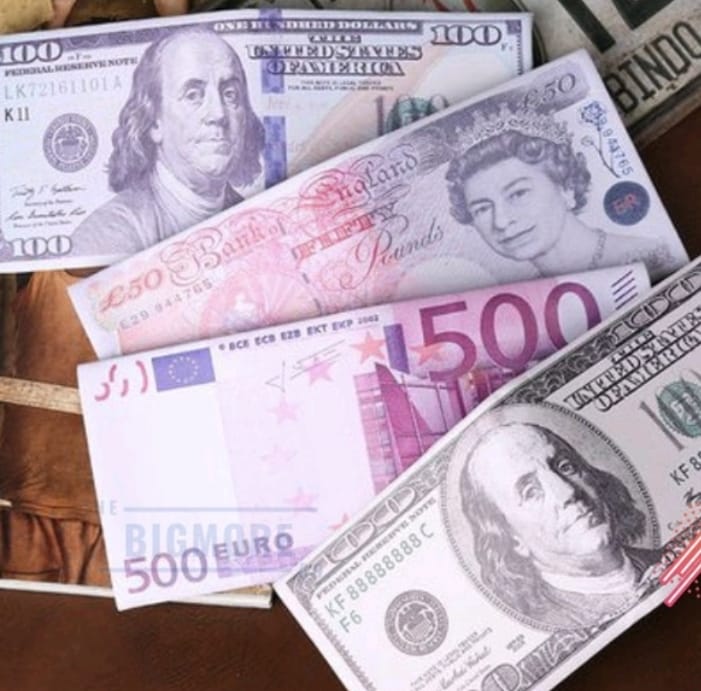
The Ringgit continued its recent decline against the US Dollar over the past week primarily due to the sell-off in both the equity and fixed income markets due to month end portfolio rebalancing exercises by the foreign fund managers.
Hence the Ringgit’s movements for the coming week is likely to remain range bound until the next Federal Open Market Committee (FOMC) meeting in 21-22 March 2023. The local currency ended the week at RM4.4755 / USD1.00 (+4.25sen) against the US Dollar.
The local currency also weakened against all of the other major currencies as well as it closed lower against the Japanese Yen RM3.2810 / JPY100 (+0.5sen), the Singapore Dollar at RM3.3254 / SGD1.00 (+2.85sen), the Euro at RM 4.7507 / EUR1.00 (+5.56sen) and the British Pound at RM5.3695 / GBP1.00 (+3.63sen).
MY OPINION
Unsurprisingly, the overall market was listless over the past week given the lackluster corporate results for 4Q2022. I am maintaining my view that the local stock market will be range bound in a +/-15 point range for the coming week as the trading activity started to ease off from Wednesday onwards.
As expected, the yields of the 10-year MGS yields rose due to their negative carry against the 10-year US Treasury Bills which carry a much higher sovereign rating. Nevertheless, the MGS bond yields still remain vulnerable to another sell off in the coming weeks as their yields are only just marginally higher than the US Treasury Bills despite last week’s rise.
With the US Federal Reserve expected to continue raising interest rates by another 50 basis points to 5.0% by the middle of the year and possibly even further if inflation is not brought down, I am of the view that the local MGS yields can potentially rise further to the 4.20% level in the coming weeks.
The Ringgit’s volatility rose last week due to portfolio fund flows. Going forward, I am adjusting my forecast for the Ringgit trading band between RM4.42 and RM4.52 against the US Dollar in the coming week to factor in last week’s movement.
The only catalyst that can cause the Ringgit to breach the RM4.50 level next week would be the continued selling in the fixed income market. - DagangNews.com
Manokaran Mottain has been an economist with a number of financial institutions and is now managing his own firm, Rising Success Consultancy Sdn Bhd and has been writing his economic analysis on a weekly basis in DagangNews.com since 2022.
Layari kami terus di DagangNews.com

Orang ramai dipelawa menghantar artikel ke ruangan PARAFRASA di [email protected] mengikut ketetapan berikut:
1. Berbentuk analisis peribadi (Op-Ed) mengenai sesuatu isu atau topik, bukan plagiat
2. Topik yang mendapat perhatian segera dan utama ialah
a. berkaitan perniagaan, perdagangan, keusahawanan, pelaburan
b. Ekonomi MADANI
c. Pembangunan ekonomi negara dan negeri khusus
d. Sektor industri khusus seperti minyak sawit, getah, penerbangan, minyak dan gas
e. ESG
f. Hak pekerja, hak majikan, hak asasi manusia
3. Sains & Teknologi
a. Penemuan penyelidikan Sains & Teknologi serta teori dan konsep
b. Langkah mengkomersialkan produk berasaskan R&D
4. Kaedah penulisan
a) Sebaiknya seorang penulis sahaja pada penama.
b) Berbahasa Malaysia
c) Bahasa Inggeris diterima tetapi akan diterjemah ke Bahasa Malaysia
d) Editor akan memutuskan jika mahu mengekalkan Bahasa Inggeris
e) Tidak melebihi 1,000 patah perkataan dan tidak kurang daripada 600.
f) Jika disertakan gambar, juga amat digalakkan tetapi jangan guna Google (elak langgar hakcipta)
5. Hantar HANYA kepada DagangNews.com
a) Jika didapati artikel sama disiarkan di media lain kerana penulis menghantar merata-rata, nama penulis akan disenaraihitamkan.
b) Sila kemukakan Nama sebenar, Cadangan nama siaran dan emel untuk dihubungi (untuk rekod).