

WEEKLY ECONOMIC ANALYSIS BY MANOKARAN MOTTAIN
MARKET
The local stock market continues to slide lower on weaker sentiment and a continued sell down by foreign fund managers. In addition, the corporate results for 1Q2023 from companies that have released their results have so far been lackluster and further contributed to the market’s weakness.
The benchmark KLCI Index ended the week lower at 1,402.98 points (-25.56 points or -1.79%). Trading value improved by 11% on a week-on-week basis to RM1.81 billion per day from RM1.63 billion per day last week thanks to a spike in trading activities last Friday. The overall trading value remains 7.6% below the past 100-day average daily trading value of RM1.96 billion per day.
In the bond market, US bond yields continued to rise as the bond investors price in the potential risk of another interest rate hike at the next Federal Open Market Committee (FOMC) meeting in June 2023 as the minutes from the latest FOMC meeting indicated that the members remain split on the views as to whether inflation has slowed down sufficiently to warrant a pause on raising interest rates.
Meanwhile inflationary pressures remain robust as the personal consumption expenditure price index for April 2023 rose 0.4% of a monthly basis and 4.7% on a yearly basis. Both numbers came in above economists’ expectations. This is one of the US Federal Reserve’s key economic gauges on inflation.
The 10-year US Treasury (UST) yields rose by 13 basis points to 3.81% from 3.68% in the previous week and this widened the total yield gains over the past 52 weeks to 107 basis points.
The UST 2-year yields spiked by a massive 30 basis points to 4.57% from last Friday’s close of 4.27% due to concerns over the progress of the debt ceiling negotiations and another potential rate hike. This continues the yield curve inversion between the UST 2-year and 10-year notes into its 46th consecutive week with the yield spreads widening further to -76 basis points from -59 basis points last week.
The 10-year MGS bond yield remained unchanged for the week at 3.76% last Friday. The yield spreads between both countries’ 10-year bonds have now reverted into negative territory at minus five (-5) basis points from +8 basis points last week.

ECONOMICS
Bank Negara Malaysia (BNM) disclosed that its international reserves has increased to US$114.7 billion (US$1=RM4.53) as at 15 May 2023 from US$114.4 billion as at 28 April 2023. The reserves position is sufficient to finance 4.9 months of imports of goods and services and is 1.0x the total short-term external debt. The main components of the international reserves were foreign currency reserves (US$102.1 billion), International Monetary Fund reserves position (US$1.4 billion), Special Drawing Rights (US$5.8 billion), gold (US$2.5 billion), and other reserve assets (US$2.9 billion).
BMI, a unit of Fitch Solutions is projecting that the average Crude Palm Oil (CPO) third-month futures prices will trade at a mean value of RM3,800 per tonne in 2023 which is a 22.6% discount to 2022 prices. The 2023 Year-To-Date prices have averaged RM3,872 per tonne and risks in the immediate term outlook are weighted towards the downside amid soft import demand from China and India as well as expectations that the global soybean harvest in 2023/2024 that is expected to reach record highs. However, BMI also added that the expected onset of El-Niño conditions during second half of 2023 would be an upside risk to their price forecast as the last major El-Niño resulted in a 6% year-on-year (y-o-y) fall in palm oil output from Indonesia and Malaysia in 2015/16. For 2024, BMI is forecasting the average CPO benchmark price to ease to RM3,400 per tonne.
Malaysia’s Consumer Price Index (CPI) for April 2023 increased 3.3% y-o-y to 130.0 from 125.9 in April 2022. The increase was primarily driven by the restaurants and hotels segment (+6.6%) and food and non-alcoholic beverages segment (+6.3%). The prices in other sectors also rose such as the furnishings, household equipment and routine household maintenance (+3.0%), miscellaneous goods and services (+2.5%), transport (+2.3%), health (+2.1%), recreation services and culture (+1.8%), the housing, water, electricity, gas & other fuels (+1.6%) and education (+1.6%). The food and non-alcoholic beverages segment contributed 29.5% of total CPI. The food at home component moderated to 5.0% in April 2023 from 5.6% in the previous month while the food away from home also recorded a slower rise of 8.1% against March 2023’s 8.6%. Core inflation (which measures changes in the prices of all goods and services but excludes prices of fresh food as well as administered prices of goods by the government) slowed slightly to 3.6% from 3.8% in March 2023.
CURRENCY
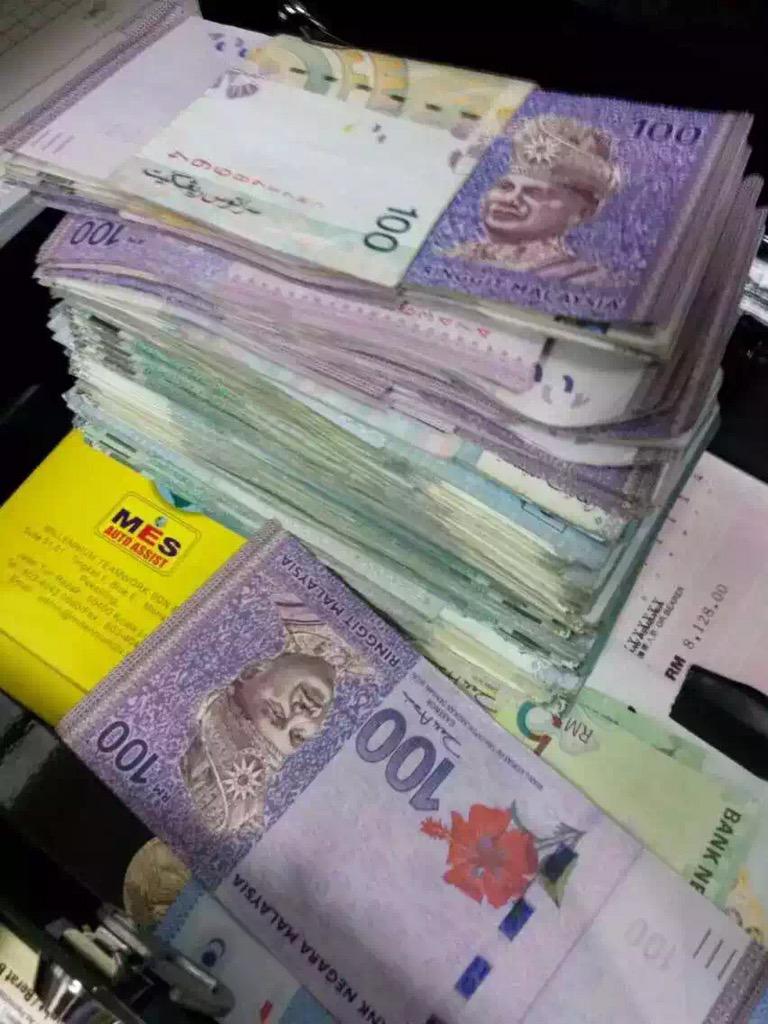
The Ringgit continued to weaken against virtually all of the major currencies for the second consecutive week with the exception of the Japanese Yen which ended unchanged at RM3.30 / JPY100. The local currency weakened against the US Dollar at RM4.5970 / USD1.00 (+6.10sen), the Singapore Dollar at RM3.4020 / SGD1.00 (+2.80sen), the British Pound at RM5.6820 / GBP1.00 (+2.60sen) and the Euro at RM4.9330 / EUR1.00 (+2.30sen).
MY OPINION
Although the local equities market fell last week, it remains within my expectations as the KLCI stayed within the 1,400 to 1,450 point range. In the coming week, there could be a rebound as I expect the US government to resolve the debt ceiling standoff which could lead to a recovery in sentiments. In addition, a large number of companies are also due to release their corporate results for 1Q2023.
Although the US bond yields continued their rise last week, the quantum of movement has slowed down. Fitch Ratings placed its US “AAA” rating on a negative watch, highlighting that the ongoing debt ceiling negotiations increases the risk of the government not meeting some of its payment obligations. However, Fitch expects a deal to be made before the 1 June 2023 deadline.
I also hold a similar view regarding the debt ceiling issue and maintain my view that the US bond markets will settle down and the 10 year UST bond yields gradually easing back to the 3.50% level after 1 June 2023. Judging from the slight negative carry of the MGS bonds against the UST 10-year bonds, I believe that the local bond managers could be having a similar view as well. If the UST 10-year yields still persist at the current level in June 2023, then it is likely the MGS yields will have to rise closer to the 4.00% level to reflect the difference in sovereign ratings.
The Ringgit remains weak as the foreign fund managers continue with their risk off strategy and move back into US Dollar assets. Nevertheless, I expect the weakness to subside once the debt ceiling issue is resolved. Given the strength of the US Dollar, I am expecting the Ringgit to trade at a revised range of between the RM4.53 - RM4.63 in the coming week. – DagangNews.com
Manokaran Mottain has been an economist with a number of financial institutions and is now managing his own firm, Rising Success Consultancy Sdn Bhd and has been writing his economic analysis on a weekly basis in DagangNews.com since 2022
CLICK HERE FOR COLLECTIONS OF MANOKARAN MOTTAIN'S ARTICLE

Layari kami terus di DagangNews.com

Orang ramai dipelawa menghantar artikel ke ruangan PARAFRASA di [email protected] mengikut ketetapan berikut:
1. Berbentuk analisis peribadi (Op-Ed) mengenai sesuatu isu atau topik, bukan plagiat
2. Topik yang mendapat perhatian segera dan utama ialah
a. berkaitan perniagaan, perdagangan, keusahawanan, pelaburan
b. Ekonomi MADANI
c. Pembangunan ekonomi negara dan negeri khusus
d. Sektor industri khusus seperti minyak sawit, getah, penerbangan, minyak dan gas
e. ESG
f. Hak pekerja, hak majikan, hak asasi manusia
3. Sains & Teknologi
a. Penemuan penyelidikan Sains & Teknologi serta teori dan konsep
b. Langkah mengkomersialkan produk berasaskan R&D
4. Kaedah penulisan
a) Sebaiknya seorang penulis sahaja pada penama.
b) Berbahasa Malaysia
c) Bahasa Inggeris diterima tetapi akan diterjemah ke Bahasa Malaysia
d) Editor akan memutuskan jika mahu mengekalkan Bahasa Inggeris
e) Tidak melebihi 1,000 patah perkataan dan tidak kurang daripada 600.
f) Jika disertakan gambar, juga amat digalakkan tetapi jangan guna Google (elak langgar hakcipta)
5. Hantar HANYA kepada DagangNews.com
a) Jika didapati artikel sama disiarkan di media lain kerana penulis menghantar merata-rata, nama penulis akan disenaraihitamkan.
b) Sila kemukakan Nama sebenar, Cadangan nama siaran dan emel untuk dihubungi (untuk rekod).