
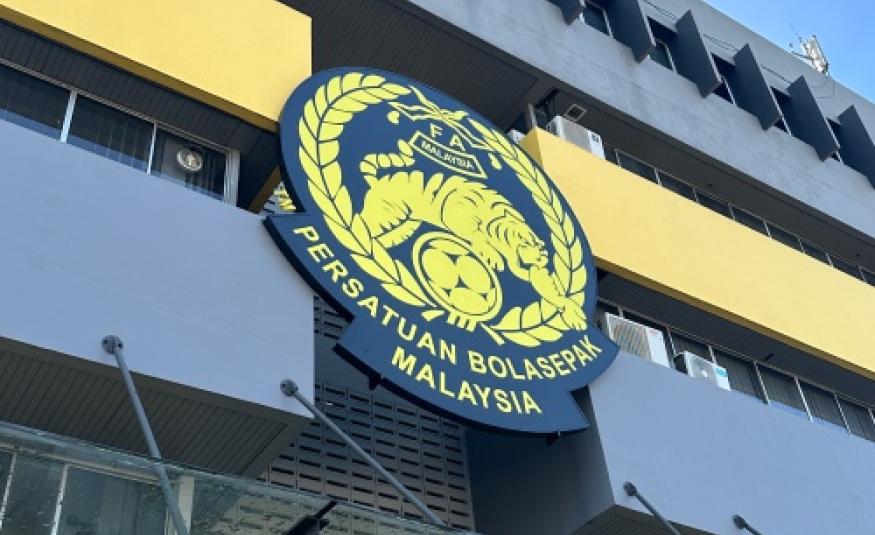
KUALA LUMPUR 24 Oct - Malaysia’s football reputation has been thrown into turmoil following the International Federation of Association Football’s (FIFA) decision to sanction the Football Association of Malaysia (FAM) and seven national players for document forgery and falsification.
The scandal, which has drawn condemnation both locally and abroad, has prompted the Center to Combat Corruption and Cronyism (C4 Center) to issue a scathing statement demanding accountability and transparency from football authorities.
On 25 September 2025, FIFA’s Disciplinary Committee announced that FAM had breached Article 22 of the FIFA Disciplinary Code, which addresses “forgery and falsification.”
According to FIFA, Malaysian officials had allegedly manipulated citizenship documentation to register several players as “heritage” athletes—claiming ancestral ties to Malaysia through their grandparents—to make them eligible for the national team.
FIFA imposed a RM1.9 million fine on FAM and RM11,000 fines plus 12-month suspensions on each of the seven players involved. The global football body stated that the actions “constituted a serious violation of integrity standards,” undermining the sport’s credibility and fair competition principles.
Public Outcry and Official Silence
In the ensuing weeks, this saga has brought Malaysia into disrepute, with outrage exhibited at both national and international levels.
Yet, despite this outrage reaching a fever pitch, the body has done little to make amends. Rather than take accountability for national humiliation and costing millions in taxpayer money, authorities have consistently shirked responsibility in the face of intense public scrutiny.
C4 Center: “An Accountability Crisis”
In a strongly worded statement released this week, the Center to Combat Corruption and Cronyism (C4 Center) condemned the lack of transparency from football authorities and government oversight bodies.
“Rather than take accountability for national humiliation and costing millions in taxpayer money, authorities have consistently shirked responsibility in the face of intense public scrutiny,” the C4 Center said. “The continued failure to do so reflects a worsening accountability crisis in Malaysia.”
C4 Center called on FAM, the Ministry of Youth and Sports, and relevant government agencies to immediately disclose findings from internal investigations, identify those responsible for the forgeries, and implement reforms to restore public confidence.
To better understand the issue, a chronology of events is presented as follows:
25 September – FIFA sanctions FAM and the seven players accused of doctoring citizenship documents
28 September – FAM Secretary General Noor Azman Rahman denies wrongdoing, claiming an FAM administrative staff had committed a “technical error”
6 October – FIFA publishes its grounds, claiming that FAM’s submissions had contradicted the original birth documents of the players’ grandparents
7 October – FAM labels FIFA’s claims “baseless”, claiming that a staff member had mistakenly uploaded documents provided by an agent instead of official documents from the National Registration Department
9 October – Home Minister Saifuddin Nasution claimed that he used discretionary powers granted under Article 20(1)(e) of the Federal Constitution to award the seven players citizenship
18 October – FAM holds its first press conference since the scandal, suspending Noor Azman Rahman pending investigation by an “independent committee”
This sequence of events raises more questions than provide answers, such as:
Who was the agent involved in submitting documents to FAM?
What documents did this agent provide that were deemed fraudulent by FIFA?
If FIFA’s findings are true, is Saifuddin culpable in approving fraudulent citizenships?
Why was Noor Azman alone made liable for the scandal?
Will Noor Azman’s removal ensure impropriety such as this will not occur again?
What guarantees are there that the investigation committee will truly be “independent” as claimed?
Why has FAM failed to publicly name the committee members?
At the very same press conference mentioned above, Chief Executive Officer of the Malaysian National Team, Rob Friend revealed the involvement of Tunku Ismail ibni Sultan Ibrahim, the Tunku Mahkota of Johor within FAM’s ongoing programme.
Calling him “the proud visionary behind this project”, Friend added that “...his role is a visionary…he has been able to convince the government to add additional funding, so that funding goes forward towards the national team in terms of professionalism.”
However, Friend went to great lengths to stress that Tunku’s involvement was “not operational” and that he “does not get into the weeds” of documentation and registration.
Whether directly involved or not, the fact that an individual outside FAM’s leadership structure possesses a level of influence so vast is highly concerning. The prevalence of external and unaccounted involvement poses extreme obstacles when attempting to identify a chain of accountability.
"In the face of this, we ask: what frameworks has FAM put in place to safeguard their decision-making from external influence? How does FAM ensure that external involvement such as this is regulated in a fair, open, and transparent manner?"
Malaysia’s persistent accountability failures
The handling of this scandal – including the inadequate response to public outcry and disregard for transparency – underscores a disturbing lack of accountability at the highest levels of the body.
In sum, FAM’s response to the scandal can be boiled down to: blaming a "technical error” on a single administrative staff, suspending their Secretary-General, and establishing a yet-to-be-named “independent committee” to investigate the matter nearly a month after the scandal first broke.
FAM has been disturbingly opaque in its statements responding to the issue. Until now, the public remains unsure if FAM even possesses proper documentation proving the Malaysian heritage of the seven players, opting to hide behind secrecy laws such as the Official Secrets Act 1972 and the Passport Act 1966.
On top of all this, Rob Friend’s statements indicate a highly involved external party, leaving accountability even further out of reach.
At each juncture, FAM has refused to take ownership of the biggest scandal in Malaysian football history. Instead, FAM has focused more on defending themselves than putting in place the necessary measures to remedy this disaster.
The question then is simple – will FAM do anything to remedy this situation both in the short-term and long-term?
Conclusion
Frustratingly, what this scandal ultimately reveals is not just an isolated failure by FAM, but a deeply ingrained problem present within Malaysian institutions.
For too long, Malaysians have laid witness to scandals that ensue in the highest public offices with little to no accountability. In the past year alone, Malaysia has been rocked by the Sabah corruption scandal, which saw over a dozen elected representatives implicated in corrupt dealings.
Despite there being publicly available footage demonstrating the accepting of bribes, not a single individual has done so much as resign over these disgraceful findings.
It must be stressed that “accountability” is more than just a tool to punish. Rather, accountability acts as a fundamental principle of good governance, ensuring that individuals entrusted with positions of power and authority are answerable for their actions, particularly when these actions create harm.
Above all else, accountability ensures that those in power are able to act responsibly, compelling them to take corrective action in instances where malfeasance has been perpetrated. Only through this can actual change be affected in our systems of governance. - DagangNews.com
Layari kami terus di DagangNews.com

Orang ramai dipelawa menghantar artikel ke ruangan PARAFRASA di [email protected] mengikut ketetapan berikut:
1. Berbentuk analisis peribadi (Op-Ed) mengenai sesuatu isu atau topik, bukan plagiat
2. Topik yang mendapat perhatian segera dan utama ialah
a. berkaitan perniagaan, perdagangan, keusahawanan, pelaburan
b. Ekonomi MADANI
c. Pembangunan ekonomi negara dan negeri khusus
d. Sektor industri khusus seperti minyak sawit, getah, penerbangan, minyak dan gas
e. ESG
f. Hak pekerja, hak majikan, hak asasi manusia
3. Sains & Teknologi
a. Penemuan penyelidikan Sains & Teknologi serta teori dan konsep
b. Langkah mengkomersialkan produk berasaskan R&D
4. Kaedah penulisan
a) Sebaiknya seorang penulis sahaja pada penama.
b) Berbahasa Malaysia
c) Bahasa Inggeris diterima tetapi akan diterjemah ke Bahasa Malaysia
d) Editor akan memutuskan jika mahu mengekalkan Bahasa Inggeris
e) Tidak melebihi 1,000 patah perkataan dan tidak kurang daripada 600.
f) Jika disertakan gambar, juga amat digalakkan tetapi jangan guna Google (elak langgar hakcipta)
5. Hantar HANYA kepada DagangNews.com
a) Jika didapati artikel sama disiarkan di media lain kerana penulis menghantar merata-rata, nama penulis akan disenaraihitamkan.
b) Sila kemukakan Nama sebenar, Cadangan nama siaran dan emel untuk dihubungi (untuk rekod).