

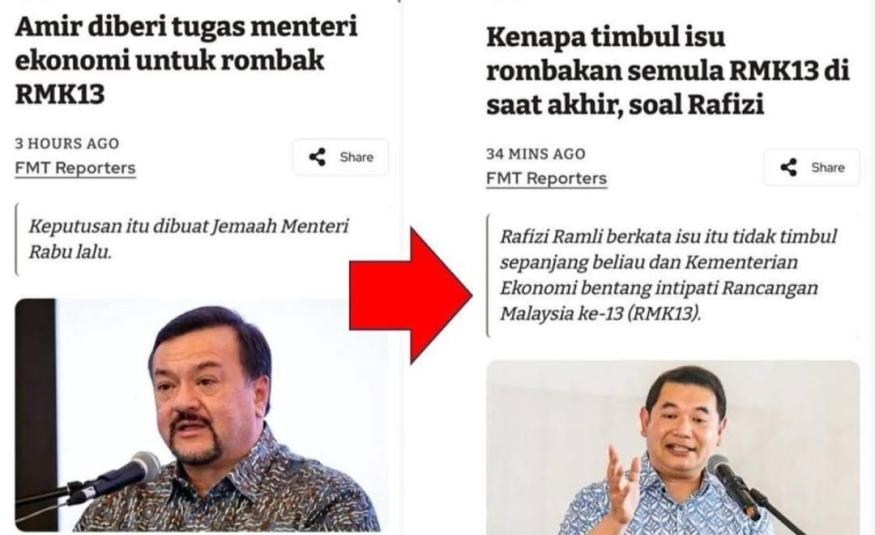
In Malaysia’s evolving post-reformasi landscape, the appointment of Rafizi Ramli as Minister of Economy is beginning to look less like a promotion and more like a masterclass in political containment.
It’s tempting to call it poetic justice—karma, even—for a man who built his career on being a whistleblower, a technocrat with spreadsheets, and a party rebel with a cause. Seated in a portfolio that sounds mighty but lacks fiscal levers and legal teeth, Rafizi is learning what it means to be placed in a box disguised as a platform.
The Ministry of Economy was crafted in the aftermath of GE15 as part of the Madani government’s institutional reshuffle, but instead of being a powerhouse, it behaves more like a high-level planning secretariat—strong in rhetoric, weak in enforcement.
Unlike the Ministry of Finance, which commands budgetary influence, or MITI, which handles trade deals and industrial zones, Rafizi’s ministry is tethered to coordination rather than execution.
If this was a trap, it was built with the subtle genius of bureaucratic ambiguity. And if there’s a strategist behind it, it’s clearly Anwar Ibrahim, who has long mastered the art of neutralising potential rivals by elevating them just enough to silence them.
Anwar, as Prime Minister, understands the fragility of a unity government better than anyone. Rafizi, with his deep grassroots pull and reformist zeal, was a wildcard in the deck —one who could either revitalise the party or split it in two.
Placing him at the helm of a ministry full of grand visions but hemmed in by overlapping jurisdictions achieves two things: it contains the threat, and it cloaks it in a technocratic halo.
It’s a tactic we’ve seen before in Malaysian politics: give the maverick a title, but starve the post of traction. And in doing so, Anwar may be clearing the runway for a different kind of successor. One with fewer sharp edges and more symbolic capital. One who fits into the global narrative of progressive Islam and inclusive governance.
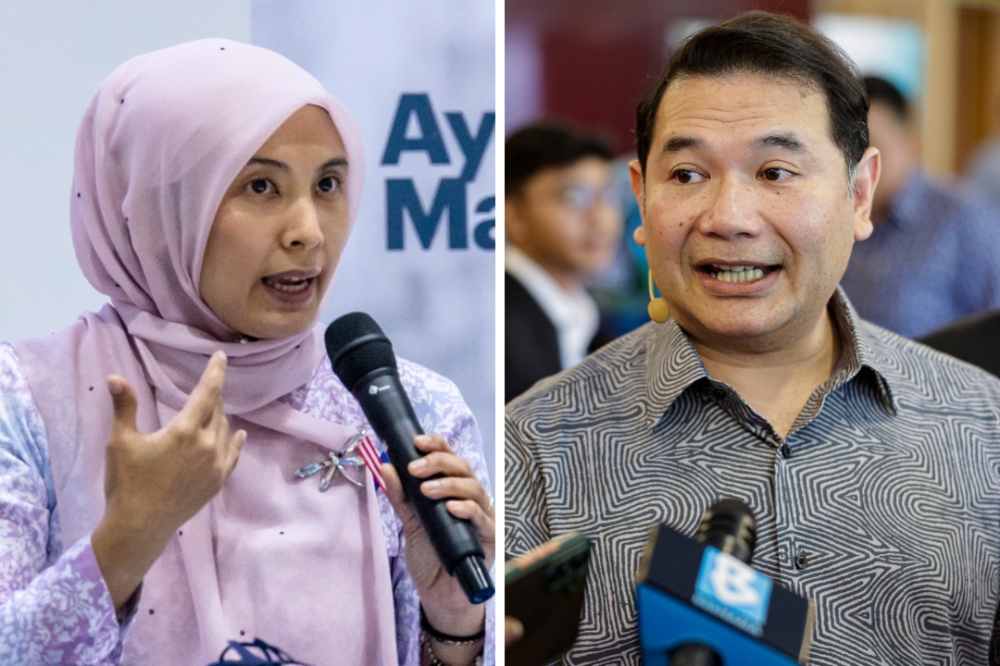
Enter the possibility of Malaysia’s first female Prime Minister—most plausibly, Nurul Izzah. She represents a gentler charisma, a dynastic continuity, and a more palatable story to both domestic moderates and foreign observers.
If Rafizi stumbles or gets tangled in under-delivery, it sets up a clean contrast: reformist energy that flamed out versus steady, statesmanlike evolution. But this drama isn’t just about individuals. It’s also about the deeper tensions within the Malay political elite.
Rafizi, a product of the boarding school meritocracy, represents the urban Malay middle class—those who are increasingly sceptical of Malaysia’s decades-old affirmative action system.
Many in this cohort feel that the NEP, originally intended to uplift rural Bumiputeras, has over time morphed into a mechanism that disproportionately benefits East Coast Malays—especially those from Kelantan, Terengganu, and Pahang— at the expense of their urban counterparts in Selangor and the Federal Territories.
What was once compensatory policy is now seen by some as a source of structural imbalance. This sentiment is compounded by the enduring presence of what many term the “feudal warlord mentality.”
In certain states, once political actors gain power, they consolidate it not through performance or reform, but by building loyalty networks fueled by patronage and identity politics.
In these environments, a figure like Rafizi—armed with data, pushing institutional reform, and questioning long-standing entitlements—is not a hero but a heretic.
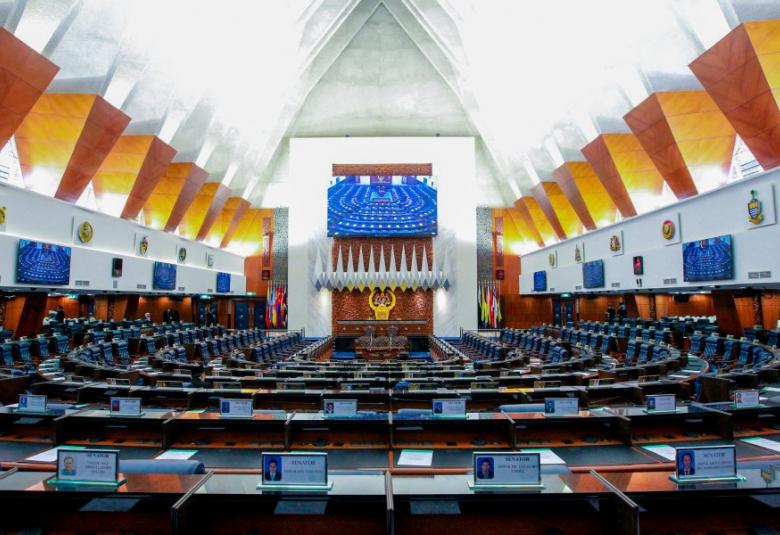
So what does all this mean for the country? It means Malaysia is watching, in real time, a collision between two political logics: the old patronage-based, regionally embedded model and a new, technocratic, data-driven style of governance that seeks to transcend the rural urban divide.
Rafizi may still have the credibility to lead that transition—but not if he’s locked inside a ministry built to look busy rather than deliver results. Whether Rafizi is truly doomed or just deliberately sidelined remains to be seen.
But what’s clear is that Anwar, ever the chess player, has positioned every piece—ally, rival, reformer, and placeholder—with precision.
The future of Malaysia’s power structure may not hinge on who speaks the loudest, but on who gets to define what “reform” actually means. And if that word loses its power, Malaysia doesn’t just risk losing a leader—it risks losing the plot. - DagangNews.com
Economist Samirul Ariff Othman is an international relations analyst. He completed his graduate studies at Macquarie University in Sydney, Australia. The views in this OpEd piece are entirely his own.
Layari kami terus di DagangNews.com

Orang ramai dipelawa menghantar artikel ke ruangan PARAFRASA di [email protected] mengikut ketetapan berikut:
1. Berbentuk analisis peribadi (Op-Ed) mengenai sesuatu isu atau topik, bukan plagiat
2. Topik yang mendapat perhatian segera dan utama ialah
a. berkaitan perniagaan, perdagangan, keusahawanan, pelaburan
b. Ekonomi MADANI
c. Pembangunan ekonomi negara dan negeri khusus
d. Sektor industri khusus seperti minyak sawit, getah, penerbangan, minyak dan gas
e. ESG
f. Hak pekerja, hak majikan, hak asasi manusia
3. Sains & Teknologi
a. Penemuan penyelidikan Sains & Teknologi serta teori dan konsep
b. Langkah mengkomersialkan produk berasaskan R&D
4. Kaedah penulisan
a) Sebaiknya seorang penulis sahaja pada penama.
b) Berbahasa Malaysia
c) Bahasa Inggeris diterima tetapi akan diterjemah ke Bahasa Malaysia
d) Editor akan memutuskan jika mahu mengekalkan Bahasa Inggeris
e) Tidak melebihi 1,000 patah perkataan dan tidak kurang daripada 600.
f) Jika disertakan gambar, juga amat digalakkan tetapi jangan guna Google (elak langgar hakcipta)
5. Hantar HANYA kepada DagangNews.com
a) Jika didapati artikel sama disiarkan di media lain kerana penulis menghantar merata-rata, nama penulis akan disenaraihitamkan.
b) Sila kemukakan Nama sebenar, Cadangan nama siaran dan emel untuk dihubungi (untuk rekod).