
Sukarno’s Rebellion: Bandung, CONEFO and GANEFO
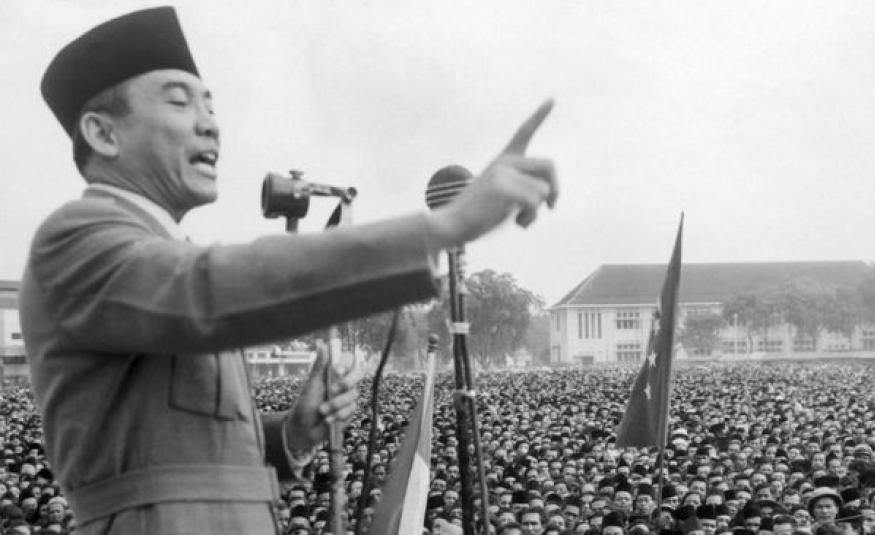
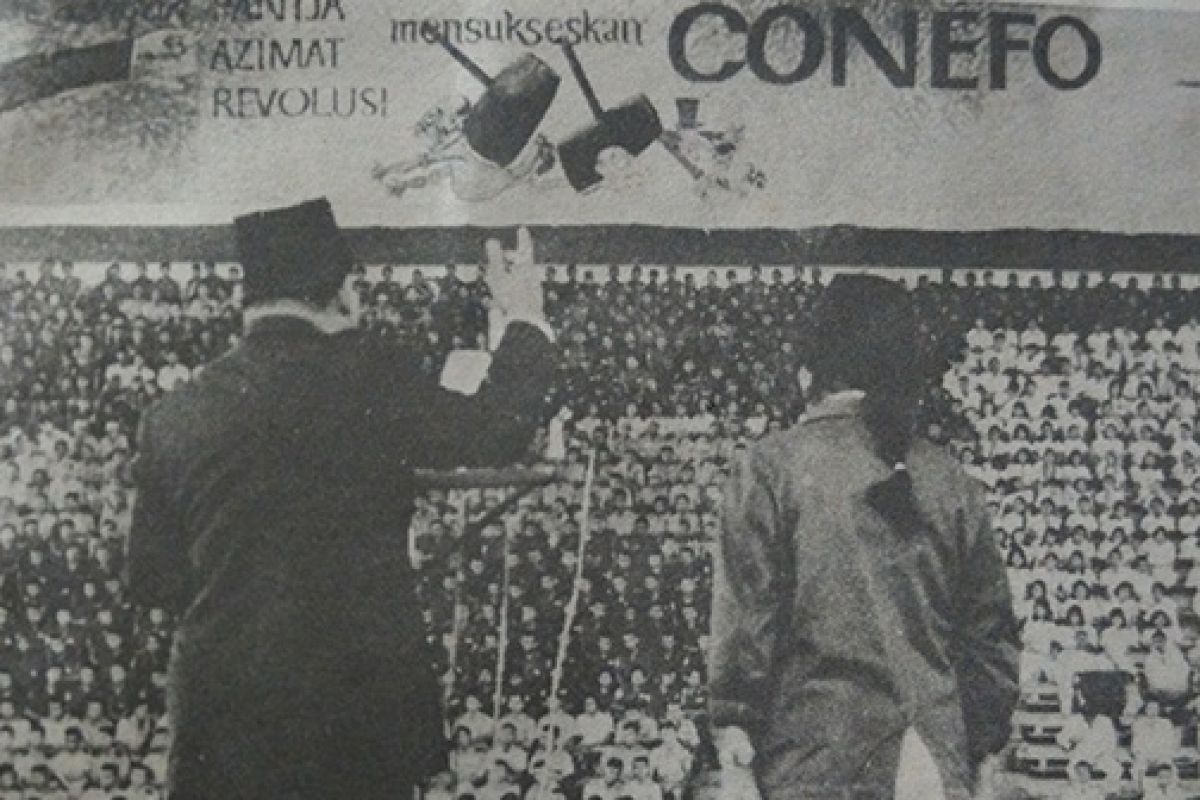
“Let the old world crumble.” That was the spirit behind Sukarno’s vision in the 1960s—when Indonesia’s founding President dared to imagine a world where newly independent states could speak for themselves, not echo the voices of empire. Flush with confidence after co-hosting the 1955 Bandung Conference with Nehru, Nasser, and other icons of post-colonial nationalism, Sukarno sought to turn the non-aligned spirit into permanent structures. From that ambition emerged CONEFO (Conference of the New Emerging Forces) and GANEFO (Games of the New Emerging Forces)—two bold but short-lived efforts to institutionalise a Global South counterweight to the Western order.
CONEFO was meant to rival the United Nations. Sukarno believed the UN had become a tool of imperial interests, and sought instead to convene a new multilateral body—headquartered in Jakarta and led by what he called the “New Emerging Forces”: the revolutionary states of Asia, Africa, and Latin America.
GANEFO, on the other hand, was a sporting and cultural rebellion. After the International Olympic Committee suspended Indonesia for refusing to host Israeli and Taiwanese athletes at the 1962 Asian Games, Sukarno responded by launching his own games—less about medals, more about political symbolism.
These were not mere side projects—they were declarations of independence, dignity, and South-South solidarity.
But the experiment was short-lived. CONEFO never held its inaugural summit before Sukarno was ousted in 1967. GANEFO ran only twice—once in Jakarta in 1963, then in Phnom Penh in 1966.
As Indonesia pivoted under Suharto to Western-aligned pragmatism, Sukarno’s revolutionary platforms dissolved.
And yet, the core idea behind them—that the global system must reflect the realities and aspirations of the post-colonial world—never disappeared. It simply went quiet, waiting for a new name, and a new strategy.
BRICS: A Quiet Continuation of the Bandung Spirit
Fast forward to the 21st century, and a very different kind of bloc is taking shape—less fiery, more methodical, but driven by the same dissatisfaction with Western-dominated institutions.
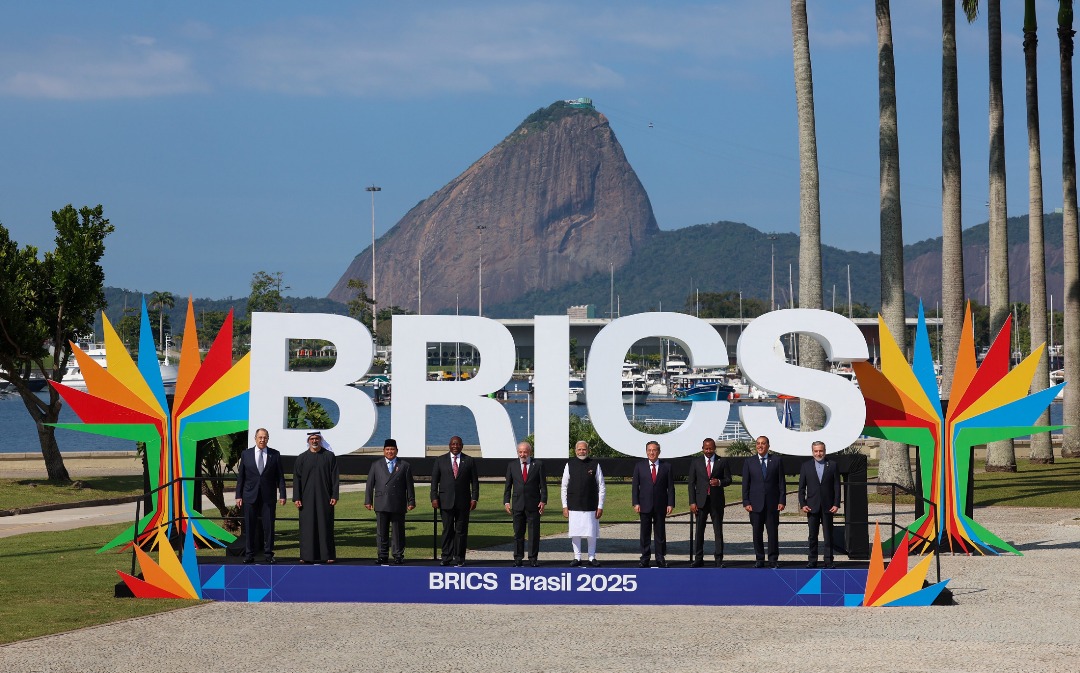
The BRICS coalition—Brazil, Russia, India, China, and South Africa—does not shout about imperialism. But its actions speak louder. Like CONEFO, BRICS questions the legitimacy of the global economic architecture, especially the IMF, the World Bank, and the outsized role of the U.S. dollar.
Like GANEFO, it seeks to build new institutions—but financial ones rather than cultural: the New Development Bank, the Contingent Reserve Arrangement, and now proposals for a common currency and cross-border payment alternatives.
The difference lies in tactics. Sukarno launched a frontal attack on the system. BRICS works from within—reformist where possible, parallel where necessary. It does not seek to abolish the UN, but to rebalance it. It does not reject global finance, but creates alternatives.
At the 2023 BRICS Summit in Johannesburg, over 40 countries expressed interest in joining BRICS+, a signal that what was once Sukarno’s fringe vision now carries mainstream weight.
Meanwhile, the New Development Bank has already disbursed over USD30 billion in loans, proving that these aren’t just slogans—they’re systems.
This is Bandung without the bullhorn, CONEFO without the confrontation. It is quiet revolution by coordination. Sukarno’s moral defiance has evolved into strategic diplomacy.
Where he once rallied the oppressed, BRICS now wields leverage—with its members accounting for nearly a third of global GDP, over 40% of the world’s population, and rising dominance in global commodity flows and supply chains.
In short, BRICS is doing what Sukarno dreamed of—but with a longer runway and sharper instruments.
From Revolution to Resilience: The Evolving Global South
The journey from CONEFO and GANEFO to BRICS is more than a rebranding exercise. It reflects a matured approach to international positioning by the Global South. Where the earlier movements were declarative and disruptive, BRICS is strategic and constructive. Sukarno’s efforts embodied rupture. BRICS favours recalibration—staying inside the system just long enough to shift its centre of gravity.
The irony is not lost. BRICS is fulfilling Sukarno’s goals precisely by abandoning his methods. It trades revolutionary theatre for institutional patience. It uses investment and trade deals in place of manifestos and manifest destiny.
Yet the intellectual DNA is unmistakable: sovereignty, dignity, and a desire for a more equitable world order. This is not the Global South abandoning its ideals—it is the Global South applying them with strategic maturity.
Indonesia today plays a different role in this story. It is no longer the frontline firebrand of the Third World, but a steady voice championing ASEAN centrality, hosting G20 summits, and signalling openness to BRICS+ membership.
While Sukarno led with bombast and binary thinking, today’s Indonesia navigates with diplomacy and hedging. But the line from Bandung to BRICS still passes through Jakarta.
The spirit of non-alignment has evolved—not into passivity, but into multidirectional agency. That is the real legacy of the Bandung generation: the sovereign right to say “yes,” “no,” or “maybe,” depending on national interest—not ideological purity.
What began as rebellion has matured into a blueprint. The slogans are gone, but the strategy remains.
Timeline: From Protest to Power
- 1955 – Bandung Conference (birth of Afro-Asian solidarity)
- 1963 – GANEFO I (Jakarta)
- 1965 – CONEFO announced
- 1967 – Sukarno removed from power; both institutions collapse
- 2006 – First BRIC (later BRICS) Summit
- 2015 – New Development Bank launched
- 2023 – BRICS+ expands interest to 40+ countries
In the end, the arc from CONEFO and GANEFO to BRICS is the story of how the Global South grew from slogans to structures. What began as rebellion has matured into a blueprint.
The slogans may be gone—but the strategy endures. Sukarno’s fire lit the torch. BRICS now carries it forward—not to burn down the house, but to renovate it, one institution at a time. - DagangNews.com
Samirul Ariff Othman is an economist, international relations analyst, adjunct lecturer at Universiti Teknologi PETRONAS (UTP), and a senior consultant with Global Asia Consulting. The views expressed here are entirely his own
Layari kami terus di DagangNews.com

Orang ramai dipelawa menghantar artikel ke ruangan PARAFRASA di [email protected] mengikut ketetapan berikut:
1. Berbentuk analisis peribadi (Op-Ed) mengenai sesuatu isu atau topik, bukan plagiat
2. Topik yang mendapat perhatian segera dan utama ialah
a. berkaitan perniagaan, perdagangan, keusahawanan, pelaburan
b. Ekonomi MADANI
c. Pembangunan ekonomi negara dan negeri khusus
d. Sektor industri khusus seperti minyak sawit, getah, penerbangan, minyak dan gas
e. ESG
f. Hak pekerja, hak majikan, hak asasi manusia
3. Sains & Teknologi
a. Penemuan penyelidikan Sains & Teknologi serta teori dan konsep
b. Langkah mengkomersialkan produk berasaskan R&D
4. Kaedah penulisan
a) Sebaiknya seorang penulis sahaja pada penama.
b) Berbahasa Malaysia
c) Bahasa Inggeris diterima tetapi akan diterjemah ke Bahasa Malaysia
d) Editor akan memutuskan jika mahu mengekalkan Bahasa Inggeris
e) Tidak melebihi 1,000 patah perkataan dan tidak kurang daripada 600.
f) Jika disertakan gambar, juga amat digalakkan tetapi jangan guna Google (elak langgar hakcipta)
5. Hantar HANYA kepada DagangNews.com
a) Jika didapati artikel sama disiarkan di media lain kerana penulis menghantar merata-rata, nama penulis akan disenaraihitamkan.
b) Sila kemukakan Nama sebenar, Cadangan nama siaran dan emel untuk dihubungi (untuk rekod).