
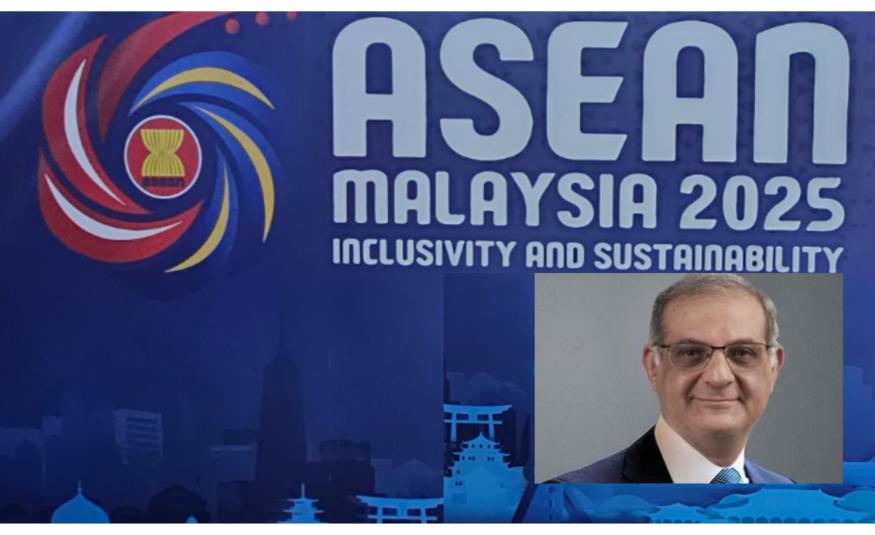
KUALA LUMPUR 10 March – ASEAN's robust economic growth is undeniable, attracting global investors and establishing the region as a significant player on the world stage.
However, the shadow of US tariffs looms, presenting a challenge to sustained prosperity.
Malaysia, as the current ASEAN Chair, is taking a proactive stance in addressing these trade tensions and fostering a path towards harmonious economic relations.
ASEAN's Economic Ascent: A Magnet for Global Investment
The region's strength is built upon rising income levels, expanding trade flows, and strategic investments.
According to Shan Saeed, Global Chief Economist at Juwai IQI, "ASEAN is thriving at the moment. Global investors are buoyant for the region."
He highlights the pivotal role of intra-ASEAN trade, stating, "Trade among ASEAN nations is the key to maintaining economic growth and securing the region’s position as a global economic powerhouse."
With ASEAN’s combined GDP projected to reach between $3.8 and $4 trillion by the end of 2025—surpassing the GDP of 11 European nations—the region's economic influence is rapidly expanding.
The US Tariff Challenge: A Call for Reassessment
However, the imposition of US tariffs poses a significant threat to the region's economic momentum. "Tariff and economic warfare are counterproductive and can jeopardize the trade and commerce for the region," warns Shan Saeed.
He advocates for a strategic shift in approach, emphasizing the need for a collaborative solution.
"To diffuse the current tariff landscape, a new engagement strategy is needed involving American companies operating in ASEAN region to provide benefits of global trade in order to leverage from region's growing wealth," suggests Shan.
This strategy aims to demonstrate the mutual benefits of trade and encourage a reassessment of US tariff policies.
He further stresses that "Involvement of American companies will send a good signal to the decision makers in Washington DC to revisit their policy of tariff on the ASEAN REGION."
By highlighting the positive impact of US businesses within ASEAN, the region hopes to foster a more balanced and mutually beneficial trade relationship.

Malaysia’s Leadership in Addressing Trade Tensions
As the current ASEAN Chair, Malaysia is actively working to mitigate the impact of US tariffs and promote regional economic stability.
Prime Minister Anwar Ibrahim's emphasis on shared prosperity aligns with the goal of ensuring that all ASEAN member states benefit from trade and investment.
Malaysia’s strategic role in maintaining strong trade ties with global economic powers, including the US, is crucial. The country is well-positioned to facilitate dialogue and advocate for policies that promote fair and equitable trade practices.
Leveraging ASEAN's Strengths for Sustainable Growth
Despite the challenges posed by US tariffs, ASEAN's inherent strengths remain a powerful driver of economic growth.
The region's commitment to economic integration, digital transformation, and sustainable development provides a solid foundation for future prosperity.
By focusing on high-value FDI, enhancing supply chain integration, and fostering digital innovation, ASEAN can continue to attract global investors and strengthen its position in the global economy.
Conclusion: ASEAN's Path to Trade Harmony and Economic Prosperity
ASEAN's ability to navigate the challenges posed by US tariffs will be crucial to its continued economic success.
By fostering dialogue, promoting mutual understanding, and leveraging its inherent strengths, the region can pave the way for a more harmonious and prosperous future.
"ASEAN’s continued success will depend on its ability to innovate, integrate, and invest in sustainable economic models that uplift all member nations, while also engaging in constructive dialogue with global partners to address trade challenges," Shan concluded. - DagangNews.com
About Shan Saeed
Shan Saeed is the Global Chief Economist at Juwai IQI, a leading proptech company operating across major financial hubs such as Kuala Lumpur, Singapore, Hong Kong, London, and Dubai. With over 24 years of experience in financial markets, private banking, risk management, and global economic strategy, he has been a key voice in international economic discussions.
Layari kami terus di DagangNews.com

Orang ramai dipelawa menghantar artikel ke ruangan PARAFRASA di [email protected] mengikut ketetapan berikut:
1. Berbentuk analisis peribadi (Op-Ed) mengenai sesuatu isu atau topik, bukan plagiat
2. Topik yang mendapat perhatian segera dan utama ialah
a. berkaitan perniagaan, perdagangan, keusahawanan, pelaburan
b. Ekonomi MADANI
c. Pembangunan ekonomi negara dan negeri khusus
d. Sektor industri khusus seperti minyak sawit, getah, penerbangan, minyak dan gas
e. ESG
f. Hak pekerja, hak majikan, hak asasi manusia
3. Sains & Teknologi
a. Penemuan penyelidikan Sains & Teknologi serta teori dan konsep
b. Langkah mengkomersialkan produk berasaskan R&D
4. Kaedah penulisan
a) Sebaiknya seorang penulis sahaja pada penama.
b) Berbahasa Malaysia
c) Bahasa Inggeris diterima tetapi akan diterjemah ke Bahasa Malaysia
d) Editor akan memutuskan jika mahu mengekalkan Bahasa Inggeris
e) Tidak melebihi 1,000 patah perkataan dan tidak kurang daripada 600.
f) Jika disertakan gambar, juga amat digalakkan tetapi jangan guna Google (elak langgar hakcipta)
5. Hantar HANYA kepada DagangNews.com
a) Jika didapati artikel sama disiarkan di media lain kerana penulis menghantar merata-rata, nama penulis akan disenaraihitamkan.
b) Sila kemukakan Nama sebenar, Cadangan nama siaran dan emel untuk dihubungi (untuk rekod).