


KUALA LUMPUR Aug 17 - Malaysia’s proposed Freedom of Information (FOI) law has been ranked sixth from the bottom in a global assessment of right-to-information legislation, prompting civil society groups to call for an urgent and comprehensive overhaul of the bill.
In a joint statement on Monday, the Center to Combat Corruption and Cronyism (C4 Center), Centre for Independent Journalism (CIJ), ARTICLE 19 and other endorsing organisations said the Centre for Law and Democracy (CLD) awarded Malaysia’s Freedom of Information Bill 2026 just 47 out of 150 points, or 29%, under its Right to Information (RTI) Rating.
The score placed Malaysia 137th out of 142 countries worldwide with RTI or FOI laws, according to the statement.
The groups urged the Parliamentary Special Select Committee (PSSC) to urgently address shortcomings identified by CLD and bring the proposed legislation in line with international human rights law and standards.
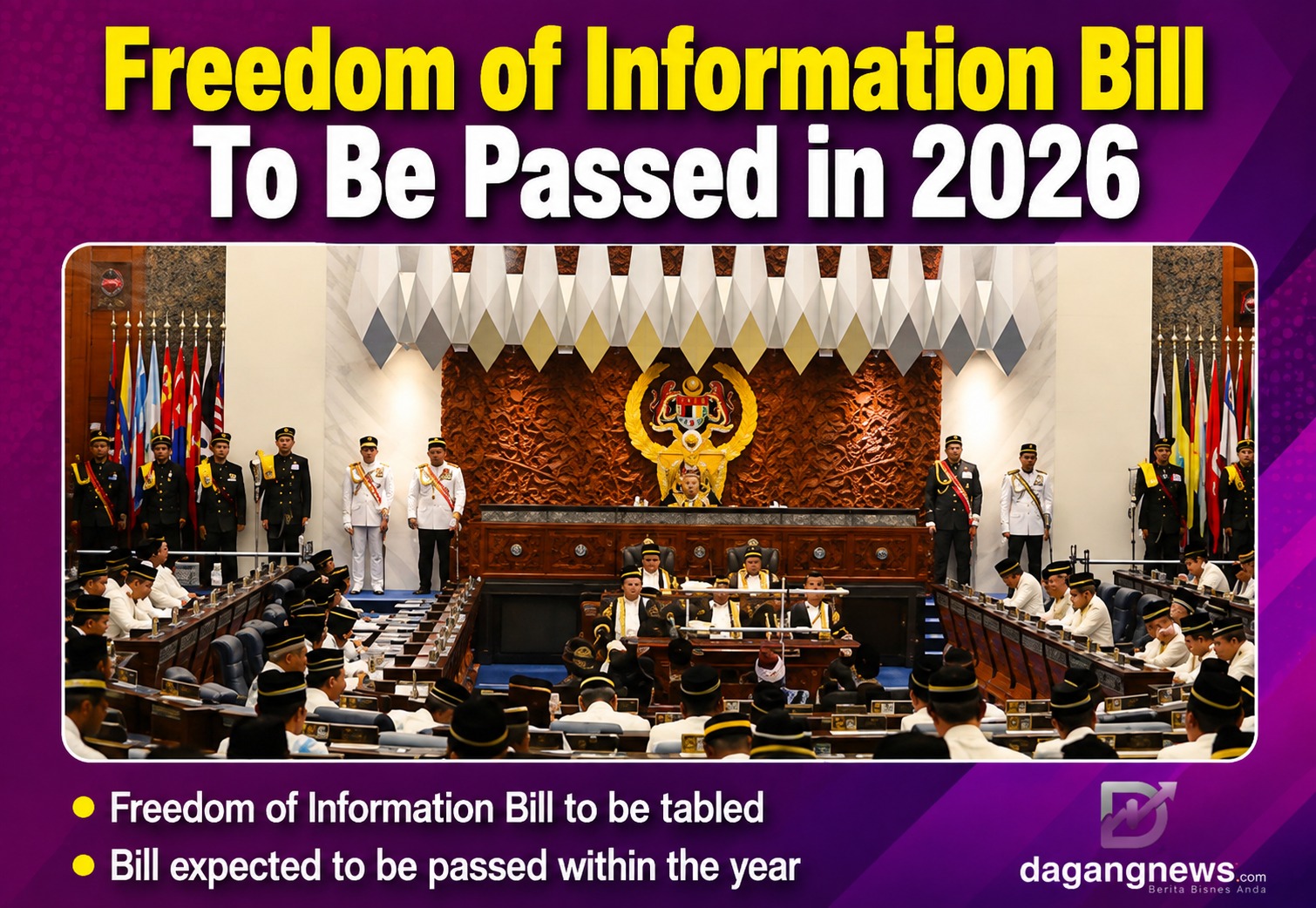
CLD's assessment, published on Aug 12, reinforced concerns previously raised by the groups over the bill, which was tabled for its first reading in Parliament on July 13.
CLD described the proposed legislation as an “extremely weak legislative effort” and said Malaysia tied with the Philippines for the weakest performance among Southeast Asian countries, although the Philippines was substantially upgrading its legislation in this area.
Under CLD's seven assessment categories, Malaysia scored:
7% for right of access
40% for scope
13% for requesting procedures
17% for exceptions and refusals
61% for appeals
50% for sanctions and protections, and
9% for promotional measures.
Five key concerns over FOI Bill
The groups said that as the Parliamentary Special Select Committee (PSSC) carries out its mandate, five major shortcomings raised by civil society and echoed by CLD should be addressed:
1. Secrecy laws remain supreme
The groups said the FOI Bill fails to establish a right for the public to access government-held information under a culture of openness by default, while preserving the supremacy of secrecy laws such as the Official Secrets Act (OSA) 1972.
About 165 federal laws, or roughly 25% of substantive federal laws currently in force, contain secrecy provisions, potentially placing a large amount of government information beyond meaningful FOI access and scrutiny.
CLD recommended that the bill establish overriding standards for secrecy provisions so that provisions in other laws that do not conform to those standards would be void to the extent of the inconsistency.
2. Exemptions are too broad
The groups said the categories of information exempted from disclosure are excessively broad and lack essential safeguards, including a comprehensive harm test, a public-interest override and meaningful severance or redaction provisions.
They warned this could allow information concerning corruption, abuse of power, environmental harm or human rights violations to remain secret even when disclosure was clearly in the public interest.
CLD said the bill contained numerous exceptions that did not conform to international standards because they protected interests or permitted secrecy on grounds not recognised internationally.
3. Restrictions on who can request information
The groups said the bill imposes unnecessary restrictions on the right to request information by limiting access to Malaysian citizens aged 18 and above, requiring the use of national identity cards, imposing prescribed purposes for requests and potentially criminalising the subsequent use of lawfully obtained information.
They said the restrictions, particularly the possibility of criminal liability, could have a chilling effect and discourage members of the public from seeking government information.
CLD described the restrictions on the purposes for which information could be sought as a “truly massive limitation” not found in other RTI laws.
Malaysia received just four points in the Requesting Procedures category, with CLD noting that only one other country, Palau, performed as poorly.
4. Constitutional interpretation
The groups also objected to a provision stating that “[n]othing in this Act shall be construed as fundamental liberties under Part II of the Federal Constitution.”
They said the provision could restrict judicial interpretation of constitutional rights rather than expanding recognition of access to information under the constitutional guarantee of freedom of speech and expression and other fundamental liberties.
The groups also said the clause raised concerns about judicial independence and the separation of powers because of its implications for the courts' role in interpreting constitutional provisions.
CLD recommended that the law recognise access to information held by public authorities as a fundamental right and that clauses 6(2) and 22 be removed.
5. No dedicated independent oversight body
The groups said the FOI Bill does not provide for effective oversight or administration by an independent authority.
Under the bill, the Ombudsman established under the Ombudsman Act would conduct external reviews. However, the groups said the Ombudsman does not currently exist and there was no clarity over when or how the position would be established, potentially leaving the FOI framework without external oversight.
CLD said access to information was a highly specialised area requiring a dedicated body and that international experience showed an institution focused on information appeals, such as an information commission, was more effective than assigning oversight to a body with a broader mandate.
It therefore recommended establishing a specialised Information Commission to oversee implementation of the FOI framework.
Groups call for comprehensive review
The groups said the FOI Bill in its current form had been widely criticised nationally and internationally as deficient and would do little to address what they described as Malaysia’s entrenched culture of secrecy.
They said the government had repeatedly reiterated its commitment to combating corruption and improving governance, but argued that the proposed legislation did not reflect those ambitions.
“It is not too late to re-draft this Bill to ensure it aligns with international law and standards,” the groups said, adding that Malaysia deserved a genuine right-to-information law rather than legislation that created an illusion of openness while preserving a culture of secrecy.
They urged the PSSC to conduct a comprehensive review of the bill, taking into account criticisms and recommendations from all relevant stakeholders.
The joint statement was issued by C4 Center's Prishanth Linggaraj, CIJ's Wathshlah Naidu and ARTICLE 19's Nalini Elumalai.
It was endorsed by 38 organisations, including Agora Society Malaysia, Aliran, Consumers’ Association of Penang (CAP), Freedom Film Network, Gabungan Pilihan Raya Bersih & Adil (BERSIH), Gerakan Media Merdeka (Geramm), Greenpeace Malaysia, Justice for Sisters, North South Initiative, Pergerakan Tenaga Akademik Malaysia (GERAK), Rasuah Busters, Sahabat Alam Malaysia (SAM), Sinar Project, SIS Forum (Malaysia) and Suara Rakyat Malaysia (SUARAM).
Another 25 individuals endorsed the statement, including Andrew Khoo, Dato’ Dr Abdul Halim bin Yusof, Datuk Chamil Wariya, Datuk Hussamuddin Yaacub, Datuk Zakaria A. Wahab, Dr Sonia Randhawa, Prof Wong Chin Huat, Prof Zaharom Nain and Shah Hakim Zain. - DagangNews.com
Layari kami terus di DagangNews.com

Orang ramai dipelawa menghantar artikel ke ruangan PARAFRASA di [email protected] mengikut ketetapan berikut:
1. Berbentuk analisis peribadi (Op-Ed) mengenai sesuatu isu atau topik, bukan plagiat
2. Topik yang mendapat perhatian segera dan utama ialah
a. berkaitan perniagaan, perdagangan, keusahawanan, pelaburan
b. Ekonomi MADANI
c. Pembangunan ekonomi negara dan negeri khusus
d. Sektor industri khusus seperti minyak sawit, getah, penerbangan, minyak dan gas
e. ESG
f. Hak pekerja, hak majikan, hak asasi manusia
3. Sains & Teknologi
a. Penemuan penyelidikan Sains & Teknologi serta teori dan konsep
b. Langkah mengkomersialkan produk berasaskan R&D
4. Kaedah penulisan
a) Sebaiknya seorang penulis sahaja pada penama.
b) Berbahasa Malaysia
c) Bahasa Inggeris diterima tetapi akan diterjemah ke Bahasa Malaysia
d) Editor akan memutuskan jika mahu mengekalkan Bahasa Inggeris
e) Tidak melebihi 1,000 patah perkataan dan tidak kurang daripada 600.
f) Jika disertakan gambar, juga amat digalakkan tetapi jangan guna Google (elak langgar hakcipta)
5. Hantar HANYA kepada DagangNews.com
a) Jika didapati artikel sama disiarkan di media lain kerana penulis menghantar merata-rata, nama penulis akan disenaraihitamkan.
b) Sila kemukakan Nama sebenar, Cadangan nama siaran dan emel untuk dihubungi (untuk rekod).