
BRUSSELS Jan 23 - Donald Trump's return to the White House forebodes a tempestuous four years for allies and foes alike.
While unity among the EU's countries is invariably elusive, here are early indications of how the bloc intends to weather the storm.
Defence: Arm up to 'survive'
Trump has made it abundantly clear that Washington no longer wants to spend "billions and billions of dollars" to finance Europe's defence through NATO.
EU officials appear ready to pick up more of the tab.
"President Trump is right to say that we don't spend enough. It's time to invest," the EU's top diplomat Kaja Kallas said on Wednesday.
She was echoed by Polish Prime Minister Donald Tusk, who said Europe needs to arm itself if it "is to survive".
The only NATO member to share a border with both Russia and Ukraine, Poland is already the member of the alliance who spends the most on defence relative to the size of its economy.
Divisions remain on how to finance a spending bonanza and whether to give preference to European weapons manufacturers -- or buy American instead.
Tariffs: Let's work this out
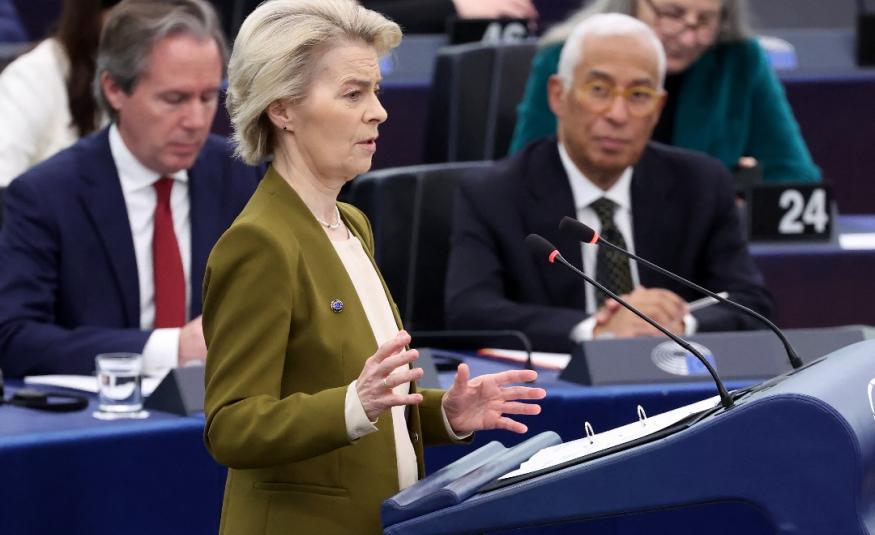
EU chief Ursula von der Leyen laid out her plans to deal with the Republican president's threats to slap tariffs on European products on Tuesday saying Brussels "will be pragmatic" and was "ready to negotiate".
A senior European official said the bloc can take a defensive approach, buying more US goods such as liquefied natural gas to appease Trump, go on the offensive placing retaliatory levies on US products -- or both.
"If there is a need to defend Europe's economic interests, we are ready to do so," said EU trade commissioner Valdis Dombrovskis.
The bloc's defence push could potentially be used as leverage in a trade standoff with Trump, according to Stephane Sejourne, the EU's commissioner for industrial strategy, who noted Europe's economy needs to be in good health to allow for more security spending.
"We cannot have a trade war and at the same time build a European defence," he said.
Trade: EU 'open for business'
Meanwhile the EU has been working to diversify its trading partnerships, announcing in recent days both a strengthened trade deal with Mexico and the resumption of talks on free trade deal with Malaysia.
A new trade pact with the South American bloc Mercosur was announced in December.
Von der Leyen told this week's gathering of the world's elites in Davos that her top team would visit India to boost ties with the world's largest democracy on the first trip abroad of its new mandate.
She also said Europe "must engage constructively with China -- to find solutions in our mutual interest".
Despite escalating trade tensions, China and the EU aligned in reaffirming their commitment to the Paris climate accords after Trump ordered the United States' withdrawal.
"Our message to the world is simple: if there are mutual benefits in sight, we are ready to engage with you," von der Leyen said. "Europe is open for business."
Tech: Wait and see
The direction of travel was less clear in the tech sphere.
After years of public arm wrestling with Silicon Valley giants -- some of which have been hit with nine-figure fines -- Brussels seems to have adopted a more cautious public stance.
EU rules requiring tech firms to police online content have come under pressure since Trump -- an avid social media user who has long railed at alleged left-wing bias in content moderation -- was re-elected.
Trump's allies, notably X owner Elon Musk, have denounced the landmark set of rules known as the Digital Services Act (DSA) as a tool of censorship.
At the same Musk has angered many in the "old continent" with a series of attacks on the European leaders as well as support for Germany's far-right AfD party before next month's elections.
The commission has deepened its investigation into X. But some countries and politicians are growing impatient with what appears to be a wait-and-see attitude.
© Agence France-Presse
Layari kami terus di DagangNews.com
Orang ramai dipelawa menghantar artikel ke ruangan PARAFRASA di [email protected] mengikut ketetapan berikut:
1. Berbentuk analisis peribadi (Op-Ed) mengenai sesuatu isu atau topik, bukan plagiat
2. Topik yang mendapat perhatian segera dan utama ialah
a. berkaitan perniagaan, perdagangan, keusahawanan, pelaburan
b. Ekonomi MADANI
c. Pembangunan ekonomi negara dan negeri khusus
d. Sektor industri khusus seperti minyak sawit, getah, penerbangan, minyak dan gas
e. ESG
f. Hak pekerja, hak majikan, hak asasi manusia
3. Sains & Teknologi
a. Penemuan penyelidikan Sains & Teknologi serta teori dan konsep
b. Langkah mengkomersialkan produk berasaskan R&D
4. Kaedah penulisan
a) Sebaiknya seorang penulis sahaja pada penama.
b) Berbahasa Malaysia
c) Bahasa Inggeris diterima tetapi akan diterjemah ke Bahasa Malaysia
d) Editor akan memutuskan jika mahu mengekalkan Bahasa Inggeris
e) Tidak melebihi 1,000 patah perkataan dan tidak kurang daripada 600.
f) Jika disertakan gambar, juga amat digalakkan tetapi jangan guna Google (elak langgar hakcipta)
5. Hantar HANYA kepada DagangNews.com
a) Jika didapati artikel sama disiarkan di media lain kerana penulis menghantar merata-rata, nama penulis akan disenaraihitamkan.
b) Sila kemukakan Nama sebenar, Cadangan nama siaran dan emel untuk dihubungi (untuk rekod).