

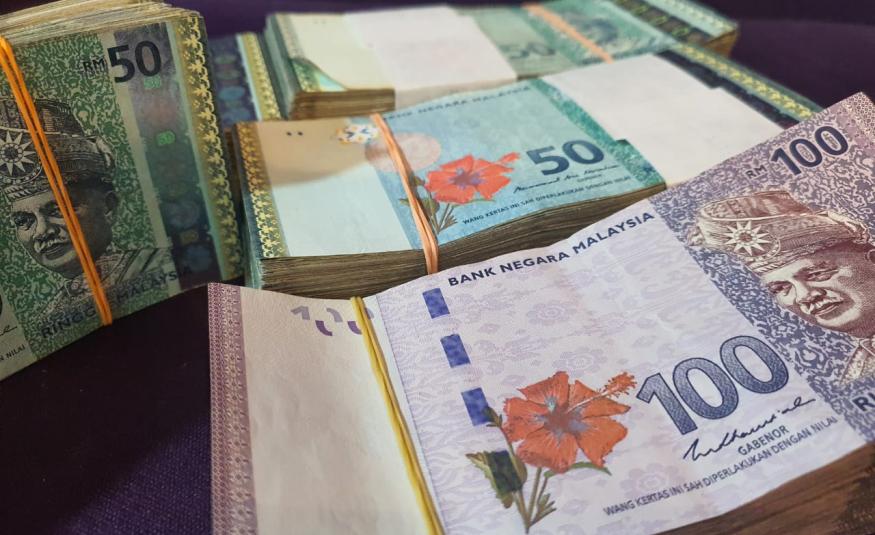
KUALA LUMPUR 23 Jan — The Malaysian ringgit surged toward a five-year high this week, signalling a decisive shift in investor sentiment as markets price in Malaysia’s macroeconomic resilience and policy certainty heading into 2026.
The local currency opened Friday trading near 4.02 against the US dollar — a psychological threshold not breached since January 2021.
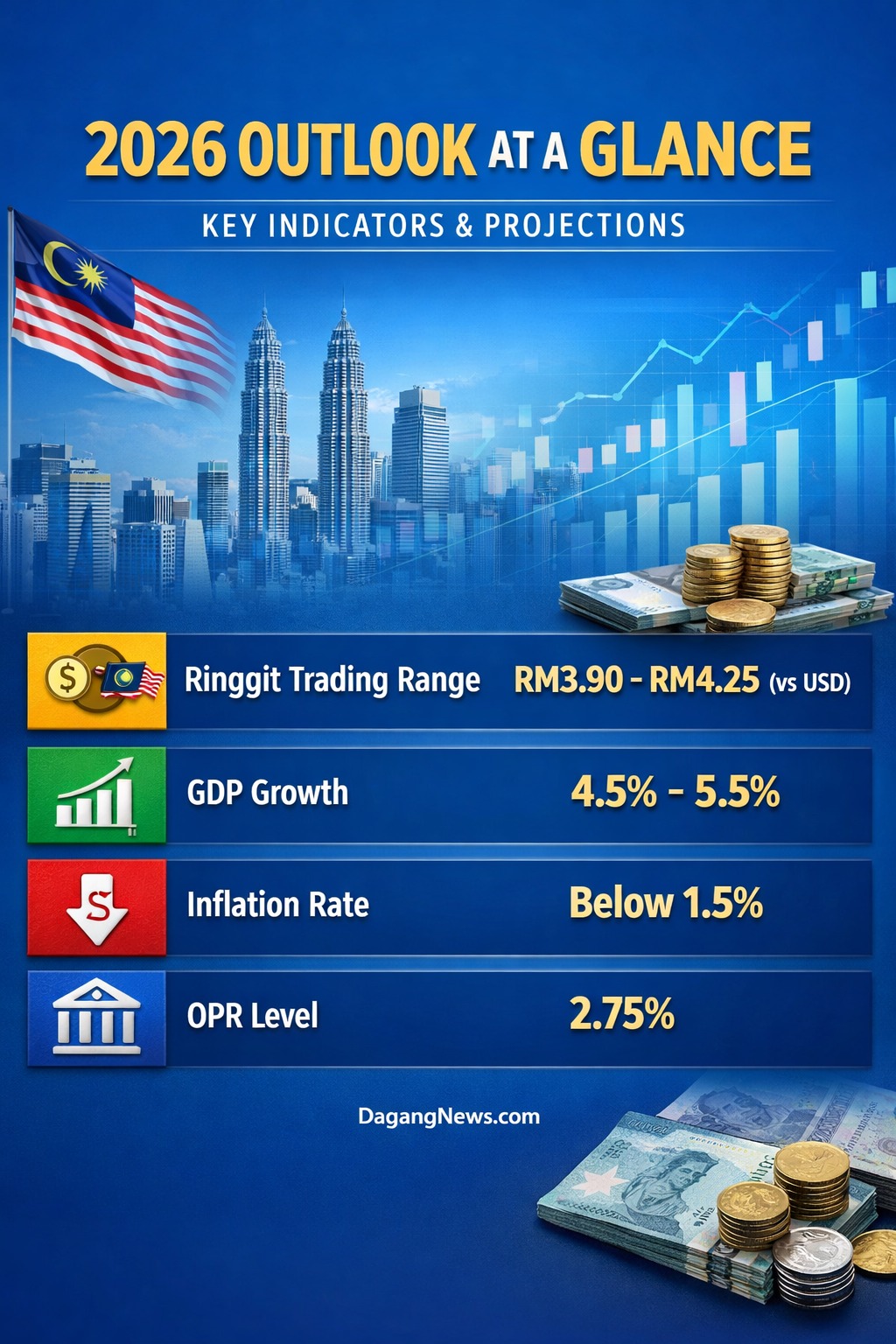
The rally follows Bank Negara Malaysia’s (BNM) decision to maintain the Overnight Policy Rate (OPR) at 2.75%, a move analysts say underscores the central bank’s confidence in the country’s domestic growth momentum.
At 8:00am, the ringgit strengthened further to 4.0285/0440, improving from Thursday’s close of 4.0370/0415.

Structural Strength Over Speculation
Market observers say the ringgit’s performance is no longer driven by short-term speculative flows, but by a deeper reassessment of Malaysia’s economic fundamentals.
Shan Saeed, Chief Global Economist at Juwai IQI, told DagangNews.com the ringgit’s current trajectory reflects “disciplined fiscal management” and a “credible monetary framework” expected to define Malaysia’s 2026 fiscal landscape.
“In 2026, we project the ringgit to trade within a resilient range of RM3.90 to RM4.25 against the US dollar,” Shan said.
“Malaysia’s structural reforms and macroeconomic buffers are delivering a rare degree of currency stability in an otherwise volatile global environment.”
The ‘Goldilocks’ Economy: Growth Meets Low Inflation
A key anchor for the ringgit’s outlook in 2026 is the convergence of steady growth and historically low inflation — placing Malaysia in what Shan describes as a “Goldilocks” zone.
• Inflation Outlook: Projected to remain below 1.5%, giving policymakers ample room to manoeuvre
• GDP Growth: Forecast at between 4.5% and 5.5%, providing solid support for the currency
• Policy Synergy: Price stability and economic expansion are moving in tandem, reducing pressure for aggressive rate adjustments
Regional Performance: Malaysia as ASEAN’s ‘Stability Play’
As regional peers contend with inflationary pressures and political uncertainty, the ringgit is expected to remain resilient against the Indonesian rupiah, Thai baht, Singapore dollar, and Philippine peso.
“The key differentiator for Malaysia is policy consistency,” Shan said. “That consistency allows the ringgit to navigate regional currency cycles and global interest-rate shifts more effectively than many emerging-market peers.”
As global markets look ahead, analysts expect the ringgit to remain a preferred “stability play” in Asia.
With fiscal reforms gaining traction and foreign direct investment at record highs, the path toward RM3.90 appears increasingly within reach. — DagangNews.com
Layari kami terus di DagangNews.com

Orang ramai dipelawa menghantar artikel ke ruangan PARAFRASA di [email protected] mengikut ketetapan berikut:
1. Berbentuk analisis peribadi (Op-Ed) mengenai sesuatu isu atau topik, bukan plagiat
2. Topik yang mendapat perhatian segera dan utama ialah
a. berkaitan perniagaan, perdagangan, keusahawanan, pelaburan
b. Ekonomi MADANI
c. Pembangunan ekonomi negara dan negeri khusus
d. Sektor industri khusus seperti minyak sawit, getah, penerbangan, minyak dan gas
e. ESG
f. Hak pekerja, hak majikan, hak asasi manusia
3. Sains & Teknologi
a. Penemuan penyelidikan Sains & Teknologi serta teori dan konsep
b. Langkah mengkomersialkan produk berasaskan R&D
4. Kaedah penulisan
a) Sebaiknya seorang penulis sahaja pada penama.
b) Berbahasa Malaysia
c) Bahasa Inggeris diterima tetapi akan diterjemah ke Bahasa Malaysia
d) Editor akan memutuskan jika mahu mengekalkan Bahasa Inggeris
e) Tidak melebihi 1,000 patah perkataan dan tidak kurang daripada 600.
f) Jika disertakan gambar, juga amat digalakkan tetapi jangan guna Google (elak langgar hakcipta)
5. Hantar HANYA kepada DagangNews.com
a) Jika didapati artikel sama disiarkan di media lain kerana penulis menghantar merata-rata, nama penulis akan disenaraihitamkan.
b) Sila kemukakan Nama sebenar, Cadangan nama siaran dan emel untuk dihubungi (untuk rekod).