
KUALA LUMPUR 18 Jun - Malaysia’s remarkable 11-spot jump in the World Competitiveness Ranking (WCR) 2025, climbing from 34th to 23rd place, has sparked national optimism.
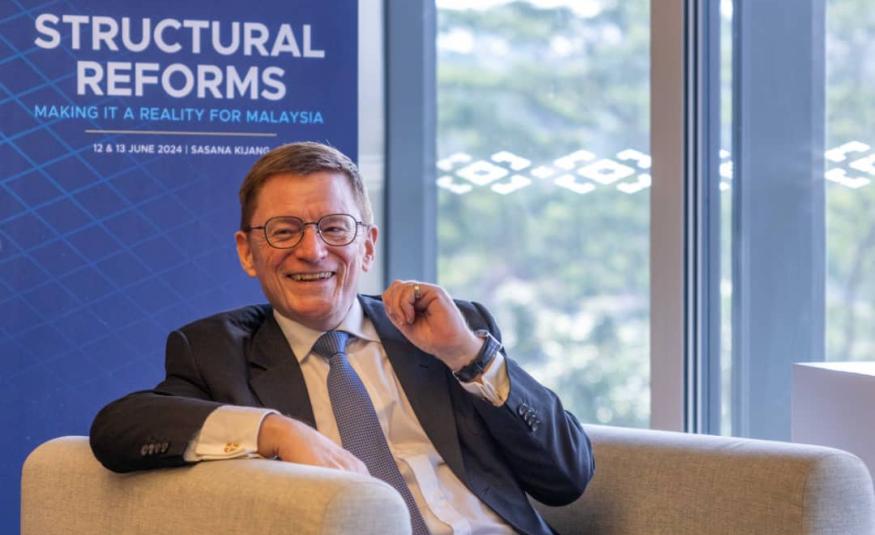
But for economist Dr. Geoffrey Williams, the real win lies not in headline rankings but in the structural policy reforms initiated under the Ekonomi MADANI framework.
In an interview with DagangNews, Dr. Williams, a respected economist and Director of Williams Business Consultancy Sdn Bhd, shared that there is a general consensus among economists that the WCR is “not very informative about real underlying competitiveness.”
“There are no real implications of this annual private survey. There is always variation from year to year, and it has no impact in terms of business and investment,” he said.
He described the WCR as a “publicity indicator, like university rankings or football tables”, adding that it lacks underlying substance and does not capture the real economic reality on the ground.
Despite his critique of the ranking, Dr. Williams acknowledged that Malaysia is now clearly on the road to reform, with the MADANI Economy taking shape only from Budget 2024 onwards.
“We only really have a MADANI Economy approach in Budget 2024. Earlier budgets under the previous finance minister were very poor in many respects and this may be a factor,” he said, referring to earlier volatility the Unity Government had to inherit and manage.
Dr. Williams was commenting following the recent announcement by Prime Minister Datuk Seri Anwar Ibrahim of a RM9 billion investment by Shell, which is expected to create high-skilled jobs and boost foreign investor confidence.
Rather than rankings, he said, Malaysia’s focus should be on sustaining structural reforms — particularly fiscal consolidation, subsidy rationalisation, and liberalisation of markets — all of which are central pillars of the MADANI framework.
“The government is well on the road for economic reform, with new fiscal frameworks and the subsidy rationalisation already underway,” he noted. Dr. Williams also pointed out that Malaysia does not need to chase competitiveness rankings to prove its progress.
The economy is already growing at around 5%, and reforms are gradually reshaping its long-term fundamentals.
“Malaysia does not need to focus on competitiveness rankings — it has 5% economic growth. The focus should be on structural reforms to raise incomes and rationalising subsidies. These will drive competitiveness through private sector creativity, agility and innovation,” he said.
On Malaysia’s future economic strategy, Dr. Williams advised that the country’s comparative advantage remains in sectors such as Islamic finance, the halal industry, and palm oil — industries that do not rely on long-term, uncertain R&D spending but can yield large global market access.
“Malaysia’s competitiveness has been and will continue to be in commodities and copying innovation from other places,” he said.
“These are not R&D-based industries, but they are where Malaysia can innovate and gain market share.” He also expressed scepticism towards the notion that high-tech R&D or “future of work” narratives accurately reflect Malaysia’s economic conditions.
“The other competitiveness-focused challenges have no relationship with the Malaysian economic reality. They are simply pushing a technology narrative without acknowledging that new technologies replace jobs — and that the future of work lies in people-focused jobs, such as in the care economy,” he explained.
While acknowledging that the positive impact on the rakyat has yet to be fully felt, he believes the medium-term outlook is encouraging.
“These targets are political and long-term. Short-term issues don’t affect them so much. As reforms progress, job opportunities and incomes are expected to improve,” Dr. Williams said.
In conclusion, Dr. Williams urged the government to abandon over reliance on rankings, and instead double down on the genuine policy foundations already in motion under the MADANI Economy.
“The government should stop drawing attention to these rankings or making them seem more important than they are. They are mostly uninformative from an economic perspective,” he said.
As Malaysia charts a new trajectory under the Unity Government, voices like Dr. Williams offer a balanced but optimistic view — one that sees real progress in the tough but necessary reforms that will shape the nation's economic resilience and fairness in the years ahead. - DagangNews.com
Layari kami terus di DagangNews.com

Orang ramai dipelawa menghantar artikel ke ruangan PARAFRASA di [email protected] mengikut ketetapan berikut:
1. Berbentuk analisis peribadi (Op-Ed) mengenai sesuatu isu atau topik, bukan plagiat
2. Topik yang mendapat perhatian segera dan utama ialah
a. berkaitan perniagaan, perdagangan, keusahawanan, pelaburan
b. Ekonomi MADANI
c. Pembangunan ekonomi negara dan negeri khusus
d. Sektor industri khusus seperti minyak sawit, getah, penerbangan, minyak dan gas
e. ESG
f. Hak pekerja, hak majikan, hak asasi manusia
3. Sains & Teknologi
a. Penemuan penyelidikan Sains & Teknologi serta teori dan konsep
b. Langkah mengkomersialkan produk berasaskan R&D
4. Kaedah penulisan
a) Sebaiknya seorang penulis sahaja pada penama.
b) Berbahasa Malaysia
c) Bahasa Inggeris diterima tetapi akan diterjemah ke Bahasa Malaysia
d) Editor akan memutuskan jika mahu mengekalkan Bahasa Inggeris
e) Tidak melebihi 1,000 patah perkataan dan tidak kurang daripada 600.
f) Jika disertakan gambar, juga amat digalakkan tetapi jangan guna Google (elak langgar hakcipta)
5. Hantar HANYA kepada DagangNews.com
a) Jika didapati artikel sama disiarkan di media lain kerana penulis menghantar merata-rata, nama penulis akan disenaraihitamkan.
b) Sila kemukakan Nama sebenar, Cadangan nama siaran dan emel untuk dihubungi (untuk rekod).