

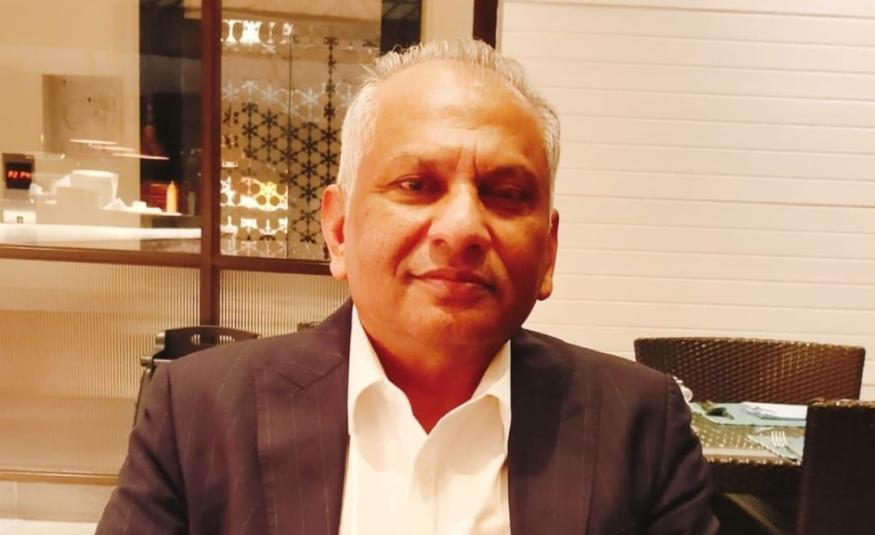
KUALA LUMPUR 19 Feb - Malaysia is set to outperform major Southeast Asian economies in 2026, supported by a stronger Ringgit Malaysia, rising equity valuations and resilient government bond yields, according to global market strategist Dr. Sailesh Kumar Jha.
In a decisive shift from his earlier bearish stance, Dr. Jha now projects the Ringgit Malaysia to trade in a range of RM3.85 to RM3.95 against the US dollar in 2026, compared with around RM3.90 currently.
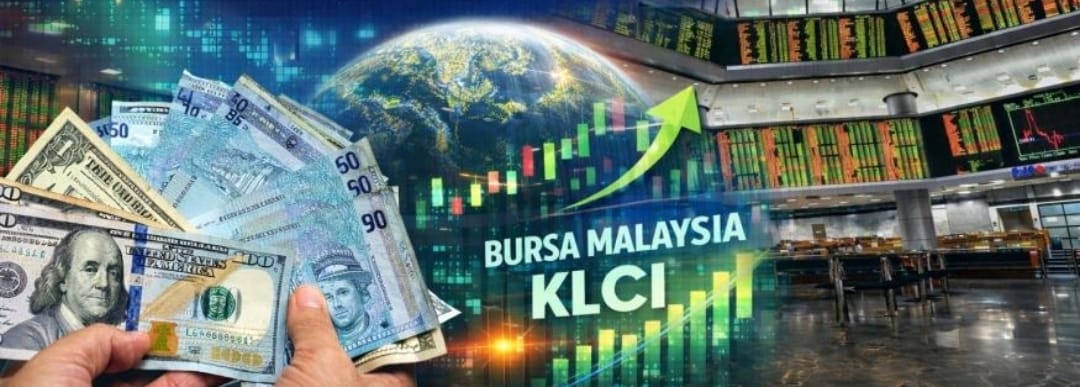
He also expects the FBM KLCI to climb to 1,900, while Malaysian Government Securities (MGS) 10-year yields remain below 4.0% despite higher global interest rates.
“Malaysia will outperform the major Southeast Asian economies such as Indonesia, the Philippines, Singapore and Thailand in terms of currency performance in 2026,” he told DagangNews.
He expects Malaysia’s equity market to rank second-best in the region next year, just behind Singapore, while its 10-year government bond market is also projected to be the second-strongest performer.
Ringgit Malaysia to Trade at RM3.85–RM3.95
Dr. Jha said sustained fiscal reforms, accelerating capital inflows and improving domestic sentiment will continue to support the Ringgit Malaysia.
He noted that the recovery of the currency from an intra-day high of RM4.79 against the US dollar in October 2023 to around RM3.90 currently reflects structural policy improvements rather than merely broad US dollar weakness.
While he expects the US Dollar Index (DXY) to trade between 97 and 101 in 2026, he believes peak US dollar weakness has already passed.
Fiscal Discipline Reshaping Market Confidence
Dr. Jha projects Malaysia’s primary fiscal deficit to narrow to around 0.8% within the next two years, compared with roughly 4.0% in 2021 and about 1% in 2025.
Operational expenditure is expected to decline toward 16.0% of Gross Domestic Product (GDP), while reforms to the Sales and Services Tax (SST) and fuel subsidy rationalisation could reduce the overall subsidies and social assistance bill to around 2.4% of GDP.
He added that foreign currency deposits as a percentage of GDP in the domestic banking system have stabilised at about 15% over the past three years, indicating stronger confidence in the Ringgit Malaysia. External vulnerability indicators have also stabilised.
KLCI Seen at 1,900 on Strong Foreign Inflows
On equities, Dr. Jha expects foreign institutional investors to drive the FBM KLCI to around 1,900 in 2026 from about 1,737 currently.
He forecasts GDP growth of 5.5% to 6.0% over the next two years, supported by improving fundamentals in the banking, property and technology sectors.
Foreign Direct Investment (FDI) as a percentage of GDP is projected to rise to around 1.5% from about 1.0%, driven by electric vehicle (EV) investments from China and India, alongside capital inflows into logistics, data centres and semiconductor manufacturing.
The Malaysia My Second Home (MM2H) programme is also expected to continue attracting capital into Kuala Lumpur’s residential property market.
MGS 10-Year Yields to Remain Below 4.0%
Dr. Jha expects MGS 10-year yields to rise moderately to between 3.65% and 3.75% in 2026 from around 3.54% currently, broadly in line with higher US Treasury yields.
However, strong domestic demand and increased allocations from international sovereign wealth funds are expected to keep Malaysian bond yields below 4.0% for much of 2026.
From Bearish to Bullish
Dr. Jha, who maintained a cautious outlook on Malaysia between 2020 and 2023, said fiscal consolidation and credible policy execution have materially improved the country’s macroeconomic trajectory.
He described Malaysia’s diplomatic positioning and reform delivery in a volatile global environment as key stabilising factors.
His overall assessment is clear: in 2026, Malaysia will stand out as a leading Southeast Asian destination for investments in currency, equities and government bonds. - DagangNews.com
Dr. Sailesh Kumar Jha is a Global Cross-Asset Market Strategist and Economist. He previously served as Chief Economist and Head of Market Research at RHB Banking Group and as Chief Economist Asia at Credit Suisse.
He holds a PhD in Economics from the University of Washington, specialising in macroeconomics and time-series econometrics, and is currently based in Singapore.
Between 2022 and 2025, his strategies reportedly delivered returns more than four times those of passive funds and seven times the hedge fund average. He also maintains proprietary econometric forecasting models, including a weekly Brent oil model and a monthly US Dollar Index model that have performed consistently for over a decade.
Layari kami terus di DagangNews.com

Orang ramai dipelawa menghantar artikel ke ruangan PARAFRASA di [email protected] mengikut ketetapan berikut:
1. Berbentuk analisis peribadi (Op-Ed) mengenai sesuatu isu atau topik, bukan plagiat
2. Topik yang mendapat perhatian segera dan utama ialah
a. berkaitan perniagaan, perdagangan, keusahawanan, pelaburan
b. Ekonomi MADANI
c. Pembangunan ekonomi negara dan negeri khusus
d. Sektor industri khusus seperti minyak sawit, getah, penerbangan, minyak dan gas
e. ESG
f. Hak pekerja, hak majikan, hak asasi manusia
3. Sains & Teknologi
a. Penemuan penyelidikan Sains & Teknologi serta teori dan konsep
b. Langkah mengkomersialkan produk berasaskan R&D
4. Kaedah penulisan
a) Sebaiknya seorang penulis sahaja pada penama.
b) Berbahasa Malaysia
c) Bahasa Inggeris diterima tetapi akan diterjemah ke Bahasa Malaysia
d) Editor akan memutuskan jika mahu mengekalkan Bahasa Inggeris
e) Tidak melebihi 1,000 patah perkataan dan tidak kurang daripada 600.
f) Jika disertakan gambar, juga amat digalakkan tetapi jangan guna Google (elak langgar hakcipta)
5. Hantar HANYA kepada DagangNews.com
a) Jika didapati artikel sama disiarkan di media lain kerana penulis menghantar merata-rata, nama penulis akan disenaraihitamkan.
b) Sila kemukakan Nama sebenar, Cadangan nama siaran dan emel untuk dihubungi (untuk rekod).