
KUALA LUMPUR 3 Nov - The Center to Combat Corruption and Cronyism (C4 Center) has voiced serious concerns over Malaysia’s newly signed Trade and Investment Framework Agreement (TIFA) with the United States, warning that it could undermine procurement transparency and place billions in government-linked company (GLC) investments beyond public oversight.
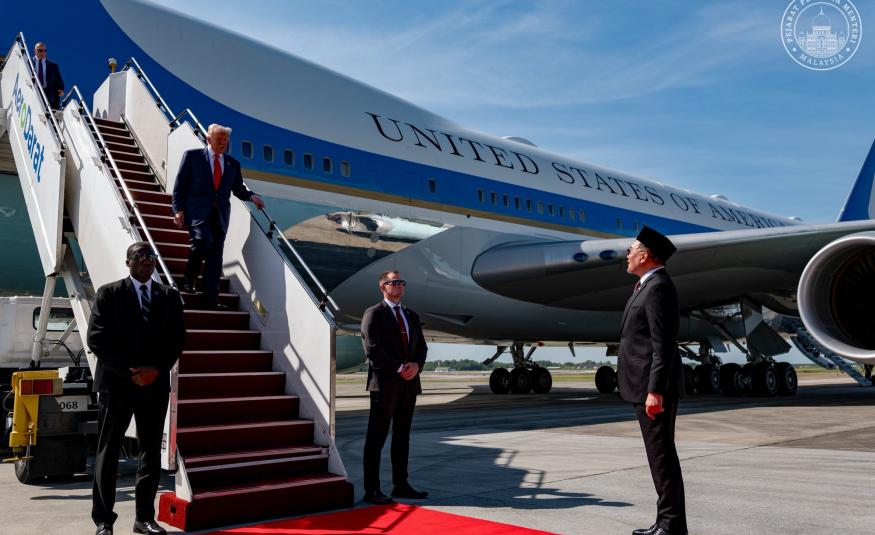
The TIFA, inked during the recent ASEAN Summit 2025, commits Malaysia to substantial purchases and investments in US industries, reportedly amounting to nearly RM1 trillion.
Among the commitments outlined in Annex IV: Purchases and Investment of the TIFA are:
- The purchase of 30 Boeing aircrafts by Malaysian Aviation Group
- An annual procurement of 3 million tonnes of liquified natural gas (LNG) by Petronas valued at USD2.04 billion (RM8.56 billion)
- Acquisitions of semiconductors, aerospace components, and data centre equipment
- Potential USD66 million (RM276.7 million) investment into the US manufacturing sector, and
- A capital investment of USD70 billion (RM294 billion) over the next decade.
Accountability and Oversight Concerns
C4 Center said these commitments raise red flags about governance and accountability in Malaysia’s procurement and investment practices, especially since the Government Procurement Act (GPA) — soon to be gazetted — may not clearly apply to GLCs involved in fulfilling TIFA obligations.
“The TIFA requires Malaysia to invest heavily in certain US industries, raising alarm over potentially bad investments that Malaysia may not be able to opt out of,” the group said. “In such a case, how will the government and GLCs be held accountable?”
Under Section 5 of the GPA, entities where more than 50% of shares are owned by the Minister of Finance Incorporated (MOF Inc.) or a federal statutory body fall within its purview.
However, it remains unclear whether this extends to companies indirectly owned through holding entities such as Khazanah Nasional Berhad, C4 Center noted.
Risk of Preferential Treatment
The watchdog further questioned whether US-based companies would be subject to Malaysia’s procurement rules, such as open tender and registration requirements, or if procurement divisions would be instructed to prioritize American bidders to meet TIFA obligations.
“This could bias procurement decisions and risk sidelining more qualified or economically sound bidders,” C4 warned, adding that government-to-government (G2G) deals often pre-commit public funds before proper scrutiny.
Weak Procurement Legislation
C4 also criticized the Government Procurement Act itself, calling it a “shoddy piece of legislation” that grants broad discretionary powers to the Minister of Finance, Prime Minister Anwar Ibrahim. The group argued that this concentration of authority weakens oversight and transparency mechanisms.
“This presents a two-fold problem — G2G agreements can be exploited to promise away public funds without accountability, and even where enforced, the GPA’s weaknesses render it ineffective as a check and balance,” it said.
Calls for Reform
C4 Center urged the government to take several steps to strengthen governance, including:
Establishing clear, legally binding guidelines for decision-making under the TIFA, including public consultations and publication of procurement information;
Exercising Malaysia’s right under Article 7.3 of the TIFA to amend unfavourable terms;
Imposing a moratorium on the GPA’s implementation until its problematic provisions are reviewed with civil society input; and
Ensuring future subsidiary legislation meets international standards of transparency and good governance.
“Good governance principles should not be made subordinate to geopolitical concerns or speculative economic gains,” C4 said.
“The idea that a government can promise away more than double the 2026 National Budget to a foreign government without scrutiny is ludicrous.” - DagangNews.com
Layari kami terus di DagangNews.com

Orang ramai dipelawa menghantar artikel ke ruangan PARAFRASA di [email protected] mengikut ketetapan berikut:
1. Berbentuk analisis peribadi (Op-Ed) mengenai sesuatu isu atau topik, bukan plagiat
2. Topik yang mendapat perhatian segera dan utama ialah
a. berkaitan perniagaan, perdagangan, keusahawanan, pelaburan
b. Ekonomi MADANI
c. Pembangunan ekonomi negara dan negeri khusus
d. Sektor industri khusus seperti minyak sawit, getah, penerbangan, minyak dan gas
e. ESG
f. Hak pekerja, hak majikan, hak asasi manusia
3. Sains & Teknologi
a. Penemuan penyelidikan Sains & Teknologi serta teori dan konsep
b. Langkah mengkomersialkan produk berasaskan R&D
4. Kaedah penulisan
a) Sebaiknya seorang penulis sahaja pada penama.
b) Berbahasa Malaysia
c) Bahasa Inggeris diterima tetapi akan diterjemah ke Bahasa Malaysia
d) Editor akan memutuskan jika mahu mengekalkan Bahasa Inggeris
e) Tidak melebihi 1,000 patah perkataan dan tidak kurang daripada 600.
f) Jika disertakan gambar, juga amat digalakkan tetapi jangan guna Google (elak langgar hakcipta)
5. Hantar HANYA kepada DagangNews.com
a) Jika didapati artikel sama disiarkan di media lain kerana penulis menghantar merata-rata, nama penulis akan disenaraihitamkan.
b) Sila kemukakan Nama sebenar, Cadangan nama siaran dan emel untuk dihubungi (untuk rekod).