

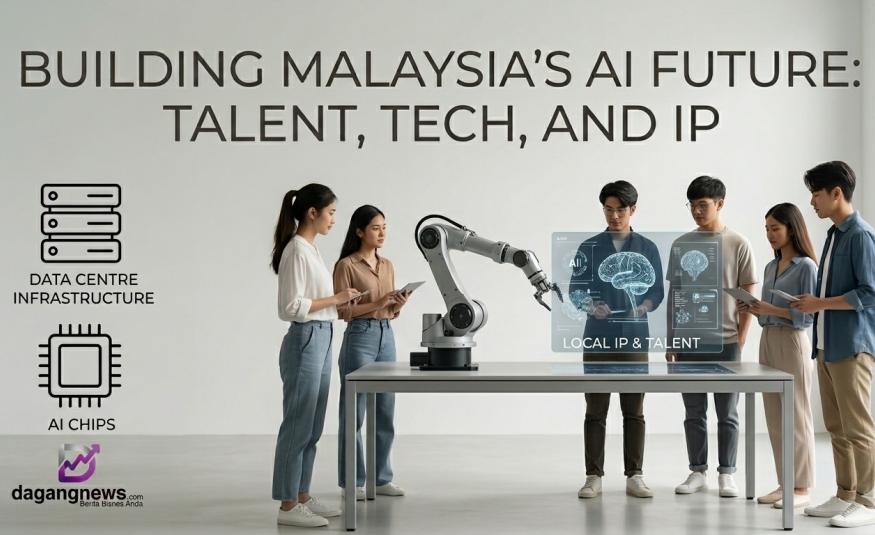
KUALA LUMPUR 5 June – Malaysia's rapidly expanding data centre industry may be attracting billions of ringgit in foreign investments, but without meaningful technology transfer, local content development, and talent creation, the country risks remaining an infrastructure host rather than a technology creator in the global artificial intelligence (AI) economy.
That is the key argument put forward by Dr Zulkifly Abbas, Associate Professor of Electrical and Electronics Engineering at the School of Artificial Intelligence and Robotics (SAIR), Xiamen University Malaysia (XMUM), who believes policymakers should focus less on physical infrastructure and more on ensuring AI investments translate into domestic capabilities, intellectual property, and long-term economic value.
"Malaysia is currently building high-tech real estate for other nations' artificial intelligence," he said.
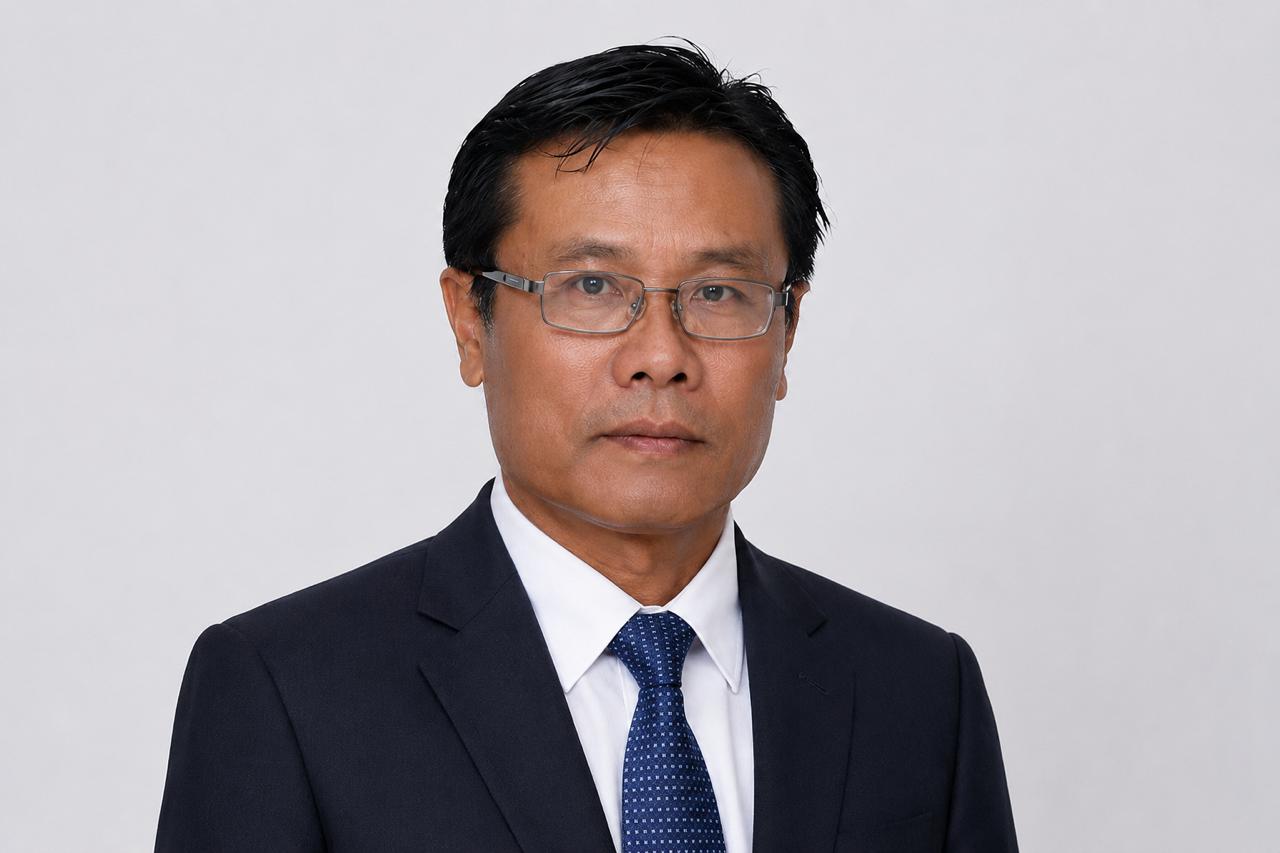
While acknowledging the importance of data centres and digital infrastructure, Dr Zulkifly argued that much of the value generated by the global AI ecosystem remains concentrated in technologies and intellectual property developed elsewhere.
"The high-value layers, including AI chips, large language models, specialised software, and advanced AI systems, are still controlled by foreign companies," he told DagangNews.com.
As a result, Malaysia's participation risks being confined to construction, utilities, facility management, and support services unless deliberate efforts are made to strengthen local participation in higher-value segments of the AI supply chain.
Beyond Infrastructure, Towards Capability
For Dr Zulkifly, the central challenge is not attracting investments but ensuring those investments create lasting benefits for the Malaysian economy.
"If there is one fundamental reality policymakers must understand, it is this: infrastructure does not equal capability."
He said data centres and digital infrastructure are important enablers, but they do not automatically create technological leadership.
"Real value is generated through applications, intellectual property, proprietary models, and highly skilled engineers."
Dr Zulkifly believes success should ultimately be measured by Malaysia's ability to generate local technology, patents, and talent.
"We should stop measuring success solely through the number of data centres built or the volume of investment announced. What matters is whether we are creating our own technology, talent, and intellectual property."
Turning AI Investments into Technology Transfer
According to Dr Zulkifly, Malaysia must ensure foreign AI investments contribute to the development of domestic capabilities rather than functioning as isolated infrastructure projects.
"Malaysia should not simply host AI infrastructure. Local universities, researchers, and software companies should also have access to some of the computing power being deployed here."
His call highlights the need for stronger collaboration between multinational technology firms and Malaysian institutions to ensure knowledge, expertise, and opportunities are shared locally.
The approach mirrors industrial development strategies used in sectors such as aerospace, oil and gas, and advanced manufacturing, where local participation and technology-transfer initiatives have helped strengthen domestic capabilities.
In the AI sector, this could include joint research laboratories, industry–university partnerships, and greater access to computing resources for Malaysian startups and researchers.
The objective, he said, is to ensure foreign investment contributes to a sustainable domestic innovation ecosystem.
Building High-Value Talent
Dr Zulkifly also believes Malaysia must pay closer attention to the quality of jobs created by AI-related investments.
While data centre construction generates immediate economic activity, the longer-term goal should be the development of highly skilled Malaysians capable of participating in advanced AI engineering, robotics, semiconductor design, and systems integration.
"The installation of advanced hardware is progressing faster than the development of local operational expertise," he said.
According to him, Malaysia currently faces a shortage of specialised expertise needed to support next-generation AI infrastructure.
As a result, many facilities continue to depend heavily on foreign specialists for maintenance and optimisation.
"This creates a situation where the hardware is here, but the deeper operational knowledge still resides elsewhere."
The challenge for policymakers is ensuring that AI investments create a pipeline of high-value careers capable of supporting progressive wage growth and long-term economic upgrading.
Bridging the Industry Readiness Gap
Dr Zulkifly believes universities have an important role to play in producing the talent required for a more sophisticated AI ecosystem.
"Universities traditionally focus on mathematical foundations, algorithm development, and simulation environments, while industry needs engineers who can work with messy real-world data, deploy AI systems, and integrate them into existing operational environments," he said.
According to him, one of the biggest challenges facing the sector is the gap between academic training and production-grade engineering.
Companies increasingly require professionals capable of deploying AI systems in real-world operating environments.
At XMUM's School of Artificial Intelligence and Robotics, efforts are being made to address this challenge by combining software development with practical exposure to robotics, embedded systems, and edge-computing technologies.
"Students do not just develop algorithms. They also learn how to deploy AI solutions on physical platforms and industrial systems," he said.
This hands-on approach helps prepare graduates to become systems architects capable of designing end-to-end solutions rather than merely writing code.
Protecting Intellectual Property
Beyond technology transfer, Dr Zulkifly stressed that Malaysia must strengthen safeguards around intellectual property.
"The government only needs to adapt and slightly modify the European AI Act for Malaysia's needs," he said.
However, he cautioned against becoming distracted by AI-related political narratives while overlooking broader economic priorities.
"The government must not get too busy with AI matters for political purposes. What is more important is the economy."
A key concern is the misuse of AI to reproduce or imitate protected intellectual property.
"We must ensure companies do not use AI to copy intellectual property, as this could lead to legal issues."
He added that Malaysian electronics firms should be particularly cautious when using AI tools in semiconductor and integrated circuit development.
"Countries in the European Union already have AI regulations that place strong emphasis on intellectual property protection and safeguarding their economies. Malaysia cannot afford to ignore these issues."
Avoiding an Infrastructure-Only Future
Dr Zulkifly also warned of what he described as an "asymmetric data drain", where valuable data generated in Malaysia ultimately creates economic value elsewhere.
"Malaysia risks exporting its raw digital resources and then buying them back in the form of expensive foreign software and services."
He likened this to the historical pattern of exporting raw commodities while importing higher-value finished products.
To address this imbalance, he called for stronger collaboration between global technology firms and Malaysian institutions, greater support for local innovation, and policies that ensure more value generated from domestic data remains within the country.
Ultimately, he believes Malaysia's AI ambitions will succeed only if policymakers focus on capability development rather than infrastructure expansion alone. The objective, he said, should not be to compete head-on with global technology giants, but to build strengths in areas where Malaysia can develop distinctive advantages, including local-language AI models, regional applications, and specialised industrial solutions.
"True AI sovereignty does not mean trying to outspend the world's largest technology companies. It means developing capabilities that are uniquely relevant to Malaysia and the region."
As Malaysia positions itself as a regional AI and data centre hub, policymakers may increasingly need to focus on value capture rather than investment attraction alone.
For Dr Zulkifly, the key question is no longer how much foreign capital enters the country, but how much technology, talent, and intellectual property remain after the investment cycle is complete. – DagangNews.com
Layari kami terus di DagangNews.com

Orang ramai dipelawa menghantar artikel ke ruangan PARAFRASA di [email protected] mengikut ketetapan berikut:
1. Berbentuk analisis peribadi (Op-Ed) mengenai sesuatu isu atau topik, bukan plagiat
2. Topik yang mendapat perhatian segera dan utama ialah
a. berkaitan perniagaan, perdagangan, keusahawanan, pelaburan
b. Ekonomi MADANI
c. Pembangunan ekonomi negara dan negeri khusus
d. Sektor industri khusus seperti minyak sawit, getah, penerbangan, minyak dan gas
e. ESG
f. Hak pekerja, hak majikan, hak asasi manusia
3. Sains & Teknologi
a. Penemuan penyelidikan Sains & Teknologi serta teori dan konsep
b. Langkah mengkomersialkan produk berasaskan R&D
4. Kaedah penulisan
a) Sebaiknya seorang penulis sahaja pada penama.
b) Berbahasa Malaysia
c) Bahasa Inggeris diterima tetapi akan diterjemah ke Bahasa Malaysia
d) Editor akan memutuskan jika mahu mengekalkan Bahasa Inggeris
e) Tidak melebihi 1,000 patah perkataan dan tidak kurang daripada 600.
f) Jika disertakan gambar, juga amat digalakkan tetapi jangan guna Google (elak langgar hakcipta)
5. Hantar HANYA kepada DagangNews.com
a) Jika didapati artikel sama disiarkan di media lain kerana penulis menghantar merata-rata, nama penulis akan disenaraihitamkan.
b) Sila kemukakan Nama sebenar, Cadangan nama siaran dan emel untuk dihubungi (untuk rekod).