
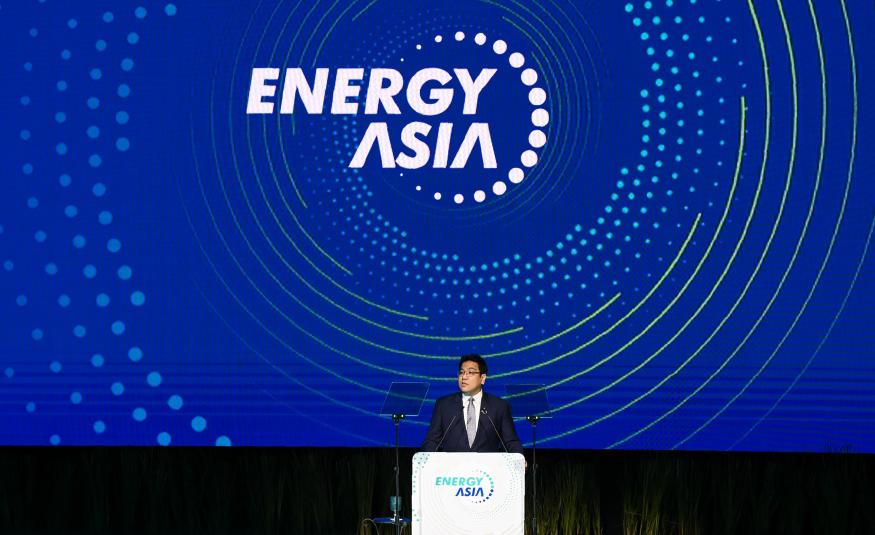
KUALA LUMPUR 16 Jun - In a compelling welcoming address at the Energy Asia 2025 Opening Ceremony, PETRONAS President and Group CEO Tan Sri Tengku Muhammad Taufik delivered a powerful message: the global energy transition hinges on Asia’s leadership — and the time for unified action is now.
“There is no net zero without Asia achieving net zero,” he declared. “And at Energy Asia, we welcome all of you to help in delivering that transition.”
His remarks followed the official launch of Energy Asia 2025 by Prime Minister Dato’ Seri Anwar Ibrahim, who opened the summit with a keynote underscoring Malaysia’s commitment to regional energy security, resilience, and sustainability.
Energy Asia 2025: A Catalyst for Regional Energy Leadership
Held from June 16 to 18 at the Kuala Lumpur Convention Centre, Energy Asia 2025 is hosted by PETRONAS in partnership with CERAWeek by S&P Global. This year’s theme — “Delivering Asia’s Energy Transition” — brings together nearly 3,000 delegates from over 60 countries.
In attendance were Deputy Prime Minister Datuk Seri Fadillah Yusof, PETRONAS Advisor Tan Sri Hassan Marican, and senior executives from energy majors including Shell, TotalEnergies, ENEOS, Mitsubishi, and JX Nippon — reflecting a united front across oil, gas, renewables, and finance.
From Crisis to Collaboration: The Origins of Energy Asia
Tengku Taufik traced the conference’s origins to 2022, when the world was emerging from a global pandemic and navigating energy crises. Those challenges, he said, reminded us of one critical truth: progress is possible when nations act in unison.
“Energy Asia was born from the realisation that Asia’s progress is essential to the world’s transition — and that the barriers we face can only be overcome if we move together.”
Facing the ‘Polycrisis’: Geopolitics, AI, and Climate Uncertainty
Tengku Taufik warned of a global “polycrisis” — an intersection of overlapping disruptions:
- Geopolitical volatility, such as the recent escalation near the Strait of Hormuz, through which 20% of global oil flows.
- Soaring energy demand, driven by AI and data infrastructure, with electricity needs from data centres projected to reach 945 TWh by 2030.
- Backtracking on ESG policies, threatening momentum toward the 1.5°C climate goal.
“These pressures are testing the very limits of our global energy systems,” he said. “But the answer isn’t retreat — it’s coordination.”
Asia’s Moment: Powering Growth, Bridging Gaps
Asia is home to 60% of the global population, serves as the world’s manufacturing engine, and is poised to lead the fifth industrial revolution — but energy access remains deeply unequal:
- 350 million people in Asia-Pacific still face limited electricity access.
- 150 million people have none.
- Fossil fuels still make up over 80% of the region’s energy mix.
Tengku Taufik stressed that progress and equity must go hand in hand.
Three Strategic Priorities: Diversify. Invest. Collaborate.
The PETRONAS CEO laid out three imperatives to guide the region’s energy transition:
1. Diversify the Energy Mix
From sustainable fuels and LNG to hydrogen, wind, solar, and CCS, no option can be left behind.
“Everything will be required. There is no single solution to a challenge this vast.”
2. Scale Up Investment
To meet future demand and climate goals, Asia needs USD 88.7 trillion in energy investment by 2050.
“We must work together to unlock capital — particularly in developing economies where supply is already falling behind.”
3. Foster Regional Collaboration
With Malaysia chairing ASEAN in 2025, the summit’s dialogue can help inform policies affecting over 700 million people.
“The world has overcome crises before through unity — we must apply the same resolve to energy transition.”
Conclusion: Turning Dialogue into Delivery
“Energy is not a luxury. It’s the foundation of human development and economic dignity,” Tengku Taufik said.
As Energy Asia 2025 continues with more than 50 strategic dialogues, cutting-edge tech at the Energy Park, and forward-looking initiatives like the Energy Asia Awards and Future Energy Leaders, the message from Kuala Lumpur is crystal clear:
Asia isn’t waiting for the future — it’s leading it. - DagangNews.com
Layari kami terus di DagangNews.com

Orang ramai dipelawa menghantar artikel ke ruangan PARAFRASA di [email protected] mengikut ketetapan berikut:
1. Berbentuk analisis peribadi (Op-Ed) mengenai sesuatu isu atau topik, bukan plagiat
2. Topik yang mendapat perhatian segera dan utama ialah
a. berkaitan perniagaan, perdagangan, keusahawanan, pelaburan
b. Ekonomi MADANI
c. Pembangunan ekonomi negara dan negeri khusus
d. Sektor industri khusus seperti minyak sawit, getah, penerbangan, minyak dan gas
e. ESG
f. Hak pekerja, hak majikan, hak asasi manusia
3. Sains & Teknologi
a. Penemuan penyelidikan Sains & Teknologi serta teori dan konsep
b. Langkah mengkomersialkan produk berasaskan R&D
4. Kaedah penulisan
a) Sebaiknya seorang penulis sahaja pada penama.
b) Berbahasa Malaysia
c) Bahasa Inggeris diterima tetapi akan diterjemah ke Bahasa Malaysia
d) Editor akan memutuskan jika mahu mengekalkan Bahasa Inggeris
e) Tidak melebihi 1,000 patah perkataan dan tidak kurang daripada 600.
f) Jika disertakan gambar, juga amat digalakkan tetapi jangan guna Google (elak langgar hakcipta)
5. Hantar HANYA kepada DagangNews.com
a) Jika didapati artikel sama disiarkan di media lain kerana penulis menghantar merata-rata, nama penulis akan disenaraihitamkan.
b) Sila kemukakan Nama sebenar, Cadangan nama siaran dan emel untuk dihubungi (untuk rekod).