

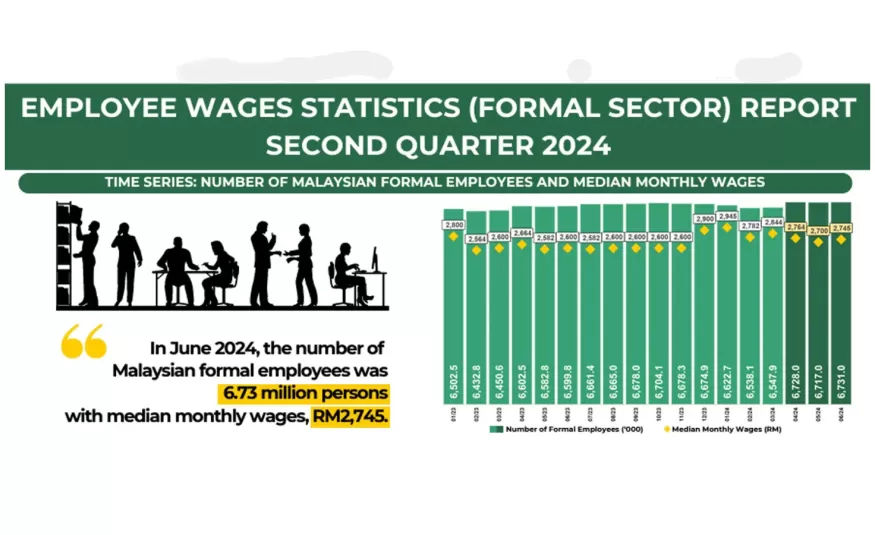
Malaysia is grappling with a wage crisis that threatens its aspirations of becoming a high-income nation.
Despite decades of economic growth, real wages have stagnated or declined, leaving many workers—especially graduates—underpaid and underemployed.
This structural imbalance is exacerbated by an overreliance on low-skilled labor, outdated education systems, and a labor market that fails to reward productivity.
Real Wages: A 40-Year Decline
Former Bank Negara Malaysia Governor Tan Sri Muhammad Ibrahim recently highlighted a stark reality: the real value of starting salaries for university graduates has plummeted over the past four decades.
In 1984, a fresh graduate could earn RM1,300 per month, equivalent to RM7,000–RM8,000 today after adjusting for inflation. However, current starting salaries hover between RM2,000 and RM3,000, indicating a significant erosion in purchasing power.
“In real terms, our wages have declined by at least threefold,” Muhammad stated, warning that without comprehensive reforms in education and economic structures, future generations may be confined to low-skilled labor roles.
Underemployment Among Graduates
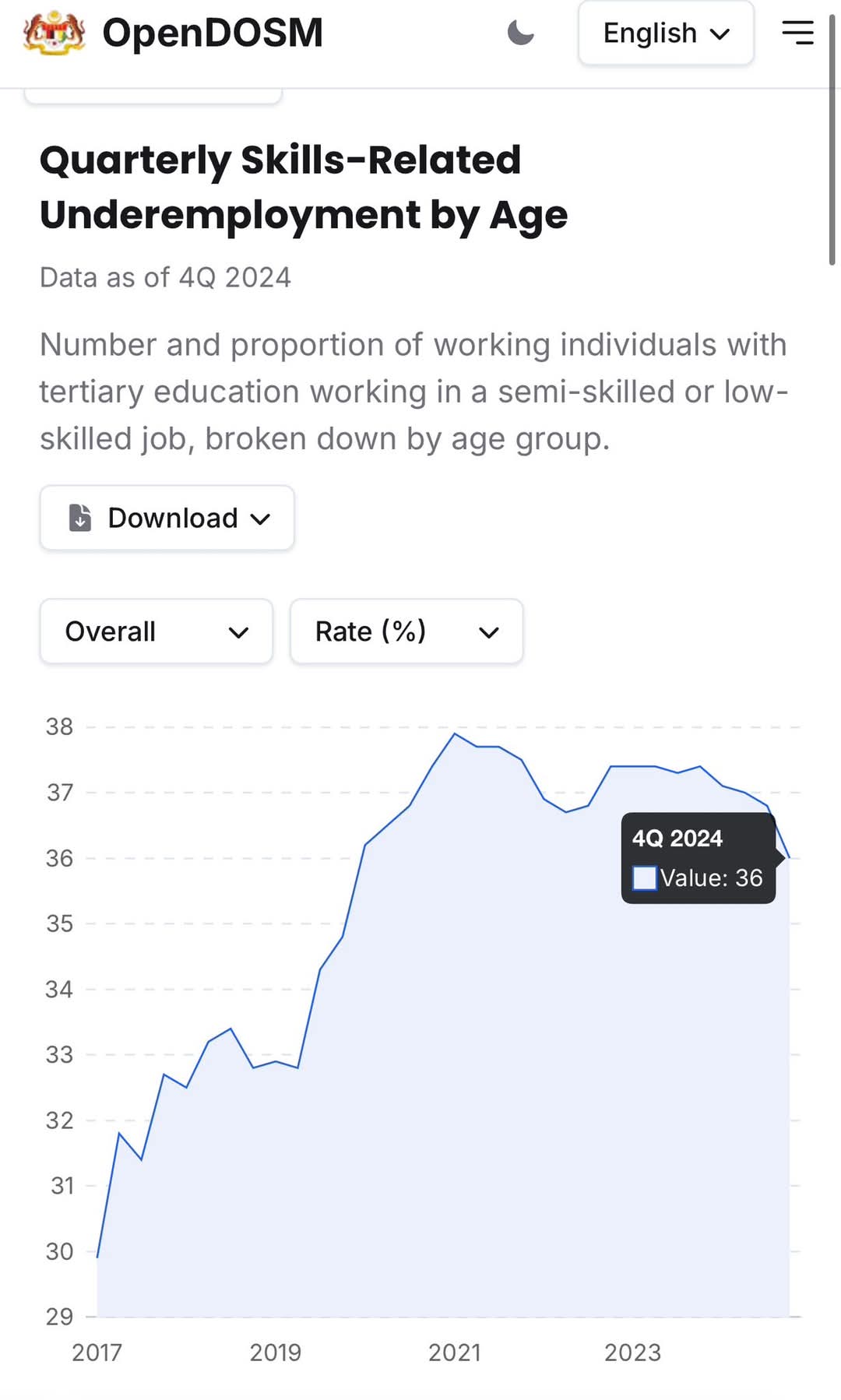
The issue of underemployment is particularly acute among Malaysia’s educated workforce. According to the Department of Statistics Malaysia (DOSM), as of the third quarter of 2024, approximately 1.95 million tertiary-educated individuals were employed in roles that did not match their qualifications, often in semi-skilled or low-skilled positions.
This trend reflects a labor market that is not generating sufficient high-skilled employment opportunities to absorb the growing number of graduates.
In 2023, only 48,700 high-skilled jobs were available, despite over 287,000 graduates entering the job market that year . This mismatch not only underutilizes human capital but also contributes to wage stagnation and dissatisfaction among the youth.
Compensation of Employees: A Shrinking Share
The share of Compensation of Employees (CE) in Malaysia’s Gross Domestic Product (GDP) has remained low compared to developed nations. In 2022, CE accounted for 32.4% of GDP, a figure that has yet to surpass the 40% target set by the government. In contrast, countries like the United States and Germany report CE shares exceeding 50%.
This disparity suggests that Malaysian workers are receiving a smaller portion of the economic pie, with a larger share accruing to capital owners and businesses. The government’s Madani economic framework aims to increase CE to 45% by 2030, but achieving this goal will require significant policy shifts and enforcement.
Structural Challenges and Policy Responses
Several structural issues underpin Malaysia’s wage stagnation. The economy’s reliance on low-cost, low-skilled labor—often from foreign workers—has suppressed wage growth and discouraged investment in automation and skill development.
Additionally, the education system has been criticized for not aligning with industry needs, resulting in graduates ill-prepared for the job market.
In response, the government introduced the Progressive Wage Policy (PWP) in December 2023, aiming to incentivize employers to offer higher wages through subsidies and tax benefits.
However, as of early 2025, only 5,000 workers have benefited from the PWP, representing a mere 0.03% of the workforce. Critics argue that without mandatory compliance and broader coverage, the policy’s impact will remain limited.
The Risk of Talent Drain
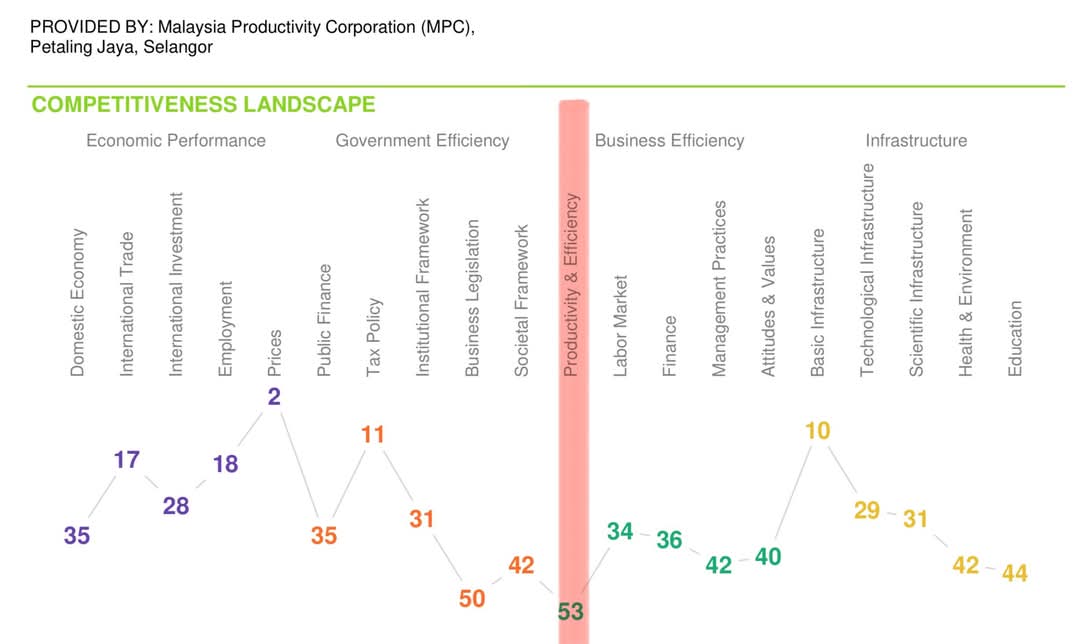
The combination of low wages and limited career prospects has led to a growing brain drain, with skilled Malaysians seeking better opportunities abroad.
For instance, Malaysian nurses earn between RM2,700 and RM3,400 monthly, while their counterparts in Singapore and Saudi Arabia can earn up to RM13,000 and RM7,000, respectively.
This exodus not only depletes the country’s talent pool but also undermines efforts to build a knowledge-based economy. Muhammad Ibrahim cautioned that Malaysia risks becoming a net exporter of labor if these trends continue unchecked.
Conclusion
Malaysia’s wage challenges are deeply rooted in structural inefficiencies and policy shortcomings. Addressing them requires a multifaceted approach: reforming the education system to align with market demands, enforcing labor policies that promote fair compensation, and restructuring the economy to move up the value chain.
Without decisive action, the nation risks entrenching economic disparities and stalling its progress toward high-income status.
As Muhammad Ibrahim aptly noted, the focus should shift from merely tracking GDP growth to ensuring that economic gains translate into meaningful improvements in workers livelihoods. - DagangNews.com
Economist Samirul Ariff Othman is an adjunct lecturer at Universiti Teknologi Petronas, international relations analyst and a senior consultant with Global Asia Consulting. The views in this OpEd piece are entirely his own.
Layari kami terus di DagangNews.com

Orang ramai dipelawa menghantar artikel ke ruangan PARAFRASA di [email protected] mengikut ketetapan berikut:
1. Berbentuk analisis peribadi (Op-Ed) mengenai sesuatu isu atau topik, bukan plagiat
2. Topik yang mendapat perhatian segera dan utama ialah
a. berkaitan perniagaan, perdagangan, keusahawanan, pelaburan
b. Ekonomi MADANI
c. Pembangunan ekonomi negara dan negeri khusus
d. Sektor industri khusus seperti minyak sawit, getah, penerbangan, minyak dan gas
e. ESG
f. Hak pekerja, hak majikan, hak asasi manusia
3. Sains & Teknologi
a. Penemuan penyelidikan Sains & Teknologi serta teori dan konsep
b. Langkah mengkomersialkan produk berasaskan R&D
4. Kaedah penulisan
a) Sebaiknya seorang penulis sahaja pada penama.
b) Berbahasa Malaysia
c) Bahasa Inggeris diterima tetapi akan diterjemah ke Bahasa Malaysia
d) Editor akan memutuskan jika mahu mengekalkan Bahasa Inggeris
e) Tidak melebihi 1,000 patah perkataan dan tidak kurang daripada 600.
f) Jika disertakan gambar, juga amat digalakkan tetapi jangan guna Google (elak langgar hakcipta)
5. Hantar HANYA kepada DagangNews.com
a) Jika didapati artikel sama disiarkan di media lain kerana penulis menghantar merata-rata, nama penulis akan disenaraihitamkan.
b) Sila kemukakan Nama sebenar, Cadangan nama siaran dan emel untuk dihubungi (untuk rekod).