

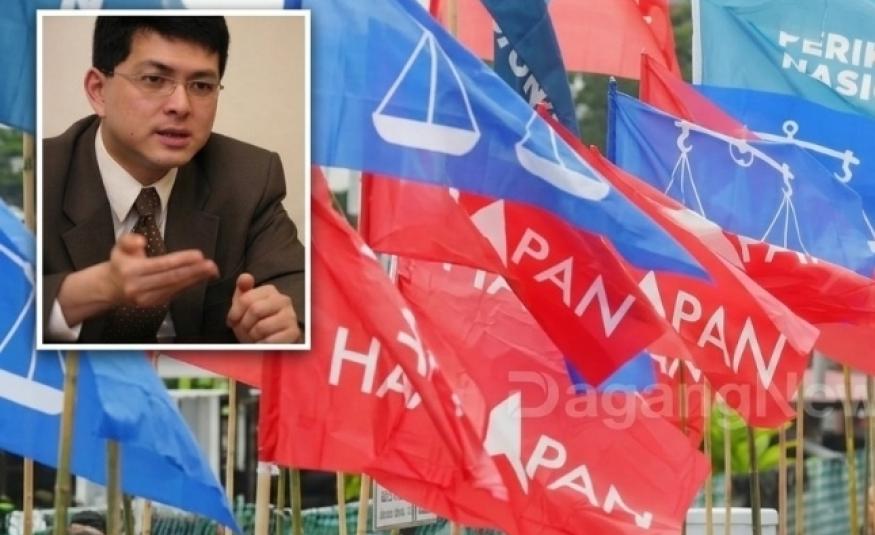
KUALA LUMPUR June 30 - As Johor enters a 14-day campaign that pits the two halves of the federal government against each other, the question is no longer who is contesting, but what the result will mean.
In an interview with DagangNews.com, Dr Oh Ei Sun, one of the country's most widely cited political analysts, shared his assessment of the contest and its implications for Malaysia's political landscape.
Dr Oh, who is a Senior Fellow at the Singapore Institute of International Affairs and Principal Adviser at the Pacific Research Center of Malaysia, is unsentimental about the supposed novelty of allies competing against one another.
"The unity government was named as such in name only from the very beginning," he said. "It has been a coalition government in essence, just like the previous coalition between PN and BN, when they also contested against one another. This is not something new."
He sees little prospect of BN and PH presenting a united electoral front before the next general election.
Political Calculus of a Divided Coalition
"Nobody is seriously thinking about BN and PH presenting a united front to go into the next general election. At best, they could coordinate so that they avoid facing off against each other in some constituencies, but as we see in Johor, even that is a tall order."
The contest, he argued, is ultimately about political leverage, with every coalition seeking to maximise its seat tally before post-election negotiations.
On the likely outcome, Dr Oh expects continuity at the top but believes underlying tensions remain.
"Nobody is seriously doubting that BN will return as the state government, or at least the largest component of it. But it also faces challenges, especially internal power struggles."
Those tensions surfaced ahead of nomination day when Umno Supreme Council member Datuk Dr Mohd Puad Zarkashi resigned from the party, alleging that Johor Umno had lost its autonomy and was being influenced by the palace. Caretaker Menteri Besar Onn Hafiz Ghazi rejected the allegation as inaccurate and misleading, while Johor Umno subsequently lodged a police report.
Opposition Strains and Electoral Benchmarks
PH faces pressure from its own flank with the emergence of Bersama, while despite holding federal power, its public perception and popularity may have slipped over the last few years.
PN, meanwhile, faces internal strains, with PAS and Bersatu getting at one another, while Bersatu’s splinter party, Wawasan, has also entered the political landscape.
From this, Dr Oh draws a common benchmark for all three major coalitions.
"The baseline for each coalition would be to retain the number of seats they won in the last state election. Anything else is a bonus. If they win fewer than last time, that is not a good omen going into the federal election."
His sharpest departure from prevailing political commentary concerns former education minister Maszlee Malik.
Snap Election Signals from Johor
"Nobody is seriously thinking about him being MB, because his party simply cannot win that many seats."
On the role of new entrants, Dr Oh believes Bersama's debut is more likely to hurt PH than BN.
"Bersama would hurt PH more. It is going to divert PH's votes and thereby benefit BN."
That is why he sees Johor less as a state contest than a national political barometer.
"If PH performs much better than the last round, Anwar will be very confident to call a snap general election," he said. "If PH performs much worse, then perhaps he would wait until the very end."
The election was effectively settled within an hour of nomination closing on Saturday.
Electoral Landscape and Key Battlegrounds
Barisan Nasional and Pakatan Harapan confirmed they would contest all 56 state seats against one another, producing 172 candidates, 14 straight fights, 27 three-cornered contests, 12 four-cornered contests and three five-cornered battles.
With 2.72 million registered voters, early voting is scheduled for 7 July, followed by polling on 11 July. A coalition requires 29 seats to form the state government.
BN enters the election defending its supermajority from 2022, with 40 of 56 seats. It has fielded Umno candidates in 37 seats, MCA in 15 and MIC in four.
Onn Hafiz, who also serves as Johor BN chairman, will defend Machap in a straight contest.
PH has mounted a full statewide challenge, with PKR contesting 20 seats, Amanah 19 and DAP 17, including Maszlee Malik in Puteri Wangsa.
Perikatan Nasional is contesting 33 seats after Gerakan opted out following seat disagreements, while Bersama makes its debut in 15 constituencies. Muda is contesting four seats and not defending Puteri Wangsa.
Two dynamics are likely to shape the outcome. First, urban voter turnout, which declined sharply in Johor during the 2022 election. Second, multi-cornered contests, which continue to favour BN due to opposition vote splitting.
For a state central to Malaysia’s manufacturing and trade economy, the result is likely to signal political continuity, but the scale of victory or defeat could influence the timing of the next general election. - DagangNews.com
Layari kami terus di DagangNews.com

Orang ramai dipelawa menghantar artikel ke ruangan PARAFRASA di [email protected] mengikut ketetapan berikut:
1. Berbentuk analisis peribadi (Op-Ed) mengenai sesuatu isu atau topik, bukan plagiat
2. Topik yang mendapat perhatian segera dan utama ialah
a. berkaitan perniagaan, perdagangan, keusahawanan, pelaburan
b. Ekonomi MADANI
c. Pembangunan ekonomi negara dan negeri khusus
d. Sektor industri khusus seperti minyak sawit, getah, penerbangan, minyak dan gas
e. ESG
f. Hak pekerja, hak majikan, hak asasi manusia
3. Sains & Teknologi
a. Penemuan penyelidikan Sains & Teknologi serta teori dan konsep
b. Langkah mengkomersialkan produk berasaskan R&D
4. Kaedah penulisan
a) Sebaiknya seorang penulis sahaja pada penama.
b) Berbahasa Malaysia
c) Bahasa Inggeris diterima tetapi akan diterjemah ke Bahasa Malaysia
d) Editor akan memutuskan jika mahu mengekalkan Bahasa Inggeris
e) Tidak melebihi 1,000 patah perkataan dan tidak kurang daripada 600.
f) Jika disertakan gambar, juga amat digalakkan tetapi jangan guna Google (elak langgar hakcipta)
5. Hantar HANYA kepada DagangNews.com
a) Jika didapati artikel sama disiarkan di media lain kerana penulis menghantar merata-rata, nama penulis akan disenaraihitamkan.
b) Sila kemukakan Nama sebenar, Cadangan nama siaran dan emel untuk dihubungi (untuk rekod).