

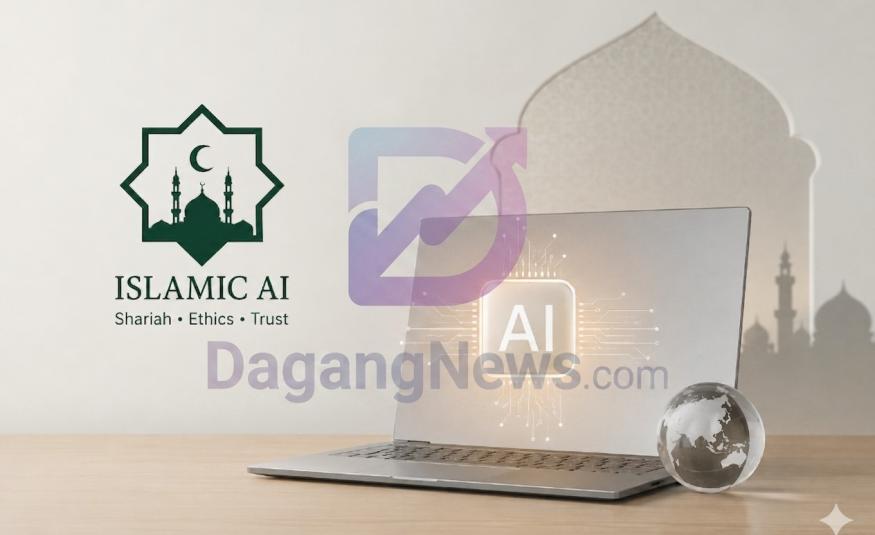
KUALA LUMPUR 26 May — Malaysia is quietly positioning itself as a regional pioneer in Islamic artificial intelligence (AI) governance, a development that could significantly reshape fintech operations, Islamic banking, and hyperscale data centre regulations in the country.
The emerging framework, which blends Shariah principles with AI governance, is expected to influence how artificial intelligence systems are designed, audited and deployed across Malaysia’s digital economy — particularly within Islamic finance, banking and data-driven industries.
For fintech companies, cloud service providers, hyperscale data centres and Islamic financial institutions, this development signals a new layer of compliance that goes beyond conventional regulatory frameworks such as the Personal Data Protection Act (PDPA) and national AI guidelines.
JAKIM–Zetrix AI partnership to develop Shariah AI certification
Key momentum began in September 2025 when the Department of Islamic Development Malaysia (JAKIM) signed a Letter of Intent with Zetrix AI Bhd to develop Shariah compliance certification and governance standards for AI systems.
The initiative was witnessed by Prime Minister Datuk Seri Anwar Ibrahim, according to a joint statement by both parties.
The collaboration is expected to form the basis of a Shariah AI certification framework, potentially positioning Malaysia as one of the first countries to formalise Islamic governance for artificial intelligence systems.
Islamic finance AI agents and Shariah-aligned LLMs
In March 2026, INCEIF University and ISRA Institute expanded their collaboration with Zetrix AI to deploy Islamic finance AI agents powered by NurAI, described by Zetrix AI as the world’s first Shariah-aligned large language model (LLM).
The initiative aims to enable natural language queries on Islamic finance topics while ensuring responses are grounded in Shariah-validated sources integrated with institutional research databases.
Data localisation rules add new compliance layer for data centres
At the same time, Malaysia has strengthened its data localisation direction, requiring hyperscale data centres — including operators such as Google and Microsoft in Johor — to maintain Malaysian data within national borders under emerging policy guidance.
This adds another layer of compliance pressure for cloud operators and data centre players already navigating global AI governance, cybersecurity and data protection requirements.
“Digital fuqaha” needed to close Islamic AI talent gap
Assoc Prof Dr Aimi Zulhazmi Abdul Rashid of UniKL Business School said these developments represent the early formation of a structured Islamic AI governance ecosystem rather than isolated policy initiatives.

“There is no official ‘Islamic AI book’ yet, but the basics are there,” he said, highlighting the urgent need for qualified experts.
A major challenge, he noted, is the lack of specialists capable of bridging Islamic jurisprudence and advanced AI technologies such as large language models, data pipelines and algorithmic systems.
Malaysia is now working to develop what he describes as “digital fuqaha” — Islamic scholars trained in technology — to support future Shariah rulings on AI systems.
Four Islamic principles shaping AI governance in Malaysia
According to Dr Aimi Zulhazmi, future Islamic AI governance frameworks are likely to be built on four classical principles:
1. Maslahah vs mafsadah (benefit vs harm)
AI applications will be assessed based on whether they generate societal benefit or harm, such as medical diagnostics versus harmful deepfake generation.
2. Algorithmic justice in AI systems
Automated decisions, such as loan approvals, must avoid discriminatory outcomes that contradict Islamic principles of justice.
3. Data as amanah (trust)
User data is considered a trust that cannot be exploited without consent, aligning with Malaysia’s PDPA framework but extending it into Shariah accountability.
4. Digital Hisbah (digital oversight system)
A modernised form of market oversight using AI and blockchain to audit compliance, ethics and consumer protection in digital systems.
Malaysia AI governance initiatives gaining momentum
Several initiatives are already shaping Malaysia’s AI governance landscape:
The JAKIM–Zetrix AI Shariah certification initiative (2025)
The National Guidelines on AI Governance and Ethics (AIGE) introduced by MOSTI in 2024
INCEIF–ISRA Islamic finance AI agents integrated with Shariah-validated knowledge systems
Ongoing development of Shariah screening frameworks for AI business models by INCEIF and IAIS Malaysia
These initiatives collectively signal a coordinated effort to integrate Islamic principles into national AI governance structures.
Islamic finance sector and data sovereignty implications
Dr Aimi Zulhazmi said the data sovereignty debate is increasingly being framed through the Islamic concept of wilayah (sovereignty), giving regulatory discussions a moral and Shariah dimension.
This means data governance in Malaysia’s Islamic finance ecosystem may extend beyond legal compliance into religious and ethical accountability, particularly for institutions managing sensitive financial and consumer data.
Talent shortage a key constraint for Islamic AI ecosystem
Malaysia currently has about 3,000 AI professionals against a projected need of 30,000 by 2030, according to World Bank estimates.
Meanwhile, industry surveys cited in the Chambers and Partners AI Practice Guide 2025 indicate that 81 per cent of Malaysian employers face difficulty hiring AI talent despite strong demand.
The shortage is even more acute in Islamic AI, where expertise must combine Shariah knowledge with advanced technical competency.
Early movers in Islamic AI may gain compliance advantage
Analysts say companies that begin investing early in Shariah-AI capability building — or collaborate with institutions such as INCEIF, ISRA and IAIS Malaysia — could gain a strategic advantage as formal governance frameworks mature.
Key recommendations for businesses include:
• Mapping AI systems against Islamic principles such as maslahah, justice, amanah and Digital Hisbah
• Monitoring the JAKIM–Zetrix AI certification framework as a potential procurement standard
• Treating data localisation as both PDPA and Shariah compliance requirement
• Engaging early with Islamic finance research institutions shaping AI governance standards
As Malaysia builds its Islamic AI governance ecosystem, the country could emerge as a global reference point for integrating religious principles into artificial intelligence regulation. - DagangNews.com
Layari kami terus di DagangNews.com

Orang ramai dipelawa menghantar artikel ke ruangan PARAFRASA di [email protected] mengikut ketetapan berikut:
1. Berbentuk analisis peribadi (Op-Ed) mengenai sesuatu isu atau topik, bukan plagiat
2. Topik yang mendapat perhatian segera dan utama ialah
a. berkaitan perniagaan, perdagangan, keusahawanan, pelaburan
b. Ekonomi MADANI
c. Pembangunan ekonomi negara dan negeri khusus
d. Sektor industri khusus seperti minyak sawit, getah, penerbangan, minyak dan gas
e. ESG
f. Hak pekerja, hak majikan, hak asasi manusia
3. Sains & Teknologi
a. Penemuan penyelidikan Sains & Teknologi serta teori dan konsep
b. Langkah mengkomersialkan produk berasaskan R&D
4. Kaedah penulisan
a) Sebaiknya seorang penulis sahaja pada penama.
b) Berbahasa Malaysia
c) Bahasa Inggeris diterima tetapi akan diterjemah ke Bahasa Malaysia
d) Editor akan memutuskan jika mahu mengekalkan Bahasa Inggeris
e) Tidak melebihi 1,000 patah perkataan dan tidak kurang daripada 600.
f) Jika disertakan gambar, juga amat digalakkan tetapi jangan guna Google (elak langgar hakcipta)
5. Hantar HANYA kepada DagangNews.com
a) Jika didapati artikel sama disiarkan di media lain kerana penulis menghantar merata-rata, nama penulis akan disenaraihitamkan.
b) Sila kemukakan Nama sebenar, Cadangan nama siaran dan emel untuk dihubungi (untuk rekod).