
KUALA LUMPUR 24 April – The ongoing economic dispute between the United States and China has led to the development of dual supply chains in the global logistics ecosystem—one tied to China and another entirely independent of it.
DP World Asia Pacific Chief Executive Officer and Managing Director Glen Hilton said the dual supply chain strategy helps diffuse risk but also introduces operational complexity, as businesses must manage additional supplier relationships and navigate various regulatory jurisdictions.
This is especially challenging when aiming to ensure the seamless movement of goods while maintaining cost efficiency.
“Implementing dual supply chain strategies may require forging new trade routes where none previously existed.
"As companies diversify away from dependence on single markets, trade route reconfiguration demands new infrastructure investments—including rail, inland waterways, and ports—to facilitate efficient cargo movement.
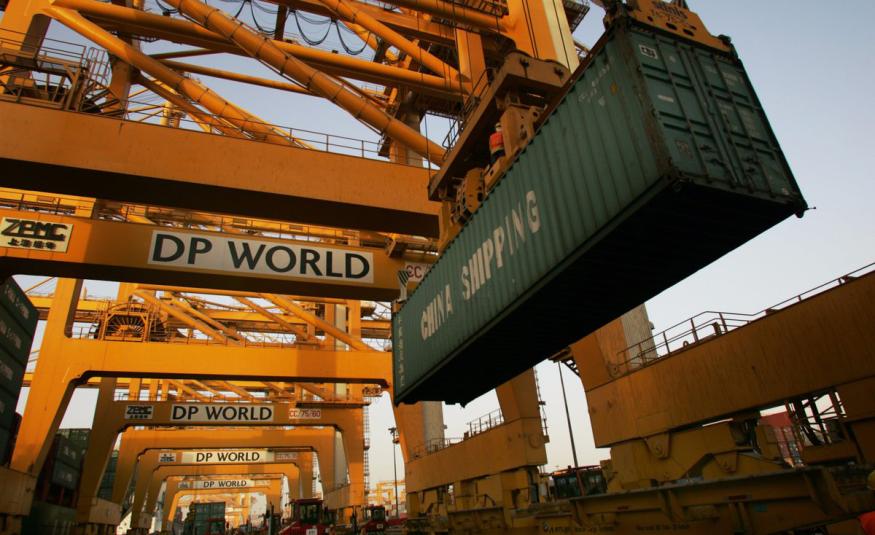
“In light of this, DP World is continuously expanding and enhancing our facilities and capabilities to ensure that trade flows remain unobstructed,” Hilton told DagangNews in a recent email interview.

He noted that DP World can help alleviate these challenges by serving as a single point of contact, managing all aspects of end-to-end supply chain operations.
“In the face of rising geopolitical uncertainty, businesses are looking for a supply chain partner who can anticipate challenges and help navigate potential disruptions.
"With our extensive integrated network and supply chain expertise, DP World can act as a strategic adviser to companies pursuing growth,” he said.
Hilton also highlighted that DP World, a multinational logistics company, offers a wide range of supply chain solutions—from ports and terminals to logistics and marine services—tailored to meet specific customer needs.
“For instance, enhancing end-to-end supply chain visibility has become a top priority for businesses.
"To support this, we offer CARGOES Flow, a multi-vendor enterprise tracking tool for intermodal shipments that provides greater supply chain visibility and helps mitigate delays and financial risks,” he said.
Beyond physical and digital infrastructure, Hilton added, DP World’s on-the-ground teams bring vital expertise in navigating local regulatory environments, customs compliance, and supply chain optimisation—key factors in helping customers design high-performance, efficient logistics solutions.
Meanwhile, the imposition of a growing list of tariffs on specific countries and commodities has triggered an international response, rattled markets and raising the risk of a global recession.
These tariff measures have significantly impacted the logistics sector, pushing up shipping costs, reducing demand for imported goods, and forcing adjustments in supply chains and shipping routes.
As a result, freight forwarders are compelled to adapt their logistics strategies accordingly. - DagangNews.com
Layari kami terus di DagangNews.com

Orang ramai dipelawa menghantar artikel ke ruangan PARAFRASA di [email protected] mengikut ketetapan berikut:
1. Berbentuk analisis peribadi (Op-Ed) mengenai sesuatu isu atau topik, bukan plagiat
2. Topik yang mendapat perhatian segera dan utama ialah
a. berkaitan perniagaan, perdagangan, keusahawanan, pelaburan
b. Ekonomi MADANI
c. Pembangunan ekonomi negara dan negeri khusus
d. Sektor industri khusus seperti minyak sawit, getah, penerbangan, minyak dan gas
e. ESG
f. Hak pekerja, hak majikan, hak asasi manusia
3. Sains & Teknologi
a. Penemuan penyelidikan Sains & Teknologi serta teori dan konsep
b. Langkah mengkomersialkan produk berasaskan R&D
4. Kaedah penulisan
a) Sebaiknya seorang penulis sahaja pada penama.
b) Berbahasa Malaysia
c) Bahasa Inggeris diterima tetapi akan diterjemah ke Bahasa Malaysia
d) Editor akan memutuskan jika mahu mengekalkan Bahasa Inggeris
e) Tidak melebihi 1,000 patah perkataan dan tidak kurang daripada 600.
f) Jika disertakan gambar, juga amat digalakkan tetapi jangan guna Google (elak langgar hakcipta)
5. Hantar HANYA kepada DagangNews.com
a) Jika didapati artikel sama disiarkan di media lain kerana penulis menghantar merata-rata, nama penulis akan disenaraihitamkan.
b) Sila kemukakan Nama sebenar, Cadangan nama siaran dan emel untuk dihubungi (untuk rekod).