
KUALA LUMPUR 11 April - Malaysia's strategic pivot towards becoming a regional Sustainable Aviation Fuel (SAF) hub, as prominently discussed at the recent Airbus Industry Outreach, presents a complex yet promising narrative.
An in-depth analysis reveals a nation leveraging its abundant resources and proactive policies, but also confronting significant logistical and technological challenges.
The pivotal question remains: can Malaysia effectively harness collaborative innovation, particularly through its strengthened alliance with Airbus and its long-term strategic vision, to realize its ambitious SAF goals?
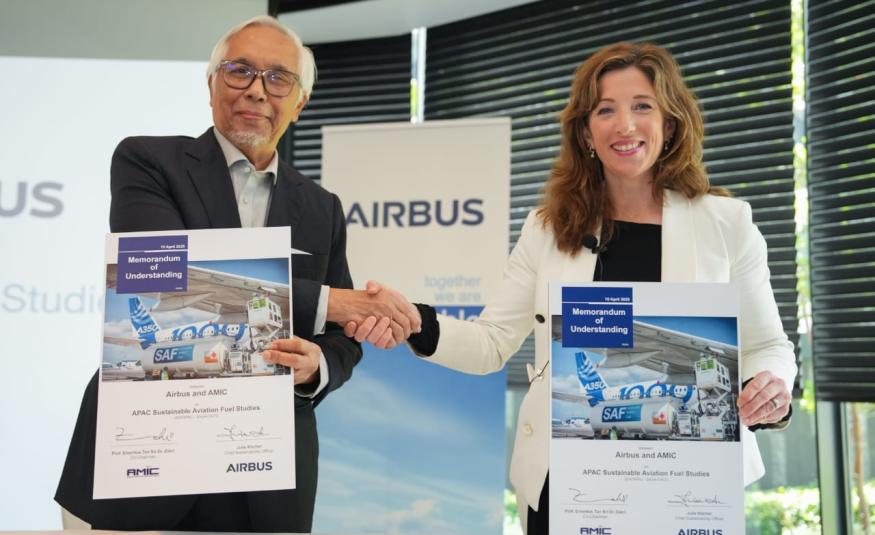
In a landmark move to revolutionize the skies, aerospace giant Airbus and the Aerospace Malaysia Innovation Centre (AMIC) have inked a cutting-edge research and technology deal aimed at powering up the SAF supply chain across the Asia-Pacific region.
This collaboration, as highlighted during the Airbus Industry Outreach, underscores the strategic importance of Malaysia in the region's sustainable aviation future.
Airbus's strategic endorsement of Malaysia's potential, encapsulated in their statement, "We see huge potential here in Malaysia," underscores the nation's burgeoning role in regional sustainability. This aligns seamlessly with Airbus Chief Sustainability Officer Julie Kitcher's overarching vision.

Interviewed by DagangNews following the Airbus Industry Outreach event in Kuala Lumpur on Thursday, Kitcher articulated: "Our primary focus is to ramp up those aircraft, so that our airlines can take delivery of those most fuel efficient planes in support of their competitiveness." This dual emphasis on production efficiency and sustainability is central to Airbus's strategy.
Kitcher's insights shed light on Airbus's approach to balancing production demands with sustainability goals. Addressing supply chain challenges post-COVID, she noted, "We delivered 766 aircraft last year, so the ramp up is progressing and this year our guidance is to deliver around 820 commercial aircraft."
This focus on delivering fuel-efficient aircraft directly supports the industry's net-zero 2050 goal, as these planes represent the "first lever to that sustainability goal."
Furthermore, Kitcher outlined Airbus's comprehensive sustainability priorities, encompassing internal emission reductions and industry-wide targets. "We have a number of priorities for our own company, so to reduce our scope one and scope two emissions by 63% by 2030," she stated, emphasizing the company's commitment to reducing its environmental footprint.
These internal targets, coupled with the industry-wide goal of "improving the CO2 intensity of our aircraft delivered by 46% by 2035," underscore Airbus's holistic approach to sustainability.
When asked on the Airbus-AMIC collaboration, Kitcher explained, "The signing ceremony that just took place with AMIC is basically to research the potential of feedstock in Malaysia, so the different types of feedstock, the different locations of feedstock and their suitability for conversion into sustainable aviation fuel under the sustainability criteria as defined by ICAO."
This research-driven partnership is crucial for Malaysia, facilitating a deeper understanding of its feedstock resources and optimizing the SAF supply chain.
Adding to this context, speaking to DagangNews, Emeritus Professor Tan Sri Dr. Zakri Abdul Hamid, Chairman of AMIC, provided further insight into the long-standing relationship with Airbus and the strategic importance of the collaboration.
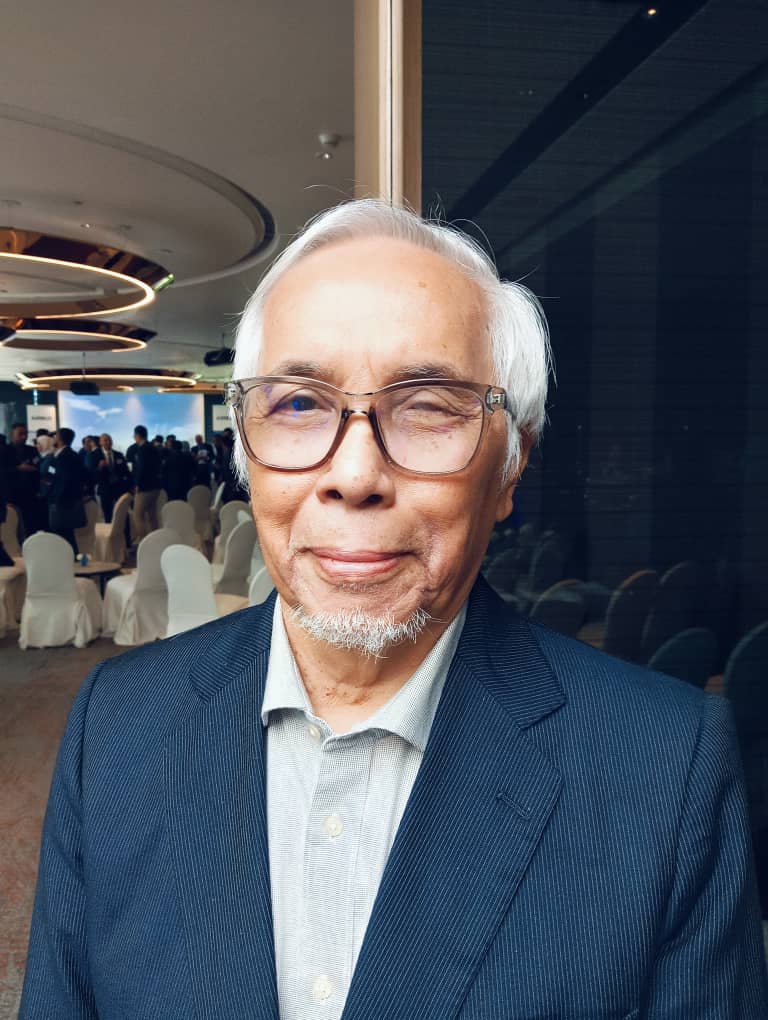
"Well, you must realise we had a very long history with Airbus, we have been in this country for 40 years," he stated, emphasizing the established partnership.
He highlighted the research focus, stating, "This research is to explore the prospect of SAF in this part of the world," and underscored Malaysia's unique advantage, "Because we are a highly biodiverse country."
Dr. Zakri also emphasized the specific research team involved: "One of the lead researchers is Distinguished Professor Dr. Phang Siew Moi from USCI University with Leong Sat Sing Vice President, Group Sustainability Office and also some others." He acknowledged the economic realities of SAF production, stating,
"There's one conditionality still very expensive to produce, so maybe 2030 and beyond, but the roadmap is there, so this is where we are to go.”
He also highlighted the magnitude of the project, stating, "This is a bigger one, bigger money at about three million ringgit and all that."
This long-term perspective highlights the strategic nature of the collaboration, focusing on building a sustainable SAF industry for the future.
However, a critical analysis continues to expose a pressing supply-demand disparity. While Malaysia boasts significant SAF feedstock resources, the current availability of key components, such as used cooking oil, falls considerably short of projected demand.
This necessitates a strategic diversification of feedstock sources and a robust scaling of collection infrastructures.
Furthermore, the geographic distribution of these resources, predominantly concentrated in Sabah, Sarawak, and Johor, presents intricate logistical challenges that demand meticulous planning and substantial investment.
The success of Malaysia's SAF strategy is inextricably linked to its ability to overcome these logistical and technological hurdles through collaborative innovation.
This is precisely where the reinforced research and technology cooperation agreement between Airbus and AMIC becomes pivotal, now further clarified by both Kitcher's and Dr. Zakri's insights.
Earlier in her speech at the Outreach event, Kitcher said, "Decarbonising aviation at speed and scale requires bold action and collaboration across sectors – from airlines, manufacturers and airports to regulators, governments and investors."
This collaboration is vital for Malaysia, facilitating knowledge and technology transfer, and strengthening the nation's SAF production capacity.
Notably, the Airbus-AMIC partnership prioritizes feedstocks and pathways validated under the ICAO-CORSIA framework, ensuring alignment with internationally recognized sustainability standards.
A strategic analysis of the global SAF market reveals a complex landscape characterized by a current supply surplus, largely due to the high cost of SAF.
However, long-term projections indicate a surge in demand, necessitating immediate investment in new SAF projects.
To navigate this landscape, Malaysia must implement a proactive policy framework that incentivizes investment and fosters a level playing field.
"Innovation, technology is on track to achieve progress towards these goals," Kitcher asserts, underscoring the necessity of a supportive regulatory environment.
Malaysia's strategic positioning as the current chair of ASEAN presents a unique opportunity to drive regional sustainability initiatives.
This leadership role, coupled with its abundant natural resources, proactive policies, and strategic collaborations like the one with Airbus and AMIC, positions Malaysia to become a key player in the global SAF market.
By addressing the current challenges and fostering strategic partnerships, Malaysia can transform its ambitious SAF goals into a tangible economic and environmental reality, ensuring a sustainable future for its aviation sector and beyond.
As Kitcher concludes, "For a safe and united world, we need to innovate, inform, and inspire," a sentiment that resonates deeply with Malaysia's strategic ambition. - DagangNews.com
Layari kami terus di DagangNews.com

Orang ramai dipelawa menghantar artikel ke ruangan PARAFRASA di [email protected] mengikut ketetapan berikut:
1. Berbentuk analisis peribadi (Op-Ed) mengenai sesuatu isu atau topik, bukan plagiat
2. Topik yang mendapat perhatian segera dan utama ialah
a. berkaitan perniagaan, perdagangan, keusahawanan, pelaburan
b. Ekonomi MADANI
c. Pembangunan ekonomi negara dan negeri khusus
d. Sektor industri khusus seperti minyak sawit, getah, penerbangan, minyak dan gas
e. ESG
f. Hak pekerja, hak majikan, hak asasi manusia
3. Sains & Teknologi
a. Penemuan penyelidikan Sains & Teknologi serta teori dan konsep
b. Langkah mengkomersialkan produk berasaskan R&D
4. Kaedah penulisan
a) Sebaiknya seorang penulis sahaja pada penama.
b) Berbahasa Malaysia
c) Bahasa Inggeris diterima tetapi akan diterjemah ke Bahasa Malaysia
d) Editor akan memutuskan jika mahu mengekalkan Bahasa Inggeris
e) Tidak melebihi 1,000 patah perkataan dan tidak kurang daripada 600.
f) Jika disertakan gambar, juga amat digalakkan tetapi jangan guna Google (elak langgar hakcipta)
5. Hantar HANYA kepada DagangNews.com
a) Jika didapati artikel sama disiarkan di media lain kerana penulis menghantar merata-rata, nama penulis akan disenaraihitamkan.
b) Sila kemukakan Nama sebenar, Cadangan nama siaran dan emel untuk dihubungi (untuk rekod).