
KUALA LUMPUR 24 April – The global economic landscape is growing more complex by the day.
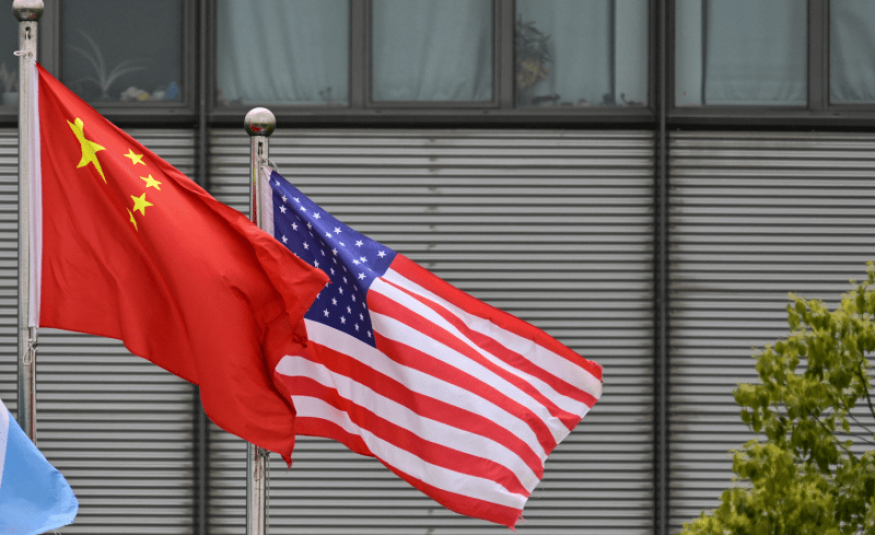
As U.S.-China tensions escalate and global trade becomes increasingly fragmented, trade-reliant nations like Malaysia find themselves at a critical juncture.
A recent article published in DagangNews examined Malaysia’s precarious position amid these shifts, sparking reactions from leading economists.
READ HERE: A New Golden Era: President Xi Jinping's State Visit Cements Malaysia-China Ties with 31 Landmark Agreements, Hailed by Expert
This follow-up piece builds on that discourse, offering a deeper look into Malaysia’s economic resilience and the strategic agility required to navigate today’s uncertainties.
One of the central voices in the initial discussion was Alicia Garcia-Herrero, Chief Economist for Asia Pacific at Natixis. Garcia-Herrero warned that the global balance is shifting toward China, not due to China's strength but because of the rising protectionism in the United States.
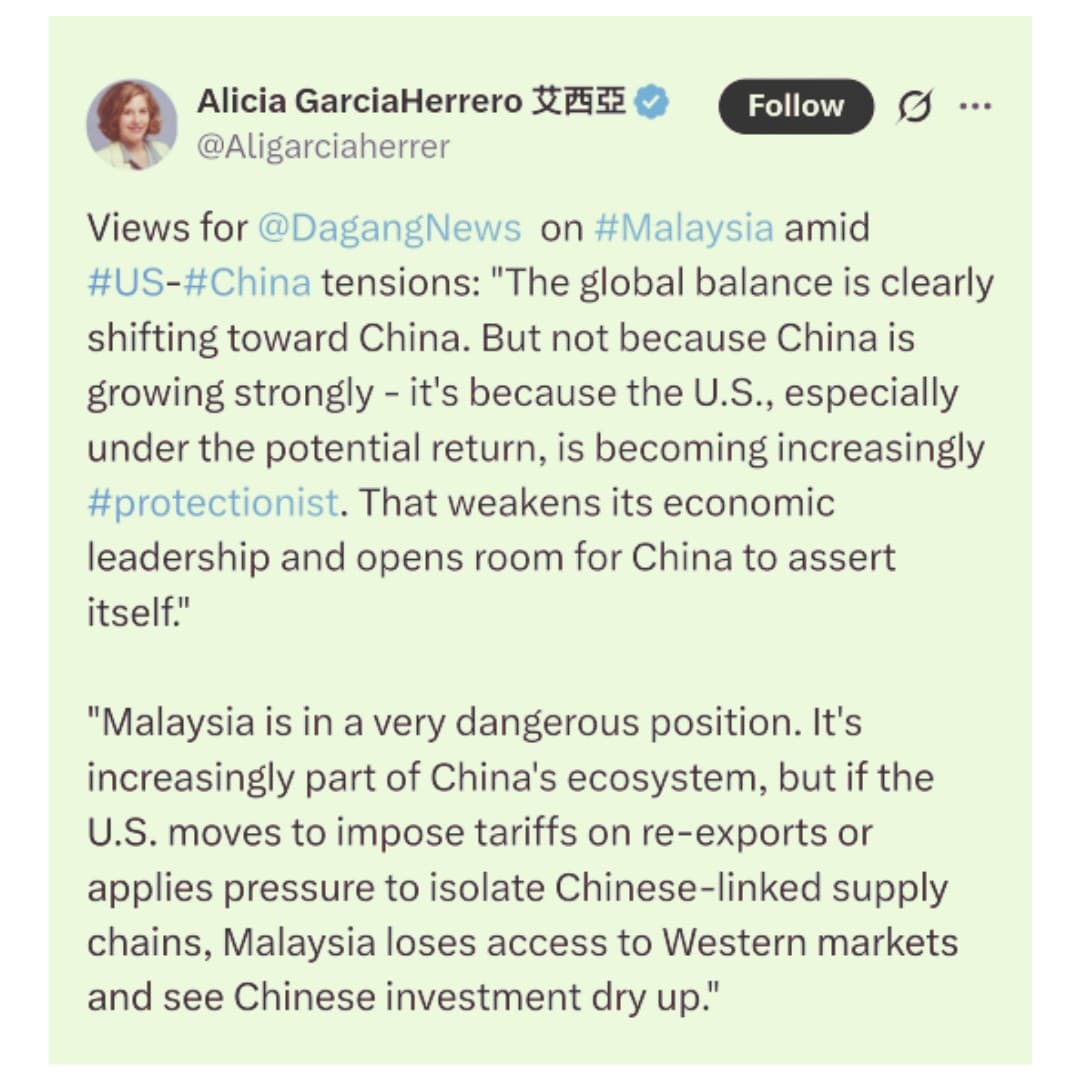
According to her, Malaysia is in a “very dangerous position,” as it becomes more deeply embedded in China’s economic ecosystem.
“If the U.S. imposes tariffs on re-exports or moves to isolate Chinese-linked supply chains, Malaysia could lose access to Western markets. At the same time, Chinese investment might dry up—especially if China no longer needs Malaysia for re-export,” she cautioned.
She also noted that China competes directly with Malaysia in key sectors like electronics and semiconductors, reducing the incentive to invest if strategic needs change.
Still, Garcia-Herrero identified a window of opportunity for ASEAN to position itself as a stable and neutral investment hub—provided it strengthens internal integration. She called on Malaysia to pursue “strategic clarity” rather than choosing sides.
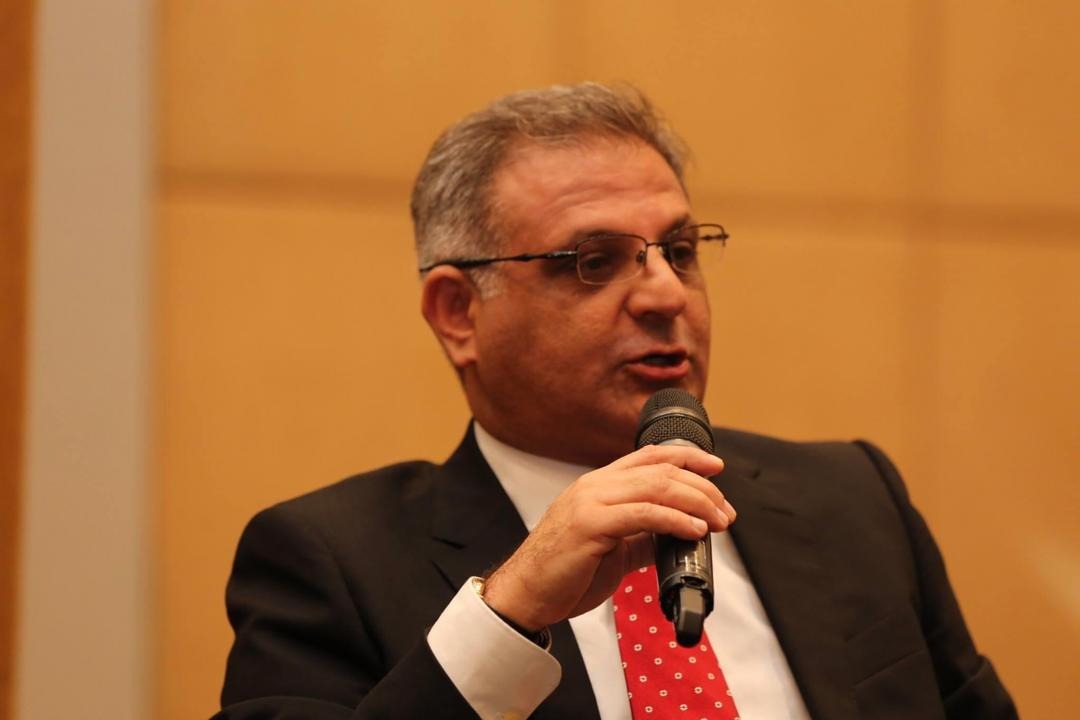
Offering a counterview was Shan Saeed, Global Chief Economist at Juwai IQI, who presented a more optimistic outlook. He emphasized Malaysia’s economic resilience and diplomatic maturity as key strengths in weathering global headwinds.
“Malaysia has managed to maintain her diplomatic relationship in a mature and sagacious manner. Global investors are still pouring investment into the country, and aggregate demand remains strong,” he said.
“Some commentators lack the knowledge and history of the country’s economic resilience and its tenacity in surmounting exogenous challenges at the macro level,” he added.
Saeed’s remarks highlight confidence in Malaysia’s fundamentals and its ability to adapt—traits that have historically supported long-term stability and growth.
Adding a pragmatic dimension to the debate, Dr. Mohd Afzanizam Abdul Rashid, Chief Economist and Head of Social Finance at Bank Muamalat Malaysia Berhad, emphasized the importance of maximizing trade opportunities already available to Malaysia through Free Trade Agreements (FTAs).
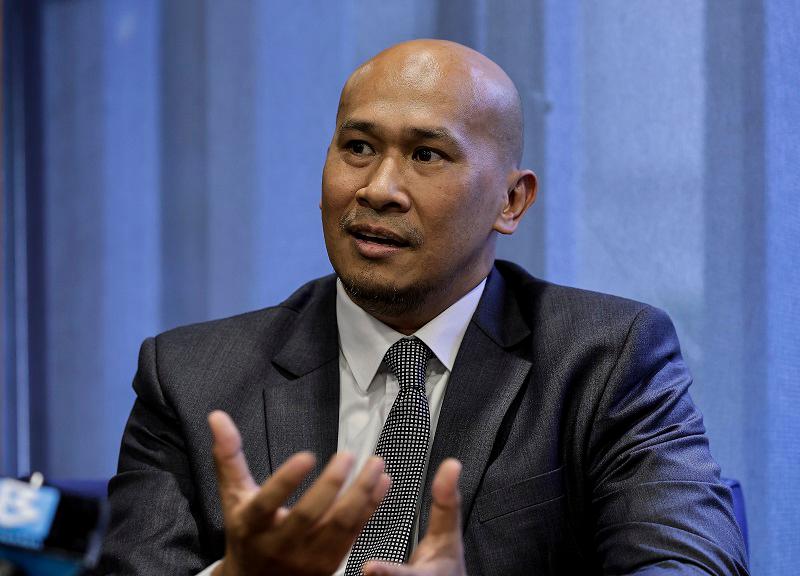
“At a time like this, the government may need to stay nimble in crafting their trade strategies,” he noted.
“The low-hanging fruit is leveraging existing FTAs and making sure utilisation—especially among MSMEs—is high. This ensures that the benefits of these agreements are felt holistically.”
Dr. Afzanizam stressed the importance of pragmatism and adaptability, particularly in engaging trade partners beyond the U.S. and China.
These expert insights underscore the complex interplay of risk and resilience shaping Malaysia’s economic future.
Garcia-Herrero underscores the geopolitical vulnerabilities that come with deep integration into global supply chains. Saeed focuses on the country’s inherent strengths and stability, while Dr. Afzanizam advocates for a policy framework that maximizes Malaysia’s current advantages.
Moving forward, Malaysia must adopt a multi-pronged strategy.
Diversifying trade and investment beyond the traditional power blocs will reduce geopolitical exposure. Investing in digital infrastructure, innovation, and workforce skills will enhance domestic competitiveness.
And most importantly, deeper ASEAN integration can provide a collective buffer against external shocks and amplify regional economic resilience.
In conclusion, Malaysia’s economic trajectory depends on its ability to balance caution with strategic agility.
By embracing its strengths, mitigating risks, and working in concert with regional partners, the country can emerge not only more resilient—but also better positioned in a rapidly evolving global order. - DagangNews.com
Layari kami terus di DagangNews.com

Orang ramai dipelawa menghantar artikel ke ruangan PARAFRASA di [email protected] mengikut ketetapan berikut:
1. Berbentuk analisis peribadi (Op-Ed) mengenai sesuatu isu atau topik, bukan plagiat
2. Topik yang mendapat perhatian segera dan utama ialah
a. berkaitan perniagaan, perdagangan, keusahawanan, pelaburan
b. Ekonomi MADANI
c. Pembangunan ekonomi negara dan negeri khusus
d. Sektor industri khusus seperti minyak sawit, getah, penerbangan, minyak dan gas
e. ESG
f. Hak pekerja, hak majikan, hak asasi manusia
3. Sains & Teknologi
a. Penemuan penyelidikan Sains & Teknologi serta teori dan konsep
b. Langkah mengkomersialkan produk berasaskan R&D
4. Kaedah penulisan
a) Sebaiknya seorang penulis sahaja pada penama.
b) Berbahasa Malaysia
c) Bahasa Inggeris diterima tetapi akan diterjemah ke Bahasa Malaysia
d) Editor akan memutuskan jika mahu mengekalkan Bahasa Inggeris
e) Tidak melebihi 1,000 patah perkataan dan tidak kurang daripada 600.
f) Jika disertakan gambar, juga amat digalakkan tetapi jangan guna Google (elak langgar hakcipta)
5. Hantar HANYA kepada DagangNews.com
a) Jika didapati artikel sama disiarkan di media lain kerana penulis menghantar merata-rata, nama penulis akan disenaraihitamkan.
b) Sila kemukakan Nama sebenar, Cadangan nama siaran dan emel untuk dihubungi (untuk rekod).