
KUALA LUMPUR 11 July – President Donald Trump’s declaration of an additional 10% tariff on countries seen as aligned with BRICS’ “anti-American policies” has cast a long shadow over Malaysia’s economic strategy.
As the country deepens yuan-based trade with China and steps up engagement with BRICS+ initiatives, it now faces a critical balancing act.
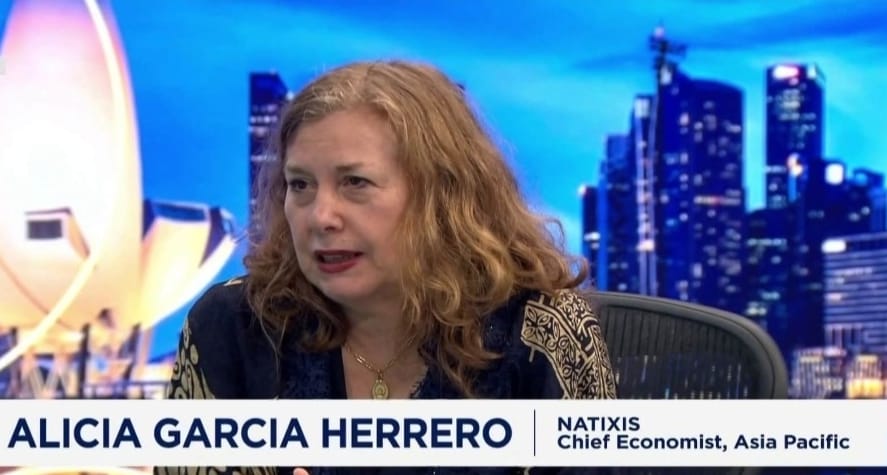
In an exclusive interview, Alicia García Herrero—Chief Economist for Asia Pacific at Natixis and a leading Spanish economist based in Hong Kong—offered a sobering view of the pressures mounting on Malaysia and the broader ASEAN region.
The Dual Threat: Transshipment and De-dollarization
García Herrero identified two key drivers behind Trump’s tariff strategy.
“First, he wants to prevent China from using other countries to transship goods to bypass existing tariffs—and Malaysia is one of them. So that's already a problem,” she noted.
Malaysia’s central role in regional supply chains places it directly in the crosshairs of U.S. scrutiny, particularly if it’s seen as facilitating indirect Chinese exports.
The second, and arguably deeper concern, is Malaysia’s involvement in alternative financial systems.
“If Trump imposes tariffs, they’ll likely target countries building payment systems that challenge the dollar,” García Herrero said. She pointed to evolving platforms like the BRICS Bridge (formerly BIS Bridge) and Hong Kong’s Omniclear—both positioned as alternatives to U.S.- and Europe-led systems such as SWIFT and Euroclear.
Malaysia’s Strategic Dilemma: Dollar or Yuan?
Malaysia’s recorded ¥102 billion in yuan-denominated trade during Q1 2025 marks a significant shift. But García Herrero cautioned against viewing this as mere diversification.
“This is not just about pragmatism. It’s a strategic choice with consequences,” she said. “If Malaysia continues down this path—fully adopting BRICS financial systems and moving away from the dollar—it must be prepared for U.S. retaliation.”
On the flip side, any attempt to appease the U.S. by curbing Chinese transshipment or adopting import restrictions could provoke “massive retaliation from China,” she warned.
“You're caught between a rock and a hard place. Either way, there’s a cost. Neutrality is getting harder to maintain.”
Fractured Unity, Defensive Moves
Trade tensions risk further splintering ASEAN, with some nations moving closer to China and others gravitating toward the U.S. For Malaysia, which has often played a bridging role, this will be a test of its diplomatic and economic agility.
While García Herrero acknowledged tools like capital controls, currency swaps, and reserve diversification, she emphasized that these are reactive buffers.
The core issue is strategic alignment—where Malaysia chooses to stand in an increasingly divided world economy.
Rise of a Multipolar Monetary System
The rise of BRICS financial infrastructure marks a significant step toward a multipolar currency order.
“Yes, Trump is likely to impose sanctions or punitive tariffs eventually,” García Herrero said, viewing BRICS monetary ambitions as a direct challenge to dollar dominance.
For Malaysia, this trend holds both promise and peril. A shift toward regional currencies like the ringgit could enhance ASEAN financial integration, but undoing dollar dependencies won’t be easy—or cheap.
Sectoral Exposure and Emerging Opportunities
While García Herrero did not name specific Malaysian sectors, it is clear that export-heavy industries with U.S. exposure—such as electronics, palm oil, tech, and automotive—would be the most vulnerable to heightened tariffs.
At the same time, sectors aligned with regional integration—such as Islamic fintech, Halal services, or digital platforms facilitating intra-BRICS trade—may gain ground. But the rewards would come with geopolitical costs.
A Nation at a Crossroads
García Herrero’s analysis underscores the complexity of Malaysia’s position. Its geography, economic openness, and pivot toward new monetary systems make it both a frontline actor and a potential casualty in the great geopolitical reshuffle.
“In this environment, choosing not to choose is no longer viable,” she said.
As Trump reshapes U.S. trade policy and BRICS accelerates its financial integration, Malaysia will soon have to decide: protect dollar-centric stability or embrace a more multipolar, but uncertain, future. - DagangNews.com
Layari kami terus di DagangNews.com

Orang ramai dipelawa menghantar artikel ke ruangan PARAFRASA di [email protected] mengikut ketetapan berikut:
1. Berbentuk analisis peribadi (Op-Ed) mengenai sesuatu isu atau topik, bukan plagiat
2. Topik yang mendapat perhatian segera dan utama ialah
a. berkaitan perniagaan, perdagangan, keusahawanan, pelaburan
b. Ekonomi MADANI
c. Pembangunan ekonomi negara dan negeri khusus
d. Sektor industri khusus seperti minyak sawit, getah, penerbangan, minyak dan gas
e. ESG
f. Hak pekerja, hak majikan, hak asasi manusia
3. Sains & Teknologi
a. Penemuan penyelidikan Sains & Teknologi serta teori dan konsep
b. Langkah mengkomersialkan produk berasaskan R&D
4. Kaedah penulisan
a) Sebaiknya seorang penulis sahaja pada penama.
b) Berbahasa Malaysia
c) Bahasa Inggeris diterima tetapi akan diterjemah ke Bahasa Malaysia
d) Editor akan memutuskan jika mahu mengekalkan Bahasa Inggeris
e) Tidak melebihi 1,000 patah perkataan dan tidak kurang daripada 600.
f) Jika disertakan gambar, juga amat digalakkan tetapi jangan guna Google (elak langgar hakcipta)
5. Hantar HANYA kepada DagangNews.com
a) Jika didapati artikel sama disiarkan di media lain kerana penulis menghantar merata-rata, nama penulis akan disenaraihitamkan.
b) Sila kemukakan Nama sebenar, Cadangan nama siaran dan emel untuk dihubungi (untuk rekod).