
KUALA LUMPUR 17 July - Oil is back above US$86 a barrel. Malaysian businesses banking on a stable second half should recalculate now.
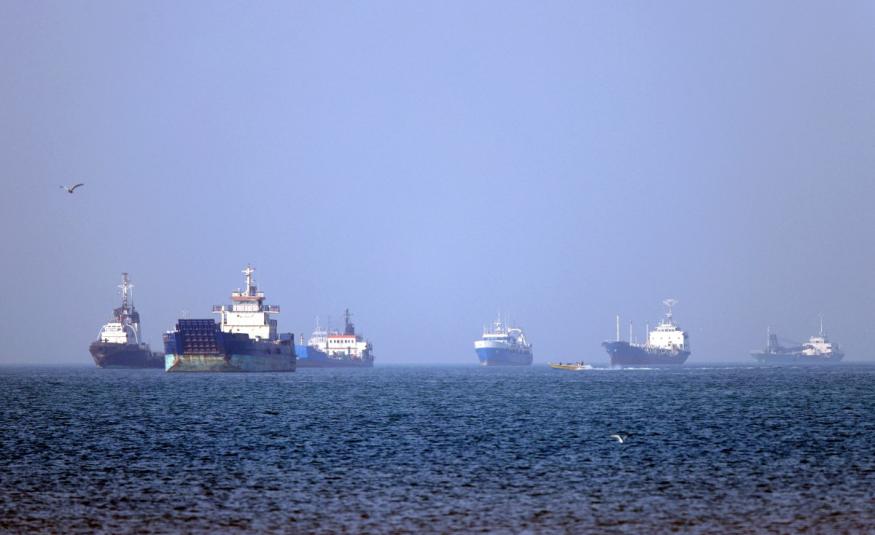
Brent crude touched US$86.19 on 15 July after the United States reinstated its naval blockade on Iranian ports, undoing weeks of calm that had followed a June ceasefire between Washington and Tehran.
For an economy that imports the bulk of its energy and depends on open trade routes through the Gulf, the swing affects household costs, shipping bills and investment planning directly.
DagangNews sought out Dr Alicia García Herrero, Chief Economist for Asia Pacific at Natixis, for a Malaysia-specific read on what businesses and policymakers should be watching.
Her responses are dated 14 July 2026, just before the blockade was reinstated, and remain relevant to the questions Malaysian firms are asking this week.

Targeted relief, not blanket subsidies
Asked what Malaysia's most pressing move should be, García Herrero did not point to broad energy subsidies.
"Malaysia's most urgent priority in the coming months is to shield households and fiscal space from energy-price volatility while protecting its valuable non-aligned positioning," she said, adding that this calls for "well-targeted, fiscally sustainable support measures together with faster diversification into higher-value manufacturing, renewables and services."
For businesses reading the tea leaves on fiscal policy, that is a signal against expecting a repeat of blanket fuel subsidies.
Targeted relief, paired with structural diversification, is the direction she expects—and likely the direction Putrajaya is already leaning.
Shipping costs are not going back down
Malaysian importers and exporters routing goods through the Gulf should not expect freight and insurance costs to fall back to pre-conflict levels once this round of fighting ends.
"Repeated Hormuz disruptions have already produced a structural shift in how markets price insurance, freight and supply reliability," García Herrero said.
She pointed to premiums that are "higher and 'stickier'," rerouting costs "now routinely built into charters," and contracts that "increasingly include chokepoint clauses or diversification requirements."
Her bottom line for logistics planning is that these costs "are likely to outlast any single conflict and will keep baseline logistics costs elevated for Asian importers while encouraging greater storage and non-Gulf sourcing."
Malaysian firms with Gulf-linked supply chains should treat the current cost base as the new normal, not a temporary spike to wait out.
Neutrality has a price tag now, not just a payoff
García Herrero's most direct message for Malaysia concerned its long-held non-aligned stance.
She described it as a genuine commercial asset: "By keeping economic doors open to both the United States and China, Malaysia can reinforce its role as a trusted neutral hub for trade and investment flows that prize predictability."
But she was equally clear that maintaining that position is becoming harder as Gulf volatility layers on top of US-China rivalry.
Speaking on the wider ASEAN picture, she noted that the combination "complicates ASEAN's balancing act by adding immediate inflationary and growth pressures on net energy importers," even as it "opens space for ASEAN as a relatively stable destination for capital and supply chains seeking to diversify away from both direct US-China flashpoints and Middle East risk," provided, she cautioned, "the grouping maintains unity and centrality."
For Malaysia, that trade-off—added inflationary pressure now versus stronger positioning later—is the calculation businesses and policymakers will be making through the rest of the year.
The yuan is quietly gaining ground
One development with quieter but longer-lasting implications for Malaysian trade finance is China's growing preference for settling energy trade outside the US dollar.
García Herrero said a prolonged Gulf conflict "would strengthen Beijing's hand in pushing yuan-denominated energy trade, as both producers and buyers seek to reduce dollar-clearing and sanctions exposure," noting that "China has already expanded such arrangements."
She was careful to temper expectations of a rapid shift: "Full-scale renminbi internationalisation, however, will still be constrained by capital controls and the dollar's liquidity advantages, so expect steady but incremental gains rather than a sudden leap."
For Malaysian firms trading heavily with China, that points to a slow but steady expansion of yuan settlement options worth tracking, rather than an imminent overhaul of how regional trade is settled.
The bottom line for Malaysian businesses
Malaysia is not a bystander to this conflict; it is a direct stakeholder through its energy import bill, its Gulf-routed shipping costs, and its positioning between two competing powers.
García Herrero's message to Malaysian businesses is essentially this: budget for elevated costs as the baseline, not the exception; treat neutrality as an asset that requires active protection, not a passive default; and watch the gradual shift towards alternative trade settlement as it develops, even if it will not reshape currency flows overnight. - DagangNews.com
Layari kami terus di DagangNews.com

Orang ramai dipelawa menghantar artikel ke ruangan PARAFRASA di [email protected] mengikut ketetapan berikut:
1. Berbentuk analisis peribadi (Op-Ed) mengenai sesuatu isu atau topik, bukan plagiat
2. Topik yang mendapat perhatian segera dan utama ialah
a. berkaitan perniagaan, perdagangan, keusahawanan, pelaburan
b. Ekonomi MADANI
c. Pembangunan ekonomi negara dan negeri khusus
d. Sektor industri khusus seperti minyak sawit, getah, penerbangan, minyak dan gas
e. ESG
f. Hak pekerja, hak majikan, hak asasi manusia
3. Sains & Teknologi
a. Penemuan penyelidikan Sains & Teknologi serta teori dan konsep
b. Langkah mengkomersialkan produk berasaskan R&D
4. Kaedah penulisan
a) Sebaiknya seorang penulis sahaja pada penama.
b) Berbahasa Malaysia
c) Bahasa Inggeris diterima tetapi akan diterjemah ke Bahasa Malaysia
d) Editor akan memutuskan jika mahu mengekalkan Bahasa Inggeris
e) Tidak melebihi 1,000 patah perkataan dan tidak kurang daripada 600.
f) Jika disertakan gambar, juga amat digalakkan tetapi jangan guna Google (elak langgar hakcipta)
5. Hantar HANYA kepada DagangNews.com
a) Jika didapati artikel sama disiarkan di media lain kerana penulis menghantar merata-rata, nama penulis akan disenaraihitamkan.
b) Sila kemukakan Nama sebenar, Cadangan nama siaran dan emel untuk dihubungi (untuk rekod).