
KUALA LUMPUR 3 March – The escalation of geopolitical tensions between Iran and Israel has introduced short-term operational friction to global aviation networks. Yet for Malaysia, the impact is manageable, transitory, and strategically navigable — not existential.
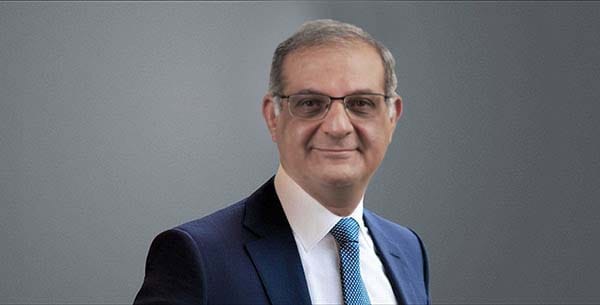
Speaking to DagangNews, Juwai IQI Chief Global Economist, Shan Saeed described the episode as “a volatility spike within an otherwise stable aviation recovery cycle.”
“This is tactical disruption, not structural damage,” Shan said.
“Malaysia’s aviation architecture is Asia-centric. The exposure to Middle East corridor risk is limited and manageable.”
Operational Impact: Tactical, Not Structural
Airspace restrictions across segments of the Middle East have compelled the rerouting of select long-haul corridors. For Southeast Asian carriers, this typically extends Europe-bound flight times by 60–120 minutes.
The incremental cost impact per long-haul rotation is estimated at US$20,000–US$40,000, driven primarily by additional fuel burn and crew-hour adjustments.
However, Malaysia’s exposure remains contained relative to Gulf carriers whose hub-and-spoke models depend heavily on Middle East transit flows.
Kuala Lumpur International Airport (KLIA) functions predominantly as an Asia-Pacific node. Europe-bound capacity represents a modest share of outbound seat distribution.
“This is a margin-compression issue, not a demand-collapse scenario,” Shan emphasised. “Network efficiency adjusts. Airlines are built for rerouting. What matters is duration, not disruption.”
Fuel Economics: Cushioning Through Hedging Discipline
According to Shan, with Brent crude fluctuating within the US$80–US$87 per barrel corridor, cost sensitivity inevitably rises. Aviation turbine fuel typically constitutes 30–40% of airline operating expenses.
However, he said Malaysian carriers operate structured fuel-hedging programmes that dampen immediate volatility pass-through. Partial hedging buffers reduce short-term earnings shocks and allow for gradual fare recalibration rather than abrupt pricing dislocation.
“Hedging discipline is the shock absorber,” Shan noted. “It smooths volatility and prevents immediate balance-sheet stress. That is the difference between turbulence and systemic strain.”
Malaysia’s diversified energy import channels and refined product ecosystem provide further insulation compared to economies heavily reliant on direct Middle East crude routing.
Demand Fundamentals: ASEAN Anchor Remains Intact
Shan said Malaysia’s aviation demand remains anchored by:
● ASEAN intra-regional traffic
● China recovery flows
● India outbound expansion
● Tourism revival momentum
ASEAN is among the fastest-growing aviation corridors globally, with passenger traffic projected to expand 5–7% annually over the medium term.
Importantly, Malaysia is not structurally dependent on Middle East-origin traffic for load factors. The bulk of seat capacity is Asia-centric — a region exhibiting sustained mobility recovery.
“ASEAN is the growth engine,” Shan said. “As long as intra-Asia demand remains intact, Malaysia’s aviation baseline remains structurally supported.”
Strategic Opportunity: Hub Realignment in Asia
As certain Gulf corridors experience temporary congestion or insurance repricing pressures, secondary hubs in Asia may gain relative attractiveness.
Kuala Lumpur offers:
● Competitive airport charges
● A strong low-cost carrier ecosystem
● Expanding long-haul narrowbody capabilities
● Geographic midpoint advantage within ASEAN
Periods of global aviation uncertainty tend to redirect traffic toward stable regulatory environments and cost-efficient hubs — criteria Malaysia satisfies.
“Volatility reshuffles comparative advantage,” Shan explained. “In times of uncertainty, capital and traffic gravitate toward predictability. Malaysia fits that profile.”
Macroeconomic Spillover: Limited Transmission Channels
From a macroeconomic standpoint:
● Aviation contributes roughly 3–4% to Malaysia’s GDP, directly and indirectly.
● Exposure to Middle East trade is modest relative to China, Singapore, and ASEAN linkages.
● Fiscal space and currency stability reduce the probability of secondary shocks.
Even in a scenario where jet fuel costs remain elevated for several quarters, the aggregate GDP drag is likely to be measured in basis points — not percentage points.
“This is friction, not fracture,” Shan said. “Malaysia’s macro foundations are intact. There is no regime shift here.”
Investor Interpretation: Risk Premium, Not Regime Shift
Financial markets tend to initially overprice geopolitical risk before recalibrating toward fundamentals.
The current aviation headwind reflects:
● Temporary cost elevation
● Insurance repricing
● Slight route inefficiencies
It does not represent structural demand erosion, regulatory downgrade, or balance-sheet destabilisation.
Malaysia’s aviation industry today is significantly more capital-disciplined and liquidity-aware than during previous crisis cycles.
“Markets will normalise once risk premiums compress,” Shan added. “This is an operational recalibration phase, not systemic stress.”
Bottom Line
The Iran–Israel geopolitical episode introduces near-term turbulence, but Malaysia’s aviation sector remains structurally sound.
As geopolitical cycles eventually stabilise — as history consistently demonstrates — Malaysia is positioned to resume:
● Capacity optimisation
● Route expansion into high-growth Asian corridors
● Strengthening its role as an ASEAN aviation nucleus
In strategic terms, this is a volatility episode — not a vulnerability exposure. - DagangNews.com
Layari kami terus di DagangNews.com

Orang ramai dipelawa menghantar artikel ke ruangan PARAFRASA di [email protected] mengikut ketetapan berikut:
1. Berbentuk analisis peribadi (Op-Ed) mengenai sesuatu isu atau topik, bukan plagiat
2. Topik yang mendapat perhatian segera dan utama ialah
a. berkaitan perniagaan, perdagangan, keusahawanan, pelaburan
b. Ekonomi MADANI
c. Pembangunan ekonomi negara dan negeri khusus
d. Sektor industri khusus seperti minyak sawit, getah, penerbangan, minyak dan gas
e. ESG
f. Hak pekerja, hak majikan, hak asasi manusia
3. Sains & Teknologi
a. Penemuan penyelidikan Sains & Teknologi serta teori dan konsep
b. Langkah mengkomersialkan produk berasaskan R&D
4. Kaedah penulisan
a) Sebaiknya seorang penulis sahaja pada penama.
b) Berbahasa Malaysia
c) Bahasa Inggeris diterima tetapi akan diterjemah ke Bahasa Malaysia
d) Editor akan memutuskan jika mahu mengekalkan Bahasa Inggeris
e) Tidak melebihi 1,000 patah perkataan dan tidak kurang daripada 600.
f) Jika disertakan gambar, juga amat digalakkan tetapi jangan guna Google (elak langgar hakcipta)
5. Hantar HANYA kepada DagangNews.com
a) Jika didapati artikel sama disiarkan di media lain kerana penulis menghantar merata-rata, nama penulis akan disenaraihitamkan.
b) Sila kemukakan Nama sebenar, Cadangan nama siaran dan emel untuk dihubungi (untuk rekod).