
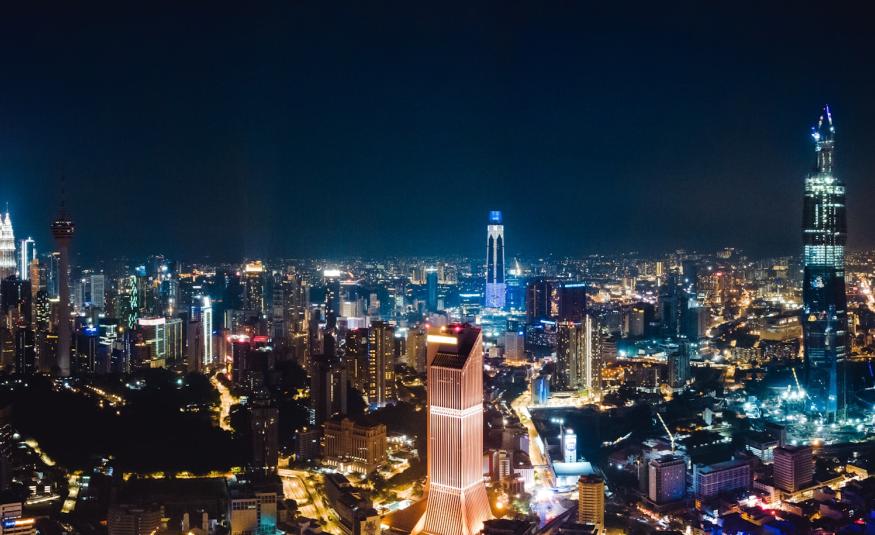
KUALA LUMPUR 21 April – As global economic power fractures along geopolitical lines and trade tensions between the United States and China intensify, Malaysia finds itself at a strategic crossroads.
Long regarded as a key player in global supply chains—particularly in electronics and semiconductor production—Malaysia now faces mounting pressure to choose a path in an increasingly fragmented world.
Amid these shifting currents, DagangNews spoke exclusively with Alicia Garcia-Herrero, Chief Economist for Asia Pacific at Natixis, to unpack what these global trends mean for Malaysia and the broader ASEAN region.
Based in Hong Kong, Garcia-Herrero offers a clear-eyed view of the global realignment—and how Malaysia’s current trajectory could prove both an opportunity and a risk.

The New Global Reality: Fragmentation Over Integration
Garcia-Herrero explained that globalization is giving way to strategic fragmentation, where trade and investment increasingly follow geopolitical allegiances rather than pure economic logic.
“The global balance is clearly shifting toward China,” she told DagangNews. “But not because China is growing strongly—it’s because the U.S., especially under a potential Trump return, is becoming increasingly protectionist. That weakens its economic leadership and opens room for China to assert itself.”
Yet this shift, she warned, is not necessarily stable or beneficial to smaller economies caught in between—like Malaysia.
Malaysia’s Position: Beneficiary or Collateral Damage?
In recent years, Malaysia has attracted significant Chinese investment, particularly in legacy chip production, aligning more closely with Beijing in both rhetoric and trade. But this growing dependence could become a liability if the U.S. further tightens trade restrictions on countries seen as indirect conduits for Chinese goods.
“Malaysia is in a very dangerous position,” Garcia-Herrero cautioned. “It’s increasingly part of China’s ecosystem, but if the U.S. moves to impose tariffs on re-exports or applies pressure to isolate Chinese-linked supply chains, Malaysia could lose access to Western markets and see Chinese investment dry up.”
She added that the situation is further complicated by competition: “China doesn’t just invest in Malaysia—it also competes directly with it in sectors like electronics and chips. If China no longer needs Malaysia for re-export, it has little reason to keep investing.”
ASEAN’s Role and Malaysia’s Strategic Choices
Despite these risks, Garcia-Herrero believes that Malaysia—and ASEAN as a whole—can still capitalize on the changing global landscape.
“There’s a window of opportunity,” she told DagangNews. “If ASEAN can strengthen internal integration and offer a stable, neutral environment for global investors, it can become a viable alternative to both China and the U.S. for global production.”
For Malaysia, this means stepping up its regional leadership, investing in higher-value industries, and diversifying its trade relationships. “It’s not enough to be in the middle,” she said. “Malaysia needs to become indispensable—not just convenient.”
A Policy Agenda for Resilience
Garcia-Herrero outlined several key priorities for Malaysian policymakers:
- Boost investment in advanced manufacturing, beyond low-margin assembly.
- Diversify export markets, particularly toward the EU, Middle East, and fellow ASEAN members.
- Enhance regulatory predictability to attract high-quality foreign direct investment (FDI).
- Navigate digital and green tech strategically, without becoming over-reliant on any one partner.
“Malaysia must avoid becoming a pawn in the U.S.-China chess game,” she said. “It needs to play its own strategy.”
Impacts Beyond Asia: Europe, Aviation, and Global Trade
On a wider scale, Garcia-Herrero told DagangNews that Europe’s push for strategic autonomy—particularly in green and digital sectors—could create openings for Malaysia, provided it can meet higher environmental and governance standards.
She also touched on China’s threat to cancel Boeing aircraft orders, warning that this could hurt China more than the U.S. “There’s no immediate substitute for Boeing. China’s own jet, the C919, isn’t certified internationally,” she explained.
“Meanwhile, countries like India are ready to absorb any production gaps, which could squeeze China’s commercial aviation ambitions.”
Conclusion: A Decisive Decade for Malaysia
The global economy is entering an era where neutrality is no longer a shield, and where economic alignment increasingly mirrors political allegiances.
For Malaysia, the decisions made in the coming months and years will shape its ability to retain investment, maintain access to key markets, and thrive in a more contested global landscape.
As Alicia Garcia-Herrero told DagangNews in closing, “Malaysia has done well to stay open. But in this new world, openness must be matched by strategic clarity. It’s not about picking sides—it’s about staying essential to all sides.” - DagangNews.com
Layari kami terus di DagangNews.com

Orang ramai dipelawa menghantar artikel ke ruangan PARAFRASA di [email protected] mengikut ketetapan berikut:
1. Berbentuk analisis peribadi (Op-Ed) mengenai sesuatu isu atau topik, bukan plagiat
2. Topik yang mendapat perhatian segera dan utama ialah
a. berkaitan perniagaan, perdagangan, keusahawanan, pelaburan
b. Ekonomi MADANI
c. Pembangunan ekonomi negara dan negeri khusus
d. Sektor industri khusus seperti minyak sawit, getah, penerbangan, minyak dan gas
e. ESG
f. Hak pekerja, hak majikan, hak asasi manusia
3. Sains & Teknologi
a. Penemuan penyelidikan Sains & Teknologi serta teori dan konsep
b. Langkah mengkomersialkan produk berasaskan R&D
4. Kaedah penulisan
a) Sebaiknya seorang penulis sahaja pada penama.
b) Berbahasa Malaysia
c) Bahasa Inggeris diterima tetapi akan diterjemah ke Bahasa Malaysia
d) Editor akan memutuskan jika mahu mengekalkan Bahasa Inggeris
e) Tidak melebihi 1,000 patah perkataan dan tidak kurang daripada 600.
f) Jika disertakan gambar, juga amat digalakkan tetapi jangan guna Google (elak langgar hakcipta)
5. Hantar HANYA kepada DagangNews.com
a) Jika didapati artikel sama disiarkan di media lain kerana penulis menghantar merata-rata, nama penulis akan disenaraihitamkan.
b) Sila kemukakan Nama sebenar, Cadangan nama siaran dan emel untuk dihubungi (untuk rekod).