

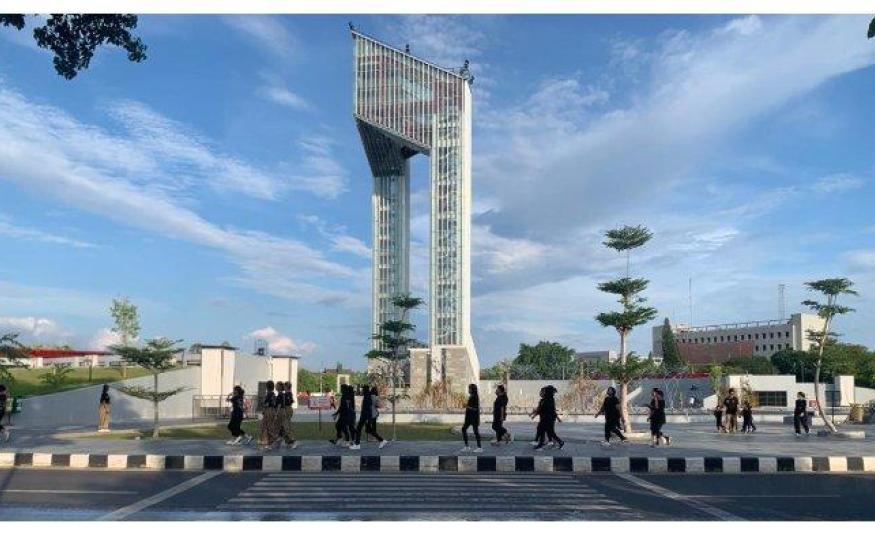
In 1957, Sukarno, Indonesia’s first president and the spiritual architect of a decolonised Southeast Asia, proposed that Indonesia move its capital from Jakarta to Palangka Raya, deep in the forests of Central Kalimantan.
This was no mere bureaucratic reshuffle. It was, for Sukarno, a civilizational realignment—a return to the inner soul of the archipelago.
Palangka Raya, surrounded by lush equatorial rainforest and far from Java’s political intrigues, was envisioned as a neutral, symbolic centre for all Indonesians, especially those outside Java’s gravitational pull.
More than that, Sukarno saw it as a gesture of environmental harmony, postcolonial rebirth, and national unity. “Let us build a capital not on conquest,” he said, “but on aspiration—a panji, a haven.”
Today, over six decades later, the Indonesian government is building Nusantara, a new capital in East Kalimantan. And while many see it as a modern logistical project to relieve Jakarta’s urban pressures, in truth, Nusantara is Palangka Raya reborn.
Sukarno: Architect with a Civilizational Vision
Sukarno was no ordinary head of state. Trained at ITB Bandung and gifted with near-photographic memory, he was a builder not just of physical infrastructure, but of symbols, narratives, and soul.
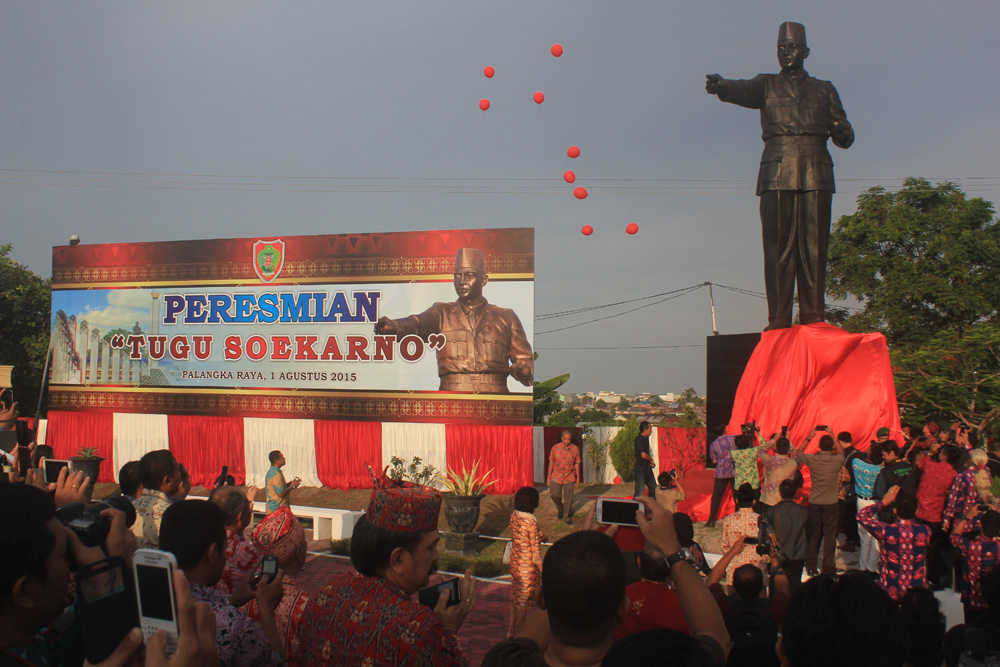
His political imagination stretched far beyond the boundaries of Indonesia. He envisioned a Pan-Malay world—what he called Maphilindo—a civilizational constellation of Malaysia, the Philippines, and Indonesia, united by shared Austronesian ancestry, colonial trauma, and cultural memory.
He drew spiritual lineage from Srivijaya, Majapahit, and Melaka, not from the Dutch or British empires. His vision for Palangka Raya—and now, implicitly, for Nusantara—was of a capital that lay not on the edge of empire but at the heart of the archipelago’s soul.
The Malay World: A Civilizational Continuum
What Sukarno foresaw—what we often forget—is that the Malay world was never just a geographical zone. It was, and still is, a maritime civilization spanning Sumatra, Borneo, Luzon, Mindanao, the Malay Peninsula, and the surrounding seas. It was fluid, cosmopolitan, and resilient. It traded cloves, ideas, and alliances long before colonial lines were drawn.
To speak of Nusantara today is to speak of that broader continuum. It is to recognise that the people of this region were always more connected by their waters than divided by their borders.
And so, Nusantara should not be built as a sterile techno-utopia, divorced from this legacy. Instead, it should reclaim the spirit of a shared Malay-Austronesian destiny—one rooted in ecology, equity, and enduring cultural ties.
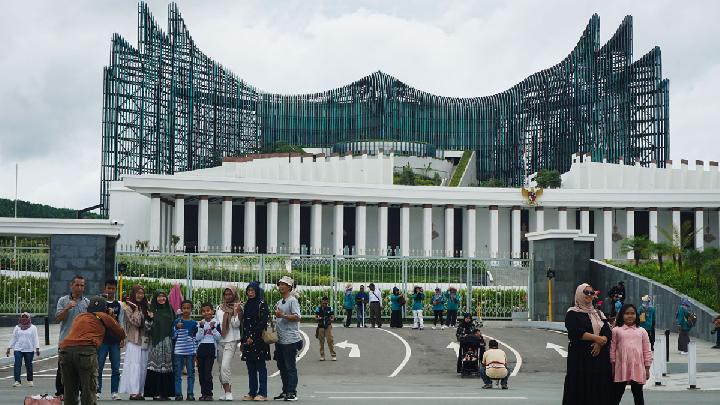
Nusantara Today: Bureaucratic Necessity or Civilizational Promise?
Skeptics rightly point out that the construction of Nusantara risks becoming a top-down, elite-driven megaproject, vulnerable to ecological damage, corruption, or soulless urbanism.
But if it draws from Sukarno’s original intent—if it embraces Kalimantan not just as a site but as a symbol—it can become much more.
It can be a place of convergence, where Dayak, Bugis, Javanese, Chinese, and all Indonesians co-create a new national story. A city that feels native. A city that is not merely new, but renewed.
A Call to the Malay World: Build Where the Soul Still Breathes
For Malaysia, the Philippines, and Indonesia, the rise of Nusantara is an invitation. Not just to witness, but to reflect. Can we, too, relocate our mental maps? Can we embrace Borneo, Mindanao, and the inner seas as the spiritual heartlands of our region?
As Malaysia debates the future of its federation, or as the Philippines seeks greater Mindanao inclusion, let us not forget Sukarno’s message: that civilizational centres are not always coastal, colonial, or convenient. Sometimes they are inland, ancestral, and quietly waiting.
“We are the heirs of the sea empires,” Sukarno reminded us. “Let us build where the soul still breathes.” - DagangNews.com
Samirul Ariff Othman is a Malaysian economist and policy strategist. He writes on economic development, political identity, and regional history. All views expressed here are his own.
Layari kami terus di DagangNews.com

Orang ramai dipelawa menghantar artikel ke ruangan PARAFRASA di [email protected] mengikut ketetapan berikut:
1. Berbentuk analisis peribadi (Op-Ed) mengenai sesuatu isu atau topik, bukan plagiat
2. Topik yang mendapat perhatian segera dan utama ialah
a. berkaitan perniagaan, perdagangan, keusahawanan, pelaburan
b. Ekonomi MADANI
c. Pembangunan ekonomi negara dan negeri khusus
d. Sektor industri khusus seperti minyak sawit, getah, penerbangan, minyak dan gas
e. ESG
f. Hak pekerja, hak majikan, hak asasi manusia
3. Sains & Teknologi
a. Penemuan penyelidikan Sains & Teknologi serta teori dan konsep
b. Langkah mengkomersialkan produk berasaskan R&D
4. Kaedah penulisan
a) Sebaiknya seorang penulis sahaja pada penama.
b) Berbahasa Malaysia
c) Bahasa Inggeris diterima tetapi akan diterjemah ke Bahasa Malaysia
d) Editor akan memutuskan jika mahu mengekalkan Bahasa Inggeris
e) Tidak melebihi 1,000 patah perkataan dan tidak kurang daripada 600.
f) Jika disertakan gambar, juga amat digalakkan tetapi jangan guna Google (elak langgar hakcipta)
5. Hantar HANYA kepada DagangNews.com
a) Jika didapati artikel sama disiarkan di media lain kerana penulis menghantar merata-rata, nama penulis akan disenaraihitamkan.
b) Sila kemukakan Nama sebenar, Cadangan nama siaran dan emel untuk dihubungi (untuk rekod).