
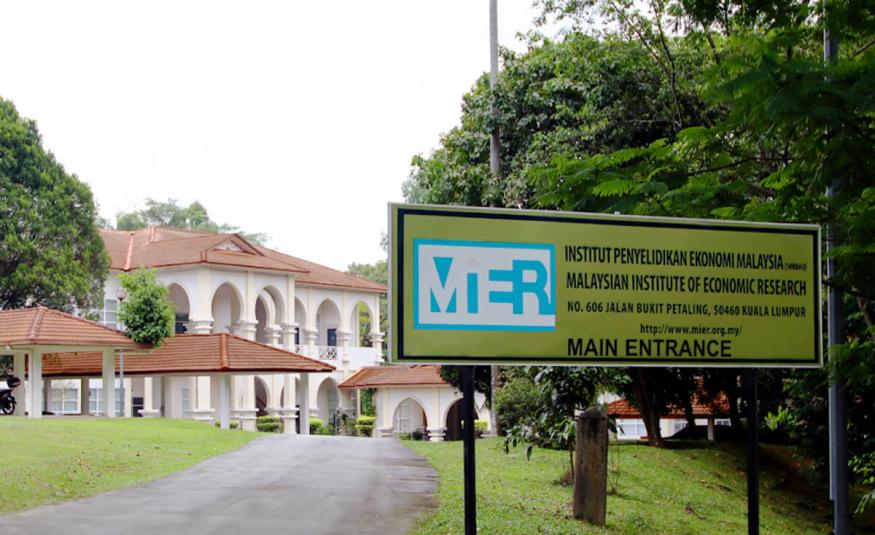
Let us be very clear. MIER’s problem is not money. It is relevance.
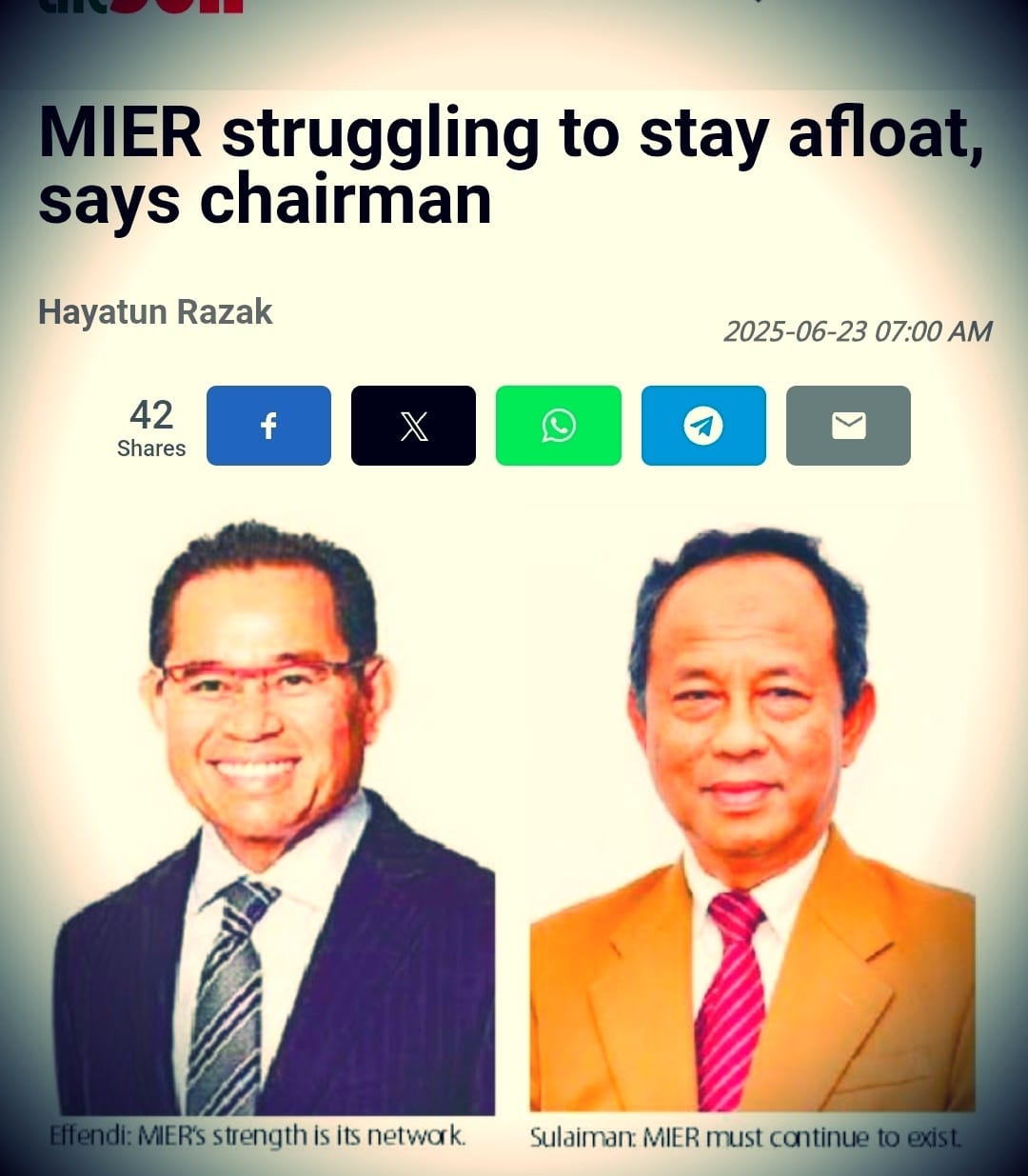
The recent article lamenting that Malaysia’s oldest economic think tank is “struggling to stay afloat” has attracted the usual round of sympathies — noble volunteers, underfunded heroes, and a disengaged government.
But if that is the story, then the situation is worse than we thought. This is not a budget issue. It is an institutional obituary in slow motion.
You Don’t Rescue a Think Tank With Pity
A think tank is not a soup kitchen. It does not exist to be kept alive. It exists to generate ideas — bold, accurate, independent — that help a nation compete, adapt, and survive.
When MIER’s board starts meeting weekly just to keep it alive, and when trustees begin footing the electricity bill themselves, what you are witnessing is not valour. It is failure of structure and strategy. A national institution that runs on donations is no longer an institution. It is a nostalgia project.
Singapore’s Institute of Policy Studies, Korea’s KDI, even Thailand’s TDRI — these are outfits that reinvented themselves, diversified funding, and maintained intellectual discipline.
What has MIER done instead? It has pivoted to cosying up to banks and chasing sponsorships — a strategy better suited for a consultancy, not a national think tank.
Where Is the Thinking? Where Is the Surveillance?
Once upon a time, MIER produced real value. Forecasts. Indices. Independent views on fiscal direction and macroeconomic strategy.
Now, look at the data. Pre-COVID, MIER’s Business Conditions Index (BCI) had a robust representation of firms in its sample. Today, only a fraction respond — and even those are no longer tracked with consistency across quarters.
The Consumer Sentiment Index (CSI) has likewise shrunk into statistical irrelevance. These once-reliable signals are now ignored by Bank Negara, DOSM, and regional analysts. That’s not oversight. That’s judgment.
Garbage In, Garbage Out. When your sampling is poor, your methods outdated, and your people leave — what do you expect?
The departure of key architects behind MIER’s flagship indices — particularly those with institutional memory and methodological expertise — has caused a haemorrhage not yet repaired.
Worse, the termination of its long-standing partnership with Merdeka Center — Malaysia’s foremost polling agency — under questionable terms, signals a regression into internalisation without the analytical bench strength to support it.
That’s not autonomy. That’s amateurism.
Brown Bags and Anachronisms: A Think Tank or a Policy Club?
The recent “Brown Bag” talk on the 13th Malaysia Plan is a case in point. Instead of sharpening national strategy, it dissolved into vague recommendations for annual plan reviews. Is this think-tanking — or committee-grade commentary?
Worse still were earlier seminars on the Harmonised Sales and Service Tax (HSST) — a concept already buried in confusion and contradiction — being treated as visionary reform.
The HSST proposal floated in one recent session offered no clear modelling of revenue-neutral thresholds, regressivity risks, or compliance mechanisms — the very basics of sound tax policy design.
If your seminars consistently regurgitate half-baked ideas with no fiscal, legal, or implementation rigour — you are not educating the nation. You are wasting its time.
Independence Is Not the Same as Influence
The chairman boasts of MIER’s new collaboration with Affin Bank. Fine. But let’s not pretend this is policy influence. It is a publicity roadshow.
A think tank that no longer publishes authoritative papers on inflation, subsidy reform, industrial strategy, or fiscal buffers — but focuses on paid conferences and media panels — is no longer in the business of national thought leadership. It’s moonlighting as an events company.
Ask the Hard Questions
What is MIER’s value-add in 2025?
Does it provide analysis that Bank Negara or DOSM cannot?
Are its models outperforming those from universities or private consultancies?
Is its output cited? Respected? Or has it faded into academic background noise?
Right now, the answers are uncomfortable. MIER is not setting the conversation — it is reacting to it.
It is not identifying trends — it is trying to catch up to them.
Credibility, once lost, is not easily regained. Nostalgia is not a substitute for national utility.
Malaysia Needs Independent Voices — But They Must Be Sharp
Let us not confuse independence with impact. You can be proudly independent and proudly irrelevant.
Yes, Malaysia needs more independent institutions. We need contrarian forecasts, competing models, and honest critique. But we need them to be competent. Technically sound. Courageous. Forward-facing.
If MIER wants to survive — and matter — it must professionalise its leadership, invest in rigorous analytics, rebuild its research core, and define clearly what it offers that no one else can.
Otherwise, the conclusion writes itself: “You don’t save a think tank with sympathy. You save it with clarity, credibility, and a reason to exist.”
A think tank that must beg to exist has already lost the battle for relevance. And in an age of global disruption, Malaysia deserves much better. - DagangNews.com
Samirul Ariff has contributed to regional and international discussions on economic governance, institutional reform, and macroeconomic strategy. All views expressed are his own.
Layari kami terus di DagangNews.com

Orang ramai dipelawa menghantar artikel ke ruangan PARAFRASA di [email protected] mengikut ketetapan berikut:
1. Berbentuk analisis peribadi (Op-Ed) mengenai sesuatu isu atau topik, bukan plagiat
2. Topik yang mendapat perhatian segera dan utama ialah
a. berkaitan perniagaan, perdagangan, keusahawanan, pelaburan
b. Ekonomi MADANI
c. Pembangunan ekonomi negara dan negeri khusus
d. Sektor industri khusus seperti minyak sawit, getah, penerbangan, minyak dan gas
e. ESG
f. Hak pekerja, hak majikan, hak asasi manusia
3. Sains & Teknologi
a. Penemuan penyelidikan Sains & Teknologi serta teori dan konsep
b. Langkah mengkomersialkan produk berasaskan R&D
4. Kaedah penulisan
a) Sebaiknya seorang penulis sahaja pada penama.
b) Berbahasa Malaysia
c) Bahasa Inggeris diterima tetapi akan diterjemah ke Bahasa Malaysia
d) Editor akan memutuskan jika mahu mengekalkan Bahasa Inggeris
e) Tidak melebihi 1,000 patah perkataan dan tidak kurang daripada 600.
f) Jika disertakan gambar, juga amat digalakkan tetapi jangan guna Google (elak langgar hakcipta)
5. Hantar HANYA kepada DagangNews.com
a) Jika didapati artikel sama disiarkan di media lain kerana penulis menghantar merata-rata, nama penulis akan disenaraihitamkan.
b) Sila kemukakan Nama sebenar, Cadangan nama siaran dan emel untuk dihubungi (untuk rekod).