

If you want to understand where Malaysia is going, don’t just look at its five-year plans or GNI targets—look at who it chooses to celebrate as heroes.
Because in Malay society, the idea of a wira (hero) is not simply about battlefield valor or political prominence. It’s a living metaphor for the nation’s moral compass, its cultural identity, and increasingly, its definition of progress.
Shahruddin Maarof, a key scholar of Malay literary and cultural studies, makes this point eloquently: the Malay hero is forged not just in the crucible of conflict, but in the alignment of values—budi pekerti (moral virtue), kesetiaan (loyalty), kepahlawanan (courage), and ilmu (wisdom). These elements don’t just describe the hero—they describe the kind of development Malaysians want: one that is ethical, communal, and intellectually grounded.
Malay heroism has always reflected the social contract of its time. In the classical age, Hang Tuah’s unwavering loyalty to the Sultan symbolised an idealised feudal order—one where hierarchy was sacrosanct and personal sacrifice upheld collective harmony.
But this model was complicated by figures like Hang Jebat, who challenged injustice in the name of moral conscience. While Tuah represented loyalty, Jebat became a proto-democrat, fighting for justice even if it meant rebelling against the crown. These two characters—locked in both friendship and moral conflict—became enduring symbols of the internal tensions between tradition and reform, hierarchy and equity.
Shahruddin’s lens helps us see these figures not merely as mythical relics, but as embodiments of evolving Malay ideas about societal advancement. In his writings, he touches on a profound notion: that pembangunan (development) in the Malay worldview cannot be reduced to material wealth or infrastructure alone.
True development must involve pembangunan insan—the growth of human character, intellect, and ethics. A developed nation, in this view, is one that produces citizens—and leaders—with budi, ilmu, and tanggungjawab (responsibility).
This cultural DNA carried over into the anti-colonial period, where figures like Tok Janggut and Mat Kilau stood not just for territorial resistance, but for the protection of indigenous values, faith, and social balance.
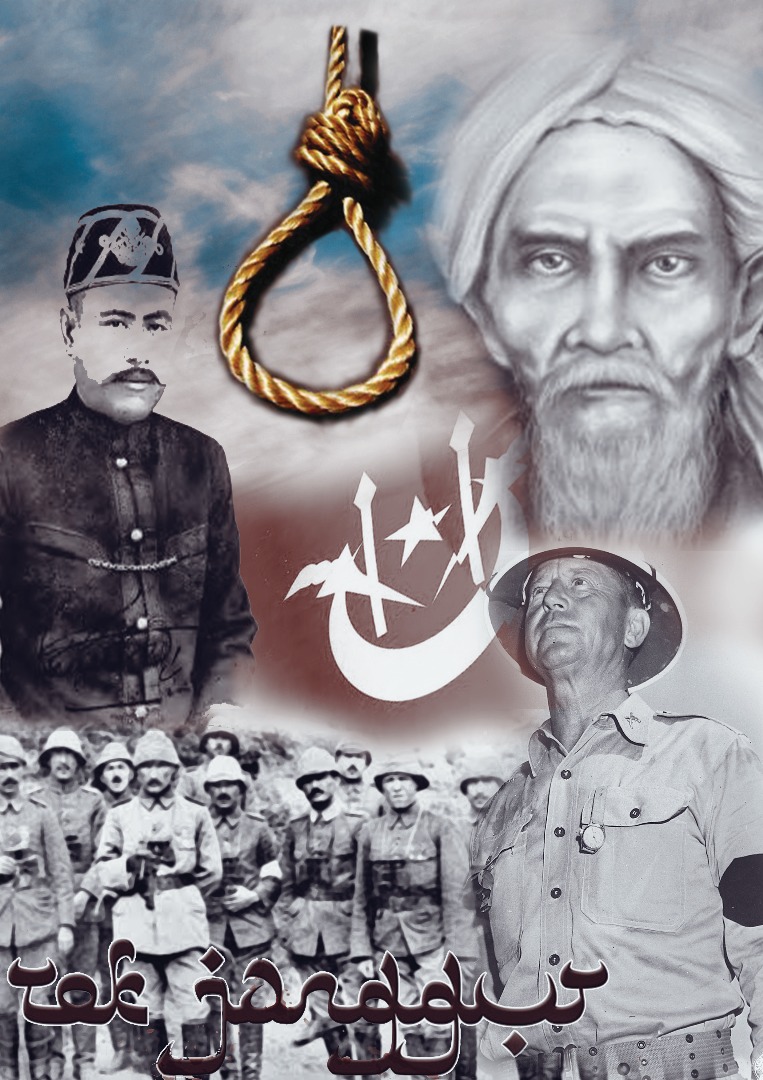
They weren’t merely opposing taxation or British rule; they were defending a way of life in which justice and moral order were inseparable from governance. These heroes saw development not as a Western import but as the preservation and empowerment of local dignity.
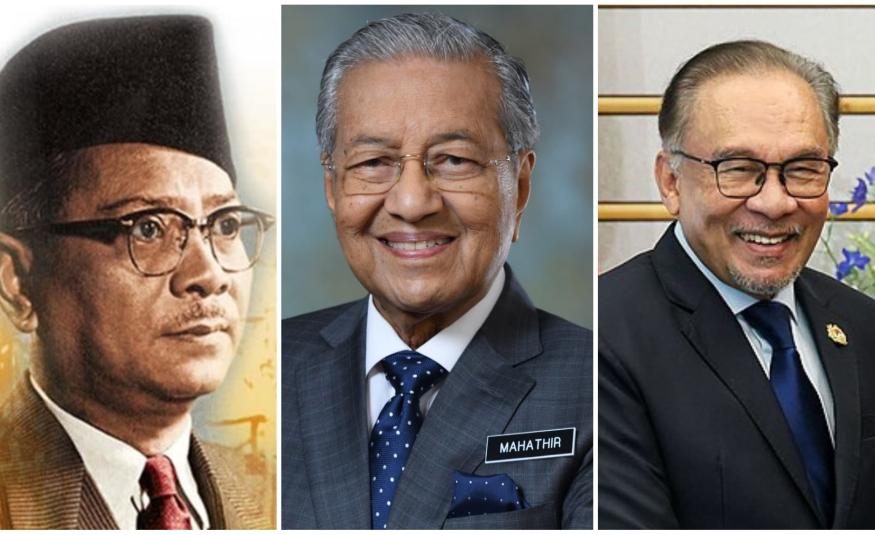
Fast forward to independence, and Tunku Abdul Rahman becomes the emblem of pembangunan melalui perpaduan—progress through unity. His heroism was measured not in military campaigns, but in his ability to envision and negotiate a multiracial, sovereign Malaysia.
Then came Mahathir Mohamad, who introduced a new paradigm: development through modernisation and industrialisation. Under Mahathir, the hero became a technocrat-warrior—armed not with a keris, but with macroeconomic targets, mega-projects, and a fierce Asian pride.
And yet, Mahathir’s brand of heroism still appealed to Shahruddin’s framework: he positioned himself as a moral guardian of national dignity, a protector of maruah Melayu, and a defender of sovereignty in a globalised world.
But in the age of Reformasi, the concept of the hero shifted again. Anwar Ibrahim’s political saga—marked by imprisonment, political exile, and eventual resurrection—recast the Malay hero as a moral sufferer. His journey reflects the deeper yearning of the rakyat for leaders who embody justice, accountability, and reform.
In a society grappling with corruption, inequality, and identity politics, Anwar’s brand of heroism is not about physical strength or administrative might, but about ethical resilience. He becomes a symbol of pembangunan moral—the idea that Malaysia cannot move forward without first confronting its conscience.
This brings us full circle. From Hang Tuah’s palace loyalty to Anwar’s street-level reform, the Malay hero has always been a reflection of what society values most at a given moment. And embedded in every hero’s arc is a statement about what progress looks like.
Shahruddin Maarof helps us see that this isn’t just about GDP or the next industrial master plan—it’s about cultivating the human spirit, defending justice, and keeping society anchored to its moral roots even as it modernises.
But here’s where it gets even more interesting. Malay heroism doesn’t just operate in isolation—it reflects a broader cultural logic that sets Malay society apart. There’s something deeply unique in how the Malays perceive power, legitimacy, and development.
Take budi, for instance. It isn’t just about politeness; it’s a philosophical worldview where morality, emotional intelligence, and restraint shape every interaction—from palace politics to kampung economics. Or consider the preference for perpaduan (harmony) over confrontation, which explains why social and political dissent—even when necessary—is often met with cultural hesitation.
In the Malay world, power is relational, not individualistic. It flows through jaringan (social networks), balas budi (reciprocity), and a sense of takdir (destiny). Leaders are not legitimised by merit alone, but by their ability to honour invisible social contracts and spiritual responsibilities.
Even economic decisions—who gets what, when, and how—are shaped by familial obligations, religious ethics, and social honour. These aren’t just quirks of culture; they are foundational principles that shape how Malays think about progress, fairness, and leadership.
Which is why institutions like Norway’s Chr. Michelsen Institute (CMI) employ so many anthropologists and sociologists alongside economists. Because the deeper we look into development—especially in postcolonial or plural societies—the more we realise that economics is never just about incentives and outcomes. It’s about the cultural wiring that makes those outcomes possible—or impossible.
CMI researchers know that in many regions, including Southeast Asia, informal norms, identity politics, and ritual legitimacy shape what policies stick and which ones fall flat. Anthropology doesn’t just explain the village—it explains why the budget failed.

This makes the historical role of Tan Sri Just Faaland, one of CMI’s most respected economists, all the more significant. In the aftermath of the 1969 racial riots, Faaland—then advising the Malaysian government through his CMI affiliation and UNDP mission—was instrumental in crafting the New Economic Policy (NEP).
Though not formally “on loan” from the World Bank, Faaland operated within that global development ecosystem, offering Malaysia a blueprint that combined redistribution with national unity. Alongside him was Dr. Rais Saniman, a prominent Malaysian economist who helped localise and operationalise the NEP’s logic. Together, they laid the groundwork for a policy that attempted something ambitious: to tie economic growth to social rebalancing, and material restructuring to national healing.
Their collaboration wasn’t just technocratic—it reflected an acute awareness of the cultural foundations of Malaysia’s political economy. The NEP was not merely a fiscal or industrial plan; it was a moral vision to realign society in a way that echoed deep-seated Malay concerns about dignity, equity, and cohesion. It represented yet another chapter in how Malays understood progress: not just as building, but as balancing.
So yes, Malaysia has highway networks, digital blueprints, and green energy roadmaps. But if you want to know how developed the nation really is, ask not how high its skyscrapers rise—but whether its heroes still rise with budi, kesetiaan, and ilmu.
Because in the end, that’s the real measure of national progress in the Malay imagination: not just what the country builds—but who it believes in. - DagangNews.com
Economist Samirul Ariff Othman is an adjunct lecturer at Universiti Teknologi Petronas, international relations analyst and a senior consultant with Global Asia Consulting. The views in this OpEd piece are entirely his own.
Layari kami terus di DagangNews.com

Orang ramai dipelawa menghantar artikel ke ruangan PARAFRASA di [email protected] mengikut ketetapan berikut:
1. Berbentuk analisis peribadi (Op-Ed) mengenai sesuatu isu atau topik, bukan plagiat
2. Topik yang mendapat perhatian segera dan utama ialah
a. berkaitan perniagaan, perdagangan, keusahawanan, pelaburan
b. Ekonomi MADANI
c. Pembangunan ekonomi negara dan negeri khusus
d. Sektor industri khusus seperti minyak sawit, getah, penerbangan, minyak dan gas
e. ESG
f. Hak pekerja, hak majikan, hak asasi manusia
3. Sains & Teknologi
a. Penemuan penyelidikan Sains & Teknologi serta teori dan konsep
b. Langkah mengkomersialkan produk berasaskan R&D
4. Kaedah penulisan
a) Sebaiknya seorang penulis sahaja pada penama.
b) Berbahasa Malaysia
c) Bahasa Inggeris diterima tetapi akan diterjemah ke Bahasa Malaysia
d) Editor akan memutuskan jika mahu mengekalkan Bahasa Inggeris
e) Tidak melebihi 1,000 patah perkataan dan tidak kurang daripada 600.
f) Jika disertakan gambar, juga amat digalakkan tetapi jangan guna Google (elak langgar hakcipta)
5. Hantar HANYA kepada DagangNews.com
a) Jika didapati artikel sama disiarkan di media lain kerana penulis menghantar merata-rata, nama penulis akan disenaraihitamkan.
b) Sila kemukakan Nama sebenar, Cadangan nama siaran dan emel untuk dihubungi (untuk rekod).